

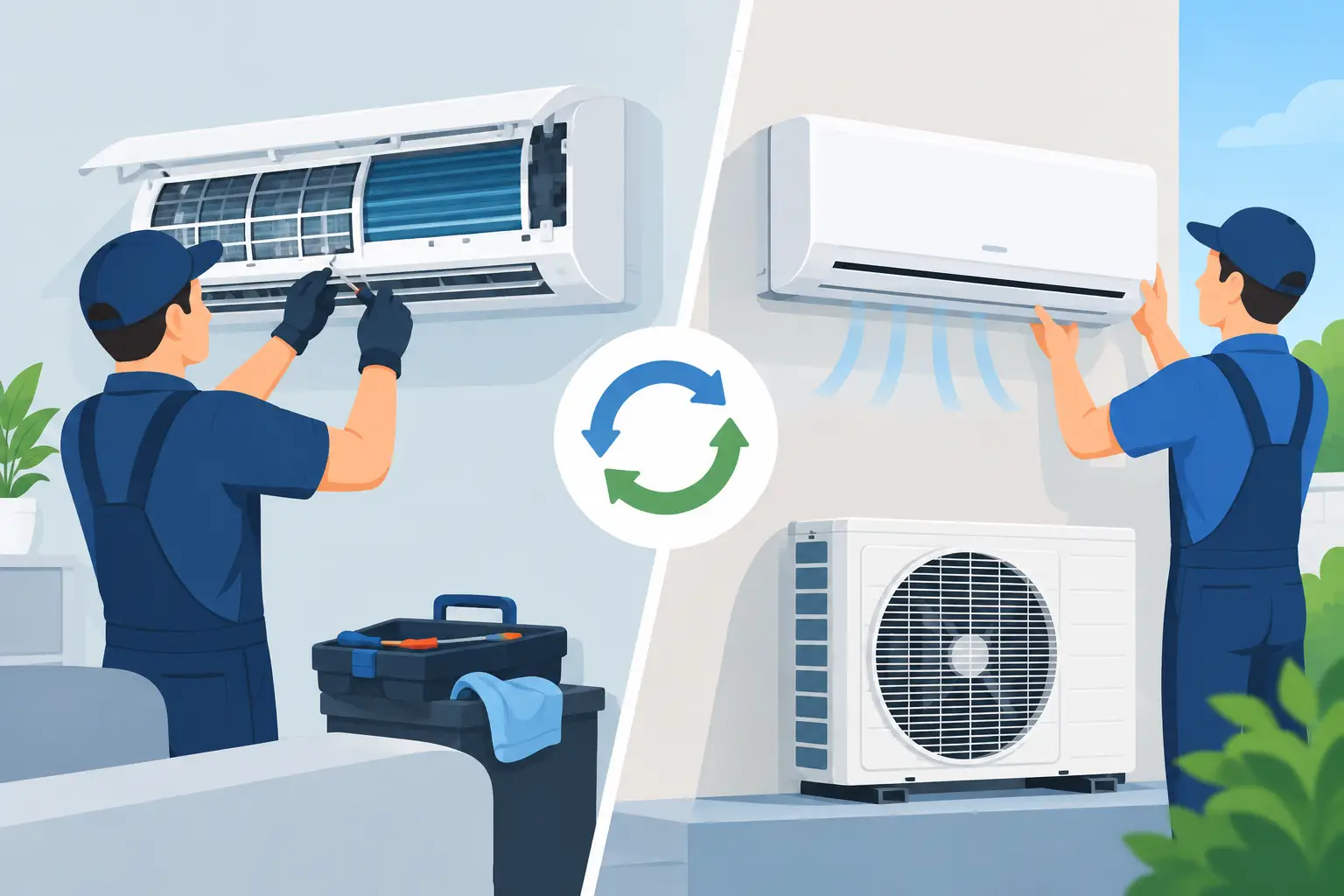
A system that cools poorly on the hottest afternoon, leaks water onto the floor, or trips a breaker before guests arrive creates the same immediate question: should you fix it properly or start over? Aircon overhaul versus replacement is not simply a choice between the lower quote and the higher quote. The right decision depends on what has failed, how the system has performed over time, and whether a major repair will give you dependable cooling for years rather than months.
For homeowners, the goal is consistent comfort without repeated service disruptions. For landlords, offices, retail spaces, and facilities teams, the decision also affects occupant satisfaction, energy use, operating budgets, and downtime. A qualified assessment should look beyond the symptom to the condition of the entire cooling system.
What an aircon overhaul is designed to solve
An aircon overhaul is a deep corrective service for equipment that is underperforming but may still be worth retaining. It is more extensive than routine servicing or a standard cleaning. Depending on the diagnosis and system type, the work may involve dismantling accessible indoor-unit components, thoroughly cleaning the evaporator coil, blower wheel, drain pan, and drainage path, checking electrical connections, testing the refrigerant circuit, and replacing worn minor parts where appropriate.
The purpose is to address accumulated dirt, poor drainage, restricted airflow, odor issues, or declining cooling performance caused by serviceable components. In many cases, a system that appears weak is not at the end of its useful life. A heavily soiled coil, blocked drain line, or dirty blower can reduce airflow and make the unit work harder than it should.
An overhaul is most sensible when the compressor is healthy, the refrigerant circuit does not have a major recurring leak, and the unit has not required frequent expensive repairs. It can restore performance and help prevent moisture-related problems, but it cannot make an aging compressor new or correct a fundamentally undersized system.
An overhaul is not a guaranteed reset
A thorough overhaul can improve a neglected system significantly, but expectations should remain realistic. If a unit has corroded coils, damaged control boards, repeated gas leaks, or a compressor approaching failure, cleaning alone will not remove those risks. A responsible technician should explain what the overhaul is likely to improve and which faults may remain.
This distinction matters because a low-cost repair can become expensive when it is repeated. If the same unit needs a major cleaning, refrigerant work, and another significant repair soon afterward, replacement may have been the better long-term value.
When replacement becomes the better investment
Replacement is usually worth serious consideration when the equipment is near the end of its expected service life and has begun to demand substantial repairs. Age by itself does not decide the issue. A well-maintained system can continue operating reliably, while a newer but poorly installed unit may develop serious problems early. Still, older equipment often has more worn parts, lower efficiency, and less practical access to replacement components.
A replacement may be the more reliable choice if cooling remains inconsistent after proper servicing, the compressor has failed, the coil has major corrosion, or refrigerant leaks keep returning. It is also worth considering when repair costs are a large portion of the price of a comparable new system, especially if there are separate concerns with drainage, electrical parts, or capacity.
New equipment can also solve comfort problems an overhaul cannot. A room that has always struggled to cool may have an incorrectly sized unit, poor air distribution, installation limitations, or a system that no longer suits how the space is used. For example, a home office that now runs all day, a retail area with additional heat-producing equipment, or a renovated space may have different cooling needs than it did when the original air conditioner was installed.
Efficiency and operating costs matter, but so does usage
A newer unit may use less energy and offer better controls, but the savings vary with local utility costs, operating hours, room conditions, and maintenance habits. It is unwise to replace a sound system solely because a newer model has a higher efficiency rating. On the other hand, a heavily used system with declining performance can cost more to operate while still delivering less comfort.
For commercial properties, evaluate the decision across the system’s operational impact. An office or food-service location may place a higher value on predictable uptime than a household with a seldom-used guest room unit. In facilities with multiple indoor units, VRV or VRF equipment, or centralized ACMV systems, a component-level diagnosis is particularly important. Replacing an entire system when a targeted repair is appropriate can waste capital, while delaying replacement of critical equipment can create costly disruption.
How to compare aircon overhaul versus replacement fairly
Start with a clear diagnosis, not a quote based only on the visible symptom. Water leaks, weak airflow, unusual noise, odors, and warm air can each have several causes. Ask what the technician found, whether the issue is isolated or part of a broader pattern, and what testing supports the recommendation.
Then compare the realistic cost of keeping the existing system. Include the proposed overhaul or repair, any parts that are already showing wear, the likelihood of follow-up work, and the inconvenience of another breakdown. Compare that with replacement costs, installation requirements, warranty coverage, expected maintenance, and whether the new equipment addresses current comfort needs.
A useful question is: if this repair works as intended, how many years of reliable service is reasonably expected? No one can promise an exact number, but an experienced technician can give a practical view based on equipment condition, usage, maintenance history, and the nature of the fault.
Do not overlook installation quality when evaluating a new system. Proper sizing, drainage routing, refrigerant piping, electrical work, and commissioning have a direct effect on performance and longevity. A premium unit installed poorly can still leak, cool unevenly, or consume more energy than expected. Replacement should be a complete cooling solution, not simply a box swap.
Signs you should avoid delaying a decision
Some problems should be assessed promptly because continued operation can worsen damage or create safety concerns. Shut down the unit and arrange professional inspection if you notice burning smells, repeated breaker trips, significant water leakage near electrical connections, loud mechanical grinding, or a unit that repeatedly turns on and off without cooling.
Frequent refrigerant top-ups also deserve attention. Refrigerant does not normally get used up like fuel. If the charge is low, the system may have a leak that needs to be identified and repaired. Adding refrigerant without addressing the underlying cause can provide only temporary relief and may lead to further compressor strain.
For businesses, establish a contingency plan before a critical unit fails. This may include identifying priority areas, scheduling work during lower-traffic hours, and reviewing whether temporary cooling is needed. Planned replacement is generally easier to manage than an emergency changeout during a heat event or a busy operating period.
Get value from either choice
Whether you proceed with an overhaul or replacement, routine maintenance protects the decision. Clean filters regularly, keep outdoor equipment clear of obstructions, watch for changes in noise or cooling time, and arrange professional servicing at intervals suited to how heavily the system operates. Commercial and high-use environments may need a more structured maintenance schedule than a lightly used residential room.
Easy Cool Engineering approaches cooling concerns by assessing the equipment condition and the needs of the space before recommending a path forward. That means clear communication about the work required, practical options, and the trade-offs involved, whether the right answer is restoring the current unit or planning a replacement.
The best choice is the one that gives your home or business dependable cooling at a sensible total cost. A careful assessment now can prevent another uncomfortable afternoon, an avoidable emergency call, and money spent on a fix that was never built to last.