

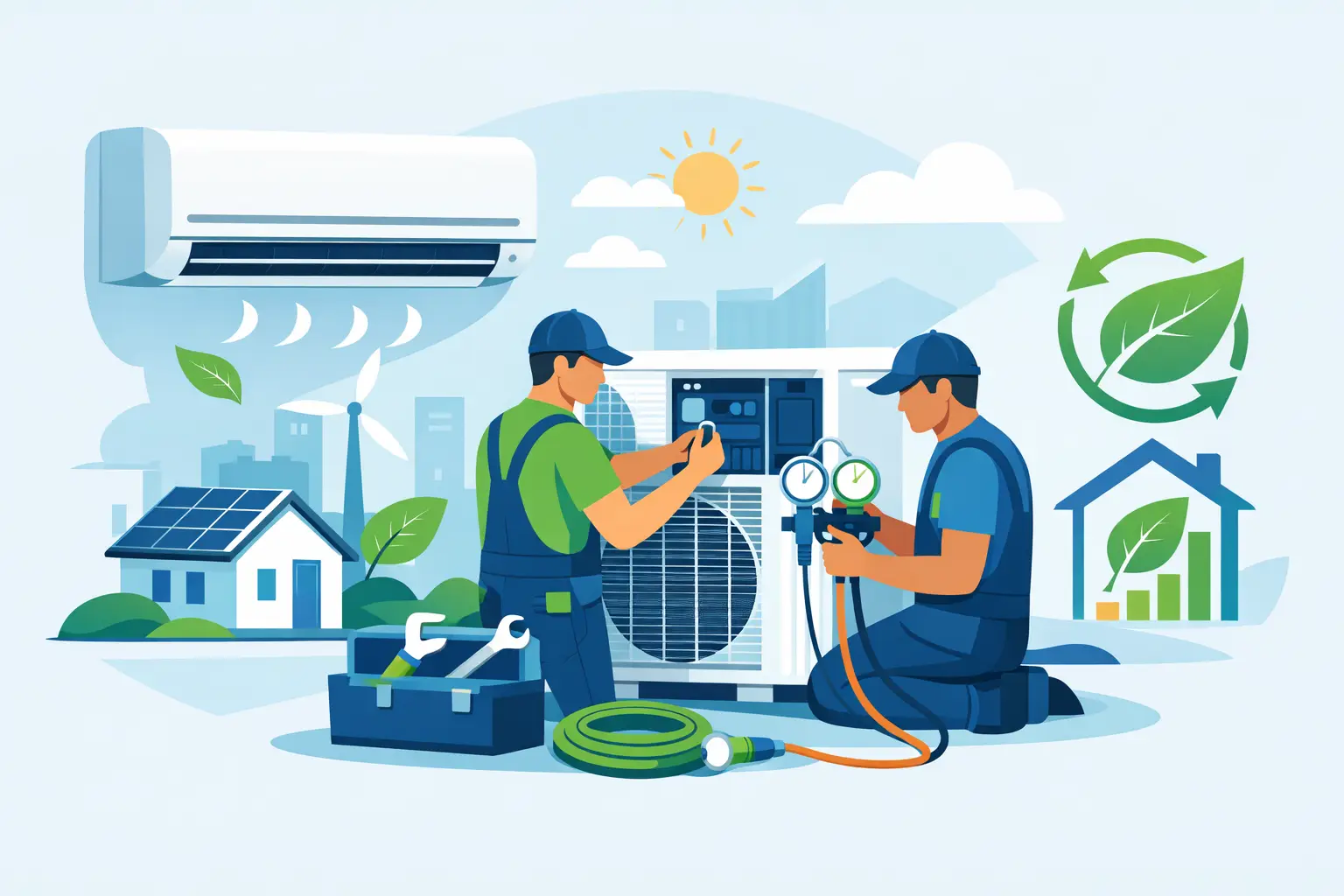
A system that still blows cold air can quietly waste a significant amount of electricity. Dirty coils, restricted airflow, incorrect refrigerant charge, and aging controls make an air conditioner work harder than it should. That is why energy efficient aircon servicing trends are shifting away from simple breakdown repairs and toward planned care that protects comfort, operating costs, and equipment life.
For homeowners, this often means a cooler home without constantly lowering the thermostat. For landlords and facilities teams, it means fewer complaints, less unplanned downtime, and a clearer view of when equipment needs attention. The right service approach depends on the system, how heavily it is used, and the environment around it, but the direction is clear: efficiency is now part of everyday air conditioning maintenance.
Energy Efficient Aircon Servicing Trends to Watch
The most useful trend is preventive maintenance based on system condition rather than waiting for poor cooling or a water leak. A technician does more than rinse a filter. They inspect airflow, clean heat-transfer surfaces, check drainage, assess electrical components, and identify small issues before they place extra strain on the unit.
This approach matters because air conditioning components work together. A clogged filter can reduce airflow. Reduced airflow can lead to uneven cooling and longer run times. Longer run times increase energy use and can place added stress on the fan motor, compressor, and other components. Addressing the source early is usually more cost-effective than responding after performance has already declined.
Another clear shift is toward measuring performance, not simply checking whether a unit turns on. Technicians increasingly use system readings to assess refrigerant pressures, temperature differences, electrical draw, and airflow behavior. These checks help distinguish between a unit that is operating and a unit that is operating efficiently.
For commercial properties, performance checks can be especially valuable where multiple indoor units, outdoor condensers, or variable refrigerant flow systems serve different zones. A small fault in one area may affect comfort across a larger space or cause occupants to adjust thermostats unnecessarily. Accurate diagnosis supports better decisions and reduces disruption.
Cleaner Heat Exchange, Better Cooling Performance
Coil cleaning remains one of the most practical efficiency measures. Indoor evaporator coils absorb heat from the air, while outdoor condenser coils release that heat. When either surface is coated with dust, grease, or debris, heat transfer becomes less effective. The system may still cool, but it uses more energy to achieve the same result.
The servicing trend is moving toward cleaning methods matched to the equipment condition. Light buildup may require routine cleaning, while heavy contamination, drainage issues, or poor airflow may call for a more thorough chemical wash or overhaul. More aggressive cleaning is not automatically better. It should be recommended when the condition of the coil and system genuinely warrants it.
Outdoor units deserve equal attention. Leaves, dust, and restricted clearance around the condenser can trap heat and force the compressor to work harder. Keeping the surrounding area clear is a simple task, but it is often missed until cooling becomes noticeably weaker. In apartments, offices, retail spaces, and food-service environments, access and location can affect how quickly outdoor equipment accumulates debris.
Airflow and Drainage Are No Longer Minor Details
Airflow problems are among the most common causes of poor efficiency. Filters, blower wheels, ducts, louvers, and return-air paths all affect how easily cooled air moves through a property. When airflow is restricted, rooms may feel warm even when the thermostat is set low. Occupants may then lower the setting further, which increases energy use without fixing the underlying problem.
Regular filter cleaning or replacement is an easy starting point, but it is not the whole solution. A dirty blower wheel or blocked return path can also reduce performance. In ducted and larger ACMV systems, duct leakage, poor balancing, and damaged insulation can create additional losses that are not obvious from inside the room.
Drainage maintenance is also receiving more attention because blocked condensate lines can lead to leaks, odors, and shutdowns. Moisture problems are not only inconvenient. They may encourage mold growth around drains or indoor components and can damage ceilings, walls, furnishings, or business inventory. Servicing that checks drain pans, pipes, and pumps helps the system operate reliably through periods of high humidity.
Smarter Controls and Practical Temperature Settings
Smart thermostats, timers, occupancy controls, and zoning features are becoming more common tools for reducing unnecessary runtime. Their value is not just convenience. When configured properly, controls can avoid cooling empty rooms, reduce overnight operation, and maintain a more stable indoor temperature.
Still, smart controls are only as effective as the system behind them. A poorly maintained air conditioner will not become efficient simply because it has a new thermostat. Controls should support good mechanical performance, not replace servicing.
For many properties, the best setting is a moderate, consistent temperature rather than frequent extreme adjustments. Setting a thermostat dramatically lower does not cool a room faster in most systems. It simply tells the system to run longer. The ideal temperature depends on building use, occupancy, insulation, equipment capacity, and local conditions, so a service provider should consider the full picture before offering recommendations.
Refrigerant Accuracy and Early Fault Detection
Refrigerant is essential to the cooling process, but more refrigerant does not mean better cooling. An incorrect charge can reduce efficiency, affect comfort, and place strain on the compressor. If a system is low on refrigerant, the priority is finding and addressing the cause rather than repeatedly topping it up.
Early fault detection is becoming a major part of energy-conscious servicing. Unusual noises, inconsistent room temperatures, frequent cycling, ice buildup, water leaks, and rising utility bills can all signal a developing issue. None of these symptoms has one universal cause. A professional inspection is needed to determine whether the problem is related to airflow, drainage, refrigerant, electrical parts, controls, or equipment sizing.
For businesses with critical cooling needs, early detection can prevent much larger operational problems. Offices may lose productivity when conditions become uncomfortable. Retail operators may face customer complaints. Restaurants and food-service businesses must consider kitchen ventilation and heat loads alongside comfort cooling. In industrial and semiconductor environments, stable temperatures can be central to equipment protection and process reliability.
Planned Maintenance Fits Different Types of Properties
There is no single servicing schedule that suits every property. A lightly used residential split system may need a different plan than a busy office, retail space, restaurant kitchen, or site with VRV, chiller, and ACMV equipment. Usage hours, indoor air quality, occupancy levels, nearby construction, pets, cooking activity, and equipment age all influence service needs.
A planned maintenance schedule gives property owners a more predictable way to manage those differences. It also creates a service record that can reveal recurring faults, declining performance, or components approaching the end of their useful life. That information helps customers budget for repair or replacement instead of making rushed decisions after a failure.
For landlords and property managers, scheduled servicing can also support tenant satisfaction. Cooling complaints are easier to handle when there is a documented maintenance history and a responsive service partner who understands the equipment on site. For homeowners, it offers reassurance that a small issue is less likely to become an inconvenient breakdown during a hot period.
Choosing Service That Supports Long-Term Efficiency
The most energy-conscious service call is not necessarily the one with the lowest upfront price. A basic cleaning may be appropriate for a well-maintained unit, while a recurring issue may require deeper diagnostics. Good recommendations should be clear about what was found, what work is necessary now, and what can be monitored over time.
Look for technicians who explain the condition of the system in practical terms. You should understand whether the concern is a maintenance need, a repair issue, or a sign that replacement planning may be sensible. For larger commercial systems, service teams should also be able to coordinate work around operating hours and minimize disruption to tenants, staff, customers, or sensitive equipment.
Easy Cool Engineering supports this practical approach across residential, commercial, and specialized cooling environments. The goal is not to overcomplicate air conditioning care. It is to keep equipment clean, correctly assessed, and ready to deliver dependable cooling with less wasted energy.
A well-serviced air conditioner does more than make a room feel cooler. It gives homeowners and businesses a better chance to control operating costs, avoid preventable repairs, and get consistent comfort from the equipment they already own.