

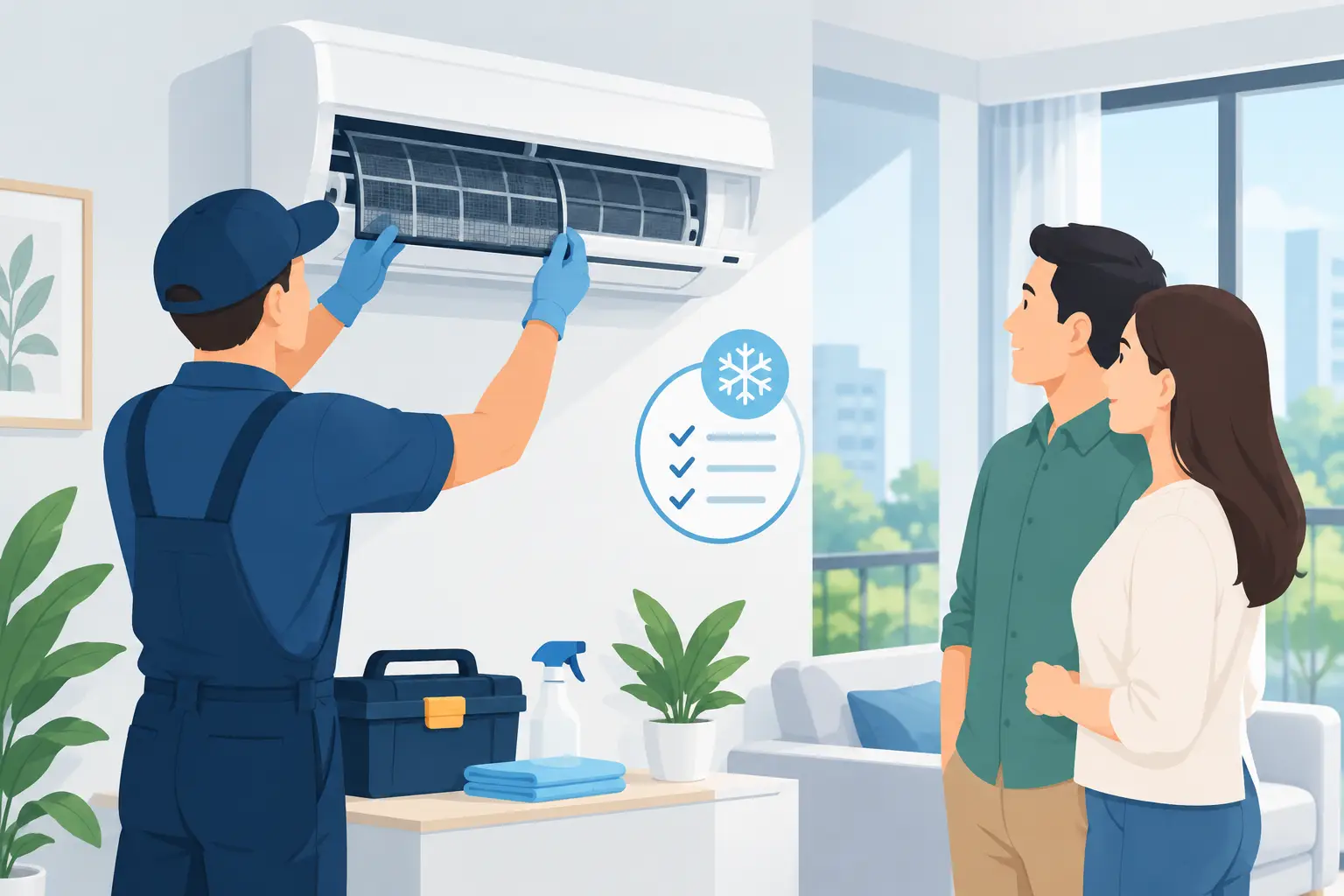
A tenancy handover can become difficult over small details: a stained air-conditioning cover, weak cooling in one bedroom, water dripping from a fan coil, or no record of when the system was last serviced. To prepare aircon for tenancy properly, treat it as a condition check and preventive maintenance task, not just a quick cleaning appointment. A clean, tested, documented system gives the incoming occupant a better start and gives the owner a clearer record of the unit’s condition.
For landlords, this work protects the property and helps reduce avoidable complaints after move-in. For outgoing tenants, it supports a smoother return of the property in the required condition. The right scope depends on the system’s age, usage, and current performance, but leaving aircon maintenance until the last day is rarely the best approach.
Why Aircon Condition Matters at Handover
Air conditioning is one of the most frequently used systems in a rental home. An issue may not be obvious during a short viewing, then appear after the new occupant runs the units for several hours each day. Reduced airflow, unpleasant odors, noisy operation, leaking water, and poor cooling often point to maintenance needs that should be addressed before keys change hands.
A professional service also creates a practical baseline. If the system is cooling correctly at handover and the condition is recorded, both parties have a clearer reference point later. This is especially useful where a tenancy agreement requires regular servicing or assigns responsibility for certain repairs to the tenant.
There is also an efficiency consideration. Dust-loaded filters and coils make an air conditioner work harder to move air and remove heat. Cleaning may improve comfort and airflow, though it will not solve every fault. A weak compressor, refrigerant leak, damaged sensor, or drainage issue requires diagnosis and repair rather than a standard service alone.
Prepare Aircon for Tenancy With a Full Condition Check
Start early enough to respond to any findings. Ideally, schedule the assessment one to two weeks before the handover date, particularly if multiple indoor units are installed. This leaves time for chemical cleaning, parts replacement, drainage repairs, or follow-up testing if needed.
A proper condition check should cover every indoor fan coil unit, the outdoor condenser, visible piping and insulation, condensate drainage, controls, and general cooling performance. Ask the technician to run each unit rather than inspecting only the unit in the living area. Bedrooms are often used less during a vacancy, so problems there can be missed until the next occupant moves in.
Check Cooling, Airflow, and Operating Noise
Each unit should start normally, respond to temperature changes, and deliver consistent airflow. Air that feels weak or warmer than expected may be caused by dirty components, but it can also indicate a mechanical or refrigerant-related issue. The technician should assess the likely cause before recommending work.
Listen for unusual rattling, grinding, clicking, or vibration. Some operating sound is normal, especially when a system starts or changes speed. Persistent or loud noise is worth investigating before handover because it can affect comfort and may worsen with continued use.
Inspect for Leaks and Drainage Problems
Water dripping from an indoor unit is one of the most common aircon complaints in rental properties. It can result from a clogged drain line, a dirty drain pan, poor pipe insulation, incorrect installation slope, or a fault affecting coil temperature. If left unresolved, it can stain walls, damage flooring, and create frustration for the incoming tenant.
Technicians should check drainage flow and inspect the surrounding ceiling, wall, and floor area for signs of previous leakage. If a unit has leaked before, do not assume the issue is resolved simply because it is dry on the day of inspection. Ask for the drain line and pan to be checked and cleaned where appropriate.
Look Beyond the Indoor Units
The outdoor condenser needs attention too. Restricted airflow around the condenser can affect cooling performance and system efficiency. Its mounting, fan operation, and visible condition should be inspected safely by a qualified professional.
Visible refrigerant piping should be checked for deteriorated insulation, exposed sections, or signs of damage. Insulation problems can lead to condensation and water marks, while physical damage may affect performance. In apartment buildings or managed properties, access requirements for outdoor equipment may affect what can be inspected or serviced, so plan ahead if building approval is needed.
Choose the Right Service Before Move-Out
Not every system needs the same level of cleaning. A routine aircon service may be sufficient when the units have been maintained regularly, are cooling well, show no leaks, and have no odor or unusual noise. This typically focuses on cleaning accessible components, filters, drainage areas, and general operational checks.
A deeper cleaning may be appropriate when there is persistent odor, visibly heavy dirt buildup, reduced cooling, recurring water leakage, or a long gap since the last maintenance visit. Depending on the condition, this may involve chemical cleaning of the fan coil or a more extensive overhaul. These services are valuable when justified, but they should not be treated as an automatic replacement for proper diagnosis.
For example, chemical cleaning can remove accumulated dirt from coils and internal parts, but it will not repair a failing electrical component. Refrigerant top-up may restore performance temporarily if levels are low, but refrigerant does not normally get used up. Low refrigerant can indicate a leak that should be identified and repaired. Clear recommendations protect property owners from paying for work that does not address the root cause.
Keep Records That Support a Fair Handover
Service documentation is as useful as the service itself. Retain the invoice, service report, and any repair recommendations. If work is completed, record what was done, which units were serviced, and whether follow-up monitoring is advised.
It is also helpful to take dated photos of each indoor unit, the remote controls, and any existing cosmetic marks near the aircon areas. Photograph the units when they are switched on if possible. These are not substitutes for technical records, but they can reduce uncertainty about visible condition at the point of handover.
For landlords, share relevant operating information with the incoming tenant. This may include the location of remote controls, basic filter-care expectations, recommended servicing intervals, and whom to contact if there is a leak or loss of cooling. For tenants, confirm the aircon clauses in the lease before arranging work. Some agreements specify the frequency of servicing, approved contractor requirements, or the documents needed at move-out.
Avoid Last-Minute Handover Problems
The most common mistake is booking a service on the final day, then discovering a fault that requires more time. Another is cleaning only the filters and assuming that makes the system ready. Filters matter, but drainage, coil condition, cooling output, and electrical performance also affect how the system runs.
Avoid covering up issues with temporary measures. Fragrances can mask moldy odors, and repeated thermostat adjustments cannot correct a unit with poor cooling. If a problem is identified, address it openly and keep the service record. That is usually less costly and less stressful than handling an urgent complaint after move-in.
For larger homes, offices, or properties with multi-split, VRV, or other complex systems, a more detailed maintenance plan may be needed. The right approach depends on equipment type, occupancy patterns, and whether cooling is essential to daily operations. Easy Cool Engineering can assess both everyday residential units and more specialized cooling systems, with recommendations based on actual condition rather than a one-size-fits-all checklist.
A well-prepared aircon system does more than satisfy a handover requirement. It gives the next occupant clean airflow, dependable cooling, and confidence that the property has been cared for from the first day they switch it on.