

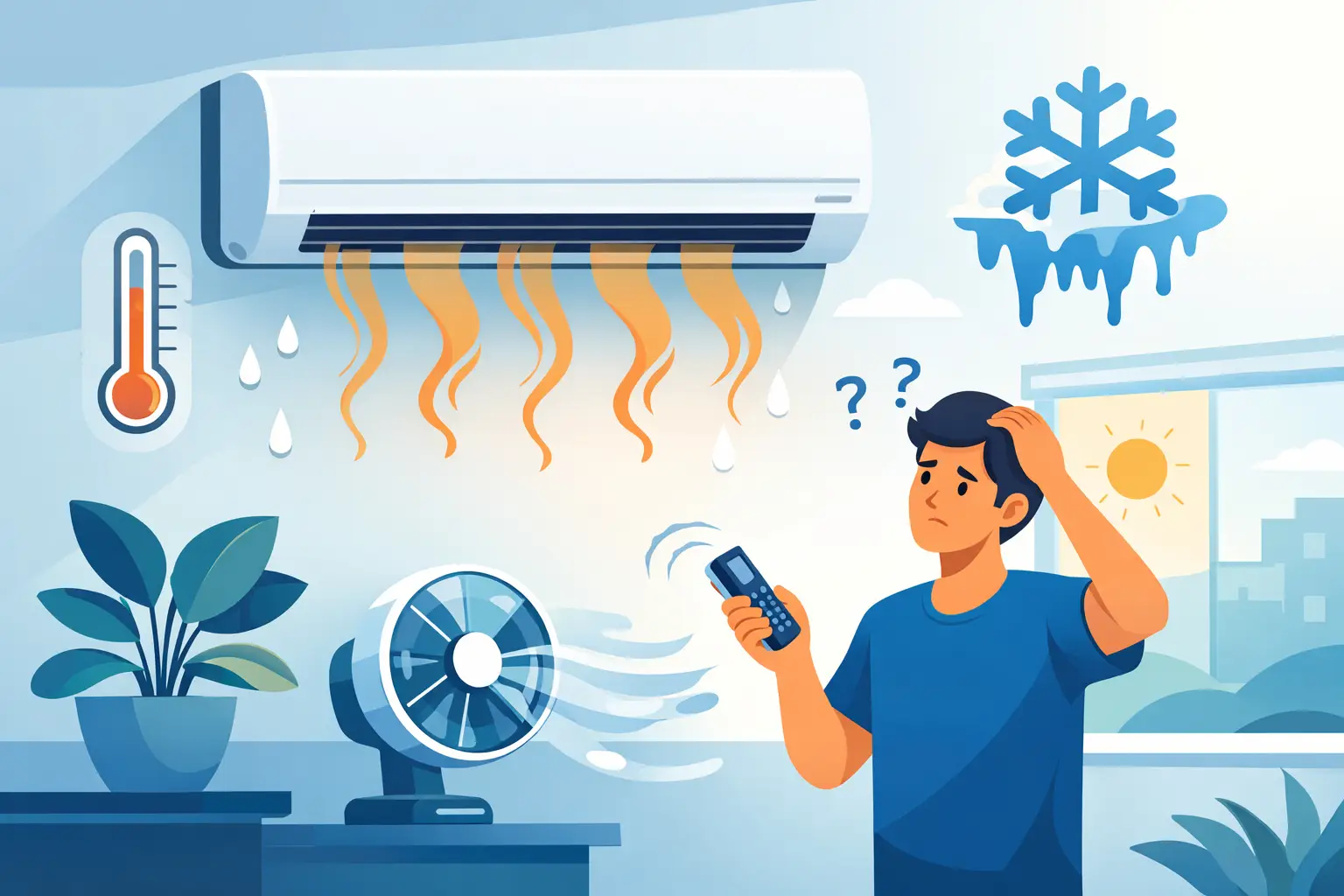
When your air conditioner is running but the room still feels warm, the problem usually starts small before it becomes expensive. An air conditioner not cooling properly can be caused by anything from a clogged filter to a refrigerant issue, and the right response depends on how your system is behaving.
For homeowners, that often means uncomfortable nights, higher utility bills, and the frustration of a unit that sounds busy but delivers very little cooling. For offices, shops, and other commercial spaces, poor performance can quickly affect comfort, staff productivity, and customer experience. The good news is that not every cooling issue means a major repair. In many cases, there are clear warning signs that point to the real cause.
Why an air conditioner is not cooling properly
Air conditioning systems cool effectively only when airflow, refrigerant levels, electrical components, and heat exchange are all working together. If one part of that process is restricted or failing, cooling drops off.
A dirty air filter is one of the most common reasons. When the filter is clogged with dust, airflow becomes weak, and the system struggles to circulate enough cooled air into the room. You may still feel some air coming out, but it will not be strong or cold enough to lower the temperature efficiently.
Blocked or dirty evaporator and condenser coils can create a similar problem. The indoor coil absorbs heat from your space, while the outdoor unit releases it. If dirt builds up on either side, the system cannot transfer heat properly. That means longer run times, weaker cooling, and added strain on the compressor.
Low refrigerant is another likely cause, especially if the unit used to cool well and has gradually become less effective. Refrigerant does not get used up like fuel. If levels are low, there is usually a leak somewhere in the system. Topping it up without addressing the leak only provides a temporary fix.
Thermostat settings can also be the culprit. Sometimes the issue is as simple as incorrect mode selection, an overly high set temperature, or a sensor that is not reading the room accurately. In other cases, the thermostat is working, but the indoor unit is short cycling because of another fault.
Then there are drainage and icing issues. If condensate drainage is blocked, moisture can back up and affect performance. If airflow is poor or refrigerant is low, ice can form on the coil. That may seem odd in a system designed to cool, but frozen coils actually reduce cooling output and can lead to water leakage later.
Signs your air conditioner not cooling properly needs attention fast
Some cooling problems can wait a day or two. Others should be checked quickly before they lead to larger repairs.
If your unit blows room-temperature air, turns on and off too frequently, leaks water indoors, gives off unusual smells, or makes rattling, buzzing, or hissing sounds, it is best not to ignore it. Hissing may indicate a refrigerant leak. Buzzing can point to an electrical or capacitor issue. A musty smell may suggest buildup in the unit, while a burning smell calls for immediate shutdown and inspection.
Commercial users should pay even closer attention to inconsistent cooling across rooms or zones. Uneven temperatures in an office, retail space, or facility can signal airflow imbalance, duct-related issues, sensor problems, or system undersizing. In larger systems, these symptoms are rarely random.
What you can check before calling for service
There are a few practical checks you can do safely. Start with the thermostat. Make sure the system is set to cooling mode and that the target temperature is lower than the current room temperature. If the remote or controller batteries are weak, replace them and test again.
Next, inspect the air filter. If it looks dusty or clogged, clean or replace it according to the manufacturer’s guidelines. A heavily blocked filter can reduce cooling more than many people expect.
Look at the indoor and outdoor units for obvious obstructions. Curtains, furniture, storage items, and accumulated debris can all interfere with airflow. The outdoor condenser needs enough clearance to release heat effectively. If it is surrounded by leaves, boxes, or dirt buildup, performance will drop.
Also pay attention to your doors and windows. In homes and small businesses, cooling complaints are sometimes made worse by warm air entering faster than the system can remove it. That does not mean the air conditioner is fault-free, but it does affect how well the space holds temperature.
If you notice ice on the indoor unit, turn the system off and let it thaw. Running it continuously in that condition can cause more damage. At that point, a professional inspection is usually the next step, because icing tends to be a symptom rather than the root problem.
When professional servicing is the better choice
If basic checks do not solve the problem, professional servicing is usually the fastest and most cost-effective path. Cooling systems are technical equipment, and performance issues often involve pressure readings, electrical testing, component inspection, coil cleaning, and fault diagnosis that cannot be done accurately without the right tools.
This matters even more when the problem seems minor. A weak capacitor, early compressor strain, sensor issue, or small refrigerant leak may not stop the unit completely, but it can push up energy use and shorten the life of the system. Waiting too long often turns a manageable service visit into a more expensive repair.
For residential users, the goal is usually to restore comfort quickly and prevent repeat issues. For commercial and industrial users, the priority is often operational continuity. Offices need stable indoor comfort. Food-service businesses may also have ventilation and cooling interdependencies. Facilities with ACMV, VRV, or specialized cooling requirements need technicians who understand more than just household wall-mounted units.
That is why the service partner matters. A company with both residential and commercial experience is better placed to identify whether the issue is a straightforward cleaning problem, a repair need, or a system-level performance concern.
How proper maintenance prevents poor cooling
Most cases of weak cooling are easier to prevent than to repair. Regular servicing helps keep filters, coils, drainage, and core components in working condition before performance drops noticeably.
For homeowners, scheduled maintenance supports better cooling, cleaner airflow, and lower strain on the system during hot periods. It also helps catch small issues like blocked drainage, dirty blower wheels, or early refrigerant loss before they become disruptive.
For landlords and property managers, regular servicing can reduce emergency callouts and tenant complaints. If a unit is used heavily or runs in enclosed urban spaces, maintenance becomes even more important.
In commercial environments, preventive maintenance is less about convenience and more about consistency. Cooling problems in offices, retail spaces, kitchens, and technical facilities can affect operations quickly. Regular inspection and servicing help maintain stable performance and support better equipment lifespan.
At https://www.easycool.sg, the focus is on dependable cooling support that matches the actual needs of the site, whether that means routine aircon servicing for a home, troubleshooting for a commercial system, or technical support for more specialized cooling equipment.
Repair or replace? It depends on the system
When an air conditioner is not cooling properly, many customers ask the same question: should this be repaired, or is it time to replace it?
The answer depends on the age of the unit, the condition of major components, repair history, and how well the system matches the space. If the unit is relatively new and the issue is related to cleaning, minor parts, drainage, or localized electrical faults, repair is often the sensible option.
If the system is older, frequently breaks down, struggles to cool even after servicing, or uses significantly more energy than it should, replacement may be worth considering. This is especially true when the compressor is failing or when refrigerant-related repairs become costly. A newer system may offer better efficiency and more reliable cooling, but only if it is correctly selected and installed for the space.
That trade-off matters. Replacement has a higher upfront cost, but repeated short-term repairs can add up without solving the bigger problem.
The right next step when cooling drops off
A unit that runs without cooling properly is not just inconvenient. It is usually a sign that the system is under stress or no longer operating as designed. Acting early gives you more options, from a simple cleaning or adjustment to a targeted repair before larger components are affected.
If your air conditioner has stopped keeping up, the most practical move is to have it checked before the problem escalates. Restoring proper cooling is not only about comfort. It is about protecting the system, controlling energy costs, and keeping your home or business running the way it should.