

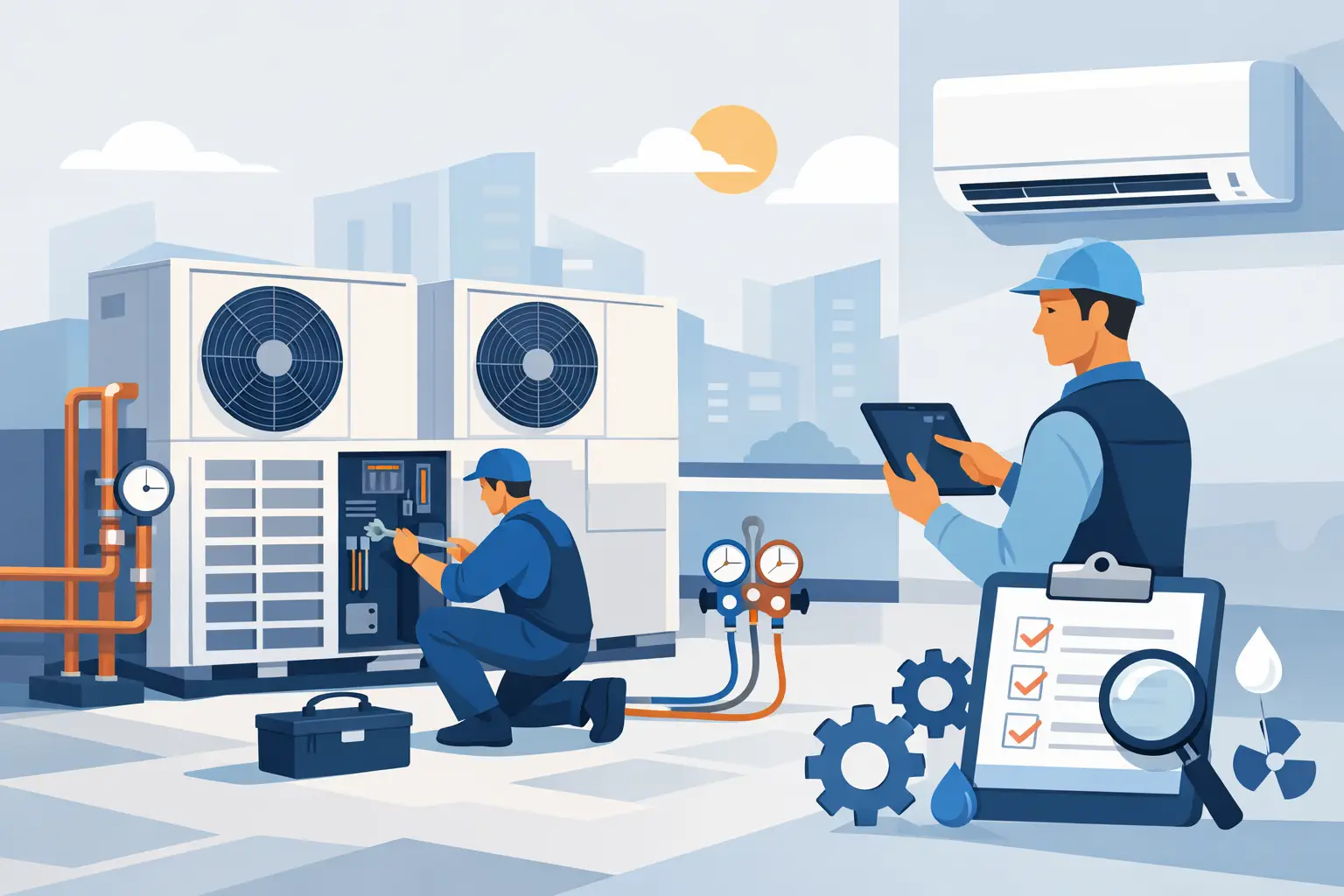
When a VRV system starts missing set temperatures, short cycling, or driving up energy bills, the issue is often not the equipment itself. It is usually missed upkeep. Understanding vrv system maintenance requirements helps building owners, facility teams, and landlords protect comfort, control operating costs, and avoid preventable downtime.
VRV systems are built for flexibility. They can serve multiple zones, handle different load conditions, and support better comfort across offices, retail spaces, larger homes, and mixed-use properties. That same flexibility also means more components, more controls, and more points that need professional attention. Maintenance is not just about cleaning a filter and moving on. It is about keeping the entire system working as designed.
Why VRV system maintenance requirements matter
A VRV setup depends on balance. Indoor units, outdoor units, refrigerant piping, expansion controls, sensors, drainage, and communication wiring all play a role. If one part falls out of spec, the effect can spread through the system. A small refrigerant issue can reduce capacity. A clogged drain can cause water leaks. Dirty coils can push the compressor harder than necessary.
For property owners, the risk is not only repair cost. It can also mean tenant complaints, uneven cooling, lost business hours, and a shorter equipment lifespan. In commercial spaces, poor maintenance can affect staff comfort and customer experience. In higher-demand environments, even a brief interruption may be unacceptable.
That is why VRV maintenance should be planned, not reactive. Regular servicing gives technicians a chance to spot wear early, test system performance, and correct minor issues before they turn into expensive failures.
What VRV system maintenance requirements usually include
The exact service scope depends on the brand, model, usage pattern, and site conditions. A retail unit near a busy street will face different conditions than a lightly used office floor. Still, most professional maintenance programs cover a consistent set of checks.
Air filters, coils, and airflow
Dirty filters are one of the most common causes of weak performance. Restricted airflow can reduce cooling, strain indoor components, and make rooms feel humid or unevenly cooled. Filters should be inspected regularly and cleaned or replaced as needed.
Indoor evaporator coils and outdoor condenser coils also need attention. Dust, grease, and debris reduce heat transfer efficiency. In some environments, coil contamination builds up faster than expected, especially in food service, high-traffic retail, or sites near construction. Coil cleaning helps maintain capacity and lowers unnecessary energy use.
Airflow checks matter just as much as cleaning. Fan motors, blowers, and discharge paths should be inspected to confirm the system is moving air properly across each zone.
Refrigerant condition and pressure checks
VRV systems rely on precise refrigerant control. If charge levels are off or if there is a leak, the system may still run, but not efficiently. Performance can drift slowly, which is why refrigerant problems are often missed until comfort complaints start.
Routine servicing should include checking operating pressures, pipe temperatures, and system behavior against expected performance. If there are signs of leakage, technicians may need to isolate the issue, repair it, and verify system stability before restoring full operation. This is one of the clearest examples of why VRV systems should be maintained by trained professionals rather than handled like basic single-split units.
Drainage and condensate management
Blocked drain lines can lead to water overflow, ceiling stains, odor problems, and shutdowns. In buildings with concealed units, drainage issues may go unnoticed until damage appears. Maintenance should include clearing drain lines, checking drain pans, and confirming that condensate removal components are working correctly.
This is especially important in humid climates or properties where systems run for long hours. Water management is a small part of the service scope, but it can prevent very visible and costly problems.
Electrical components and communication controls
VRV systems depend heavily on stable electrical connections and control communication. Loose terminals, worn contact points, sensor faults, or board issues can trigger intermittent errors that are hard to diagnose after the fact.
A proper service visit includes inspecting wiring connections, measuring electrical readings where relevant, and checking for signs of overheating or component wear. Technicians should also review error histories, controller behavior, and communication performance between indoor and outdoor units.
Unlike simpler systems, VRV faults are not always obvious from room temperature alone. A building may still feel mostly comfortable while control issues are quietly developing in the background.
Outdoor unit inspection
Outdoor units handle heavy work and are exposed to weather, debris, and heat. Maintenance should cover fan operation, coil condition, cabinet cleanliness, vibration, mounting stability, and compressor performance indicators. Any unusual noise, oil trace, or airflow obstruction deserves attention.
If the outdoor unit is installed in a tight service area, maintenance becomes even more important. Restricted airflow around the unit can reduce efficiency and increase operating stress over time.
How often should a VRV system be serviced?
There is no single schedule that fits every building. Usage intensity, occupancy, hours of operation, and environmental conditions all affect service frequency. For many commercial properties, quarterly inspections are a practical baseline. Sites with longer operating hours, higher heat loads, or dust and grease exposure may need more frequent attention.
For residential or light-use properties with VRV systems, semiannual servicing may be enough if the system is operating in a relatively clean environment. Even then, a lighter schedule only works if there are no warning signs between visits. If filters clog quickly, rooms cool unevenly, or error codes appear, the maintenance plan should be adjusted.
Manufacturer requirements and warranty terms also matter. Some systems require documented professional servicing to support warranty coverage. Skipping scheduled maintenance may save money in the short term, but it can create bigger costs later if a major claim is denied.
Signs your VRV system needs attention sooner
Even with a schedule in place, some issues should not wait for the next planned visit. Uneven temperatures between zones, rising utility bills, water leaks, unusual noise, delayed cooling response, and recurring fault codes all point to the need for inspection.
It is also worth paying attention to softer warning signs. If occupants keep adjusting thermostats to feel comfortable, if certain rooms feel sticky despite cooling, or if the system seems to run longer than usual, performance may already be slipping. These problems do not always mean a major failure is coming, but they do mean the system is no longer operating at its best.
The trade-off between basic upkeep and full professional servicing
Some routine tasks can be handled in-house, depending on the property and maintenance team. Filter checks, visible cleaning around outdoor units, and simple observations of noise or leaks are useful. They help catch obvious issues early and support better system hygiene between service visits.
But VRV systems are not ideal candidates for a do-it-yourself maintenance approach. Refrigerant diagnostics, control testing, electrical inspection, and performance verification require the right tools and technical knowledge. A basic cleaning visit is not the same as a full maintenance service. If the goal is reliable long-term operation, both surface-level upkeep and deeper technical servicing are needed.
For larger buildings, this distinction matters a lot. It is possible for a system to look clean on the outside and still have control faults, airflow imbalance, or declining refrigerant performance. That is why service scope should always be clearly defined.
Choosing the right maintenance partner
A good VRV maintenance provider should do more than respond when the system fails. They should understand multi-zone controls, diagnose issues accurately, communicate clearly, and tailor service intervals to the site. That matters for homeowners with premium cooling systems and even more for commercial operators managing comfort across multiple rooms or tenants.
Look for a service partner that documents findings, explains priorities, and distinguishes between urgent repairs and watch-list items. Transparent communication helps property owners make better decisions and avoid rushed spending. It also supports better planning for part replacement, downtime coordination, and lifecycle budgeting.
For customers who need both everyday cooling support and more specialized technical capability, working with an experienced provider such as Easy Cool Engineering Pte Ltd can simplify maintenance planning across different property types and operating demands.
A smarter way to protect system performance
The best approach to vrv system maintenance requirements is to treat maintenance as performance protection, not just a box to check. A well-maintained system cools more consistently, responds better to changing loads, and is less likely to surprise you with downtime at the wrong moment.
If your VRV system supports a home, office, retail unit, or larger facility, regular professional care gives you more control over comfort, cost, and equipment life. A little attention at the right time usually costs far less than recovering from a breakdown during peak demand.