

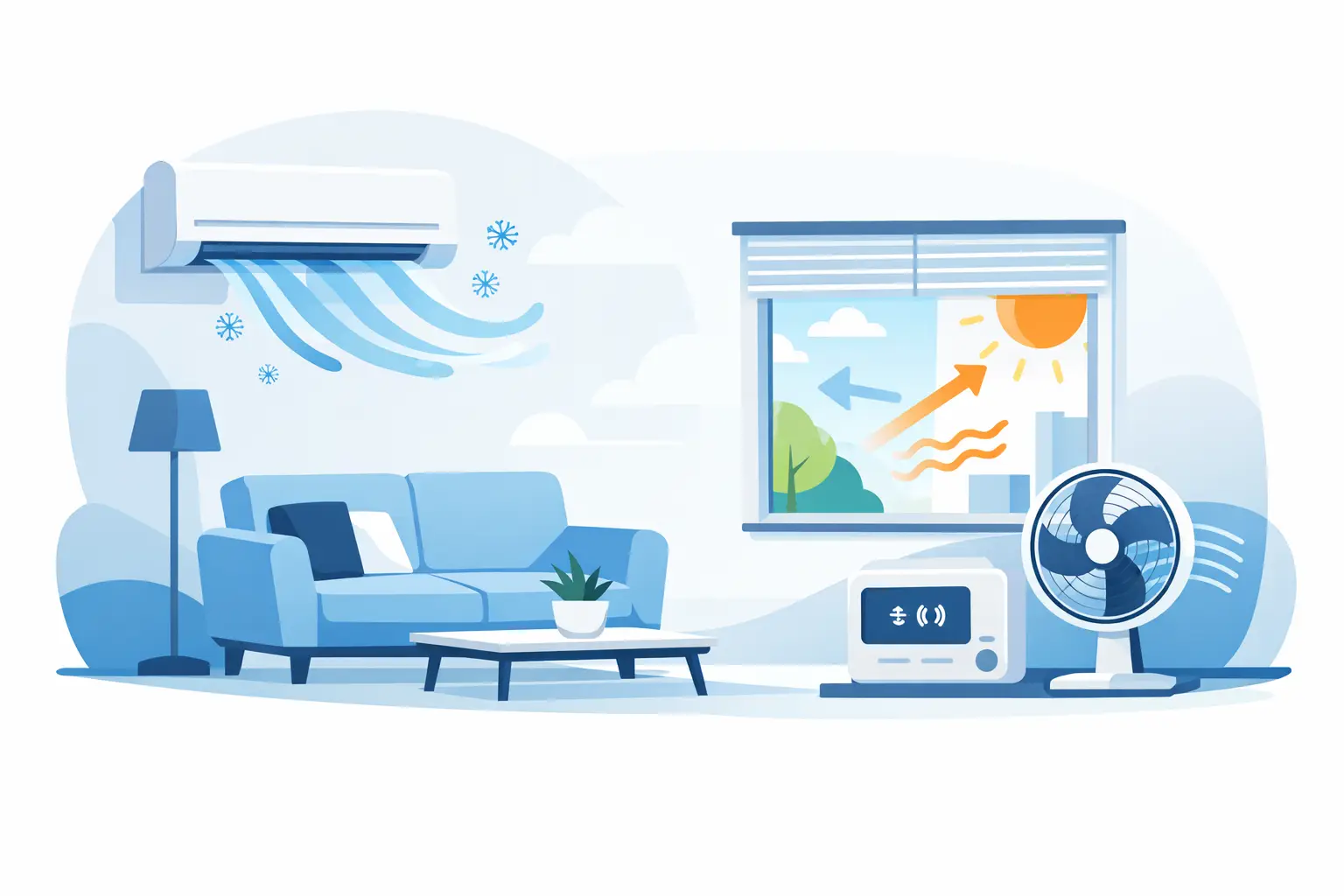
If your air conditioner seems to run all day but the room still feels uneven, sticky, or slow to cool, the issue is not always the unit itself. In many homes and commercial spaces, how to improve indoor cooling efficiency comes down to a mix of airflow, maintenance, insulation, and system setup. Small inefficiencies add up fast, especially during long hot spells when energy use climbs and comfort drops.
The good news is that better cooling performance usually does not start with replacing everything. In many cases, the biggest gains come from correcting common issues that force your system to work harder than necessary. That matters for homeowners trying to manage utility costs, landlords maintaining tenant comfort, and businesses that need consistent indoor conditions without unnecessary downtime.
How to improve indoor cooling efficiency at the system level
Cooling efficiency is really about heat management. Your AC is not creating cold air from nothing. It is removing heat from indoors and releasing it outside. Anything that adds extra heat indoors, blocks airflow, or reduces the system’s ability to remove heat will lower efficiency.
That is why one of the first things to check is airflow. A well-sized air conditioning system still underperforms if return air is restricted, vents are blocked, or filters are clogged. When air cannot move properly, cooled air does not circulate as intended and the system may run longer cycles to reach the thermostat setting. In practice, this often shows up as rooms that feel warmer than others, weak airflow from vents, or an AC that never seems to catch up in the afternoon.
Temperature settings also matter, but not always in the way people expect. Setting the thermostat extremely low does not cool a room faster. It just tells the system to run longer. A realistic and steady setting usually supports better efficiency than constant manual adjustments. For many properties, a moderate setpoint paired with good insulation and clean airflow produces better results than overworking the equipment.
Start with the easiest fixes indoors
Some of the most effective improvements are simple and immediate. Dirty air filters are a classic example. When filters fill with dust and debris, the unit has to push harder to move air. That reduces performance and can increase wear on parts over time. In homes with pets, renovation dust, or heavier use, filters may need attention more often than expected.
Blocked supply vents create a similar problem. Furniture, curtains, storage boxes, or decorative covers can prevent cooled air from reaching the room properly. Even if only a few vents are obstructed, the system’s airflow balance can suffer. Keeping vents clear and open helps cooled air spread more evenly.
Ceiling fans can also help, not by lowering the actual room temperature, but by improving air movement so the space feels cooler. That can allow a slightly higher thermostat setting without sacrificing comfort. In offices and larger residential spaces, fan-assisted circulation can reduce hot and cold spots that make people lower the thermostat unnecessarily.
Sunlight is another hidden load. Rooms with direct afternoon sun often heat up quickly through windows, especially if blinds or curtains are left open. Closing window coverings during peak heat hours can reduce heat gain and ease the burden on the AC. It is a basic step, but in many buildings it makes a noticeable difference.
Maintenance is where efficiency is often won or lost
If you want reliable results, routine servicing matters. Cooling systems lose efficiency gradually, so problems are often missed until comfort declines or energy bills rise. A unit can still be running while performing far below its best.
Coils are a good example. When evaporator or condenser coils become dirty, heat transfer becomes less effective. The system then needs more time and more energy to deliver the same cooling result. Drain line issues can also affect performance and, in some cases, lead to water leaks or shutdowns. These are not always dramatic failures. Often they are quiet efficiency losses happening month after month.
Professional servicing helps catch those issues early. A proper inspection can identify weak airflow, refrigerant concerns, dirty components, electrical wear, and early signs of system strain. For residential customers, this helps extend equipment life and maintain steady comfort. For commercial and industrial environments, it is even more critical because poor cooling performance can affect staff comfort, operating costs, or temperature-sensitive processes.
It also helps to remember that cleaning is not the same as a quick visual check. A system may look fine from the outside while internal buildup is already affecting output. Regular maintenance is one of the most practical answers to how to improve indoor cooling efficiency because it addresses the root causes instead of just reacting to poor performance.
Insulation and air leakage matter more than most people think
Even an efficient AC system will struggle if cooled air is escaping or outside heat is constantly entering the building. Gaps around doors and windows, poor attic insulation, and unsealed penetrations around pipes or wiring all increase the cooling load.
This is especially common in older properties and in spaces that have been renovated over time without a full review of the building envelope. You may cool the room successfully, but if conditioned air keeps leaking out, the AC has to replace that lost cooling again and again. That means longer run times, less stable temperatures, and higher bills.
Sealing obvious leaks and improving insulation can make a surprisingly large difference. The exact benefit depends on the building, of course. A high-rise apartment with limited sun exposure has different needs than a landed home, restaurant kitchen, or office with large glass windows. Still, the principle is the same. Keep heat out and keep cooled air in.
Humidity control also deserves attention. When indoor humidity is high, spaces feel warmer even at the same temperature. That often leads people to lower the thermostat more than necessary. If your system is oversized, short cycling, or not removing moisture effectively, comfort can suffer despite strong cooling. This is where proper sizing and professional assessment become important.
How to improve indoor cooling efficiency in larger or more complex spaces
In bigger homes, offices, retail spaces, and industrial environments, efficiency depends on more than a thermostat and a few filters. Zoning, duct condition, system controls, and equipment matching all become more important.
Duct leakage is a common issue in commercial and larger residential systems. If cooled air is escaping into ceiling voids or non-occupied areas, you are paying to cool the wrong space. Poor duct insulation can also cause losses before air even reaches the intended room. A system can appear to be running normally while delivering weak results at the endpoint.
Control strategy matters too. Some buildings cool empty rooms too aggressively while occupied spaces remain inconsistent. Smarter scheduling and better calibration can improve comfort without increasing runtime. For businesses, this is where efficiency and operations meet. Cooling should support the space as it is actually used, not just how the controls were set years ago.
For specialized settings such as VRV, ACMV, or precision cooling applications, efficiency improvements need a more technical review. Load conditions, occupancy patterns, ventilation requirements, and equipment staging all affect performance. In these environments, guesswork can be expensive. A tailored service approach is often the best investment because the wrong adjustment can solve one issue while creating another.
When repair, upgrade, or replacement makes sense
Not every efficiency problem can be fixed with maintenance alone. If a unit is aging, improperly sized, or repeatedly breaking down, repair costs and energy waste can start to outweigh the value of keeping it in service. That does not mean replacement is always the first answer, but it should be considered honestly.
An oversized unit may cool quickly but fail to manage humidity well. An undersized unit may run constantly and still struggle in peak heat. Older systems can also lose ground simply because newer equipment is built to operate more efficiently. The right choice depends on the age of the system, the condition of key components, and how the space is used.
This is where a reliable service partner adds real value. Good advice should not default to the most expensive option. It should reflect the actual condition of the system, the cooling demands of the property, and the customer’s priorities. For some customers, targeted repairs and servicing restore strong performance. For others, an upgrade provides better long-term savings and fewer disruptions. That practical, tailored approach is what many customers expect from providers such as Easy Cool Engineering Pte Ltd.
Better cooling efficiency is rarely about one dramatic fix. It usually comes from making the system easier to do its job – with cleaner airflow, tighter spaces, proper maintenance, and equipment that matches the demand. When those pieces are working together, indoor spaces feel more comfortable, cooling costs become easier to manage, and the system is under less strain day after day.