

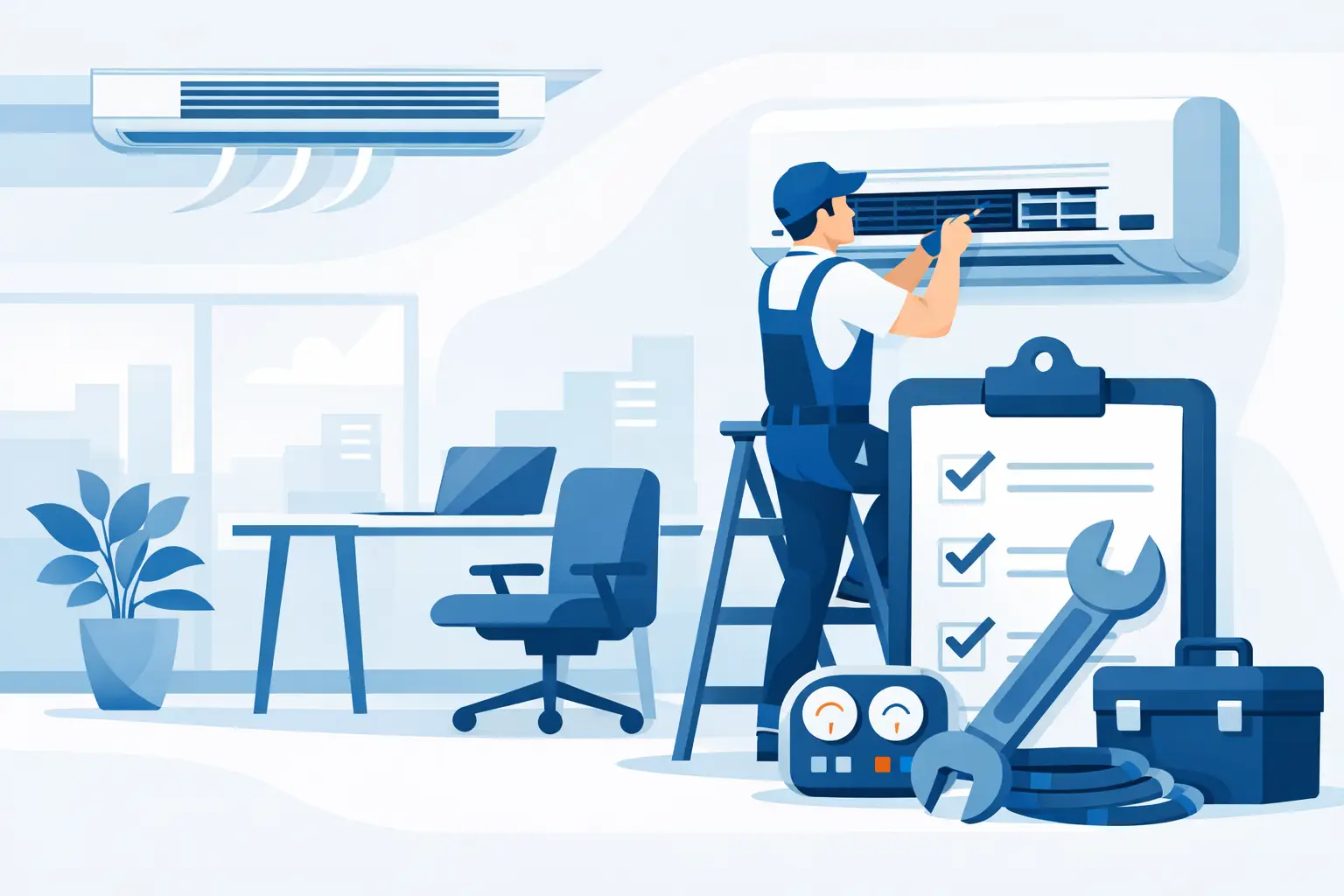
A single hot meeting room can tell you a lot about an office HVAC system. If one zone feels stuffy, another feels freezing, and complaints start showing up before noon, you usually do not have a people problem. You have a maintenance problem. A solid office air conditioning maintenance checklist helps catch small issues before they turn into comfort complaints, wasted energy, or expensive downtime.
For office managers, facility teams, and business owners, the goal is not just to keep cool air running. It is to keep the workplace comfortable, predictable, and efficient without constant reactive service calls. That starts with knowing what should be checked, how often, and what signs should never be ignored.
Why an office AC checklist matters
Office systems work harder than many people realize. They run for long hours, deal with changing occupancy, and often serve different rooms with different cooling demands. A neglected system may still run, but it usually becomes less efficient long before it fully breaks down.
That has a direct cost. Dirty filters restrict airflow. Clogged drain lines increase leak risk. Worn electrical components can create intermittent failures that are hard to diagnose. Poor airflow balancing leaves some teams too warm while others adjust thermostats all day, which only adds to the problem.
A good checklist creates consistency. It helps your internal team spot obvious issues early and makes professional servicing more effective because technicians can focus on system performance, not basic preventable faults.
Office air conditioning maintenance checklist by frequency
The most practical office air conditioning maintenance checklist is organized by how often tasks should happen. Not every item needs monthly attention, but some do.
Monthly visual and operational checks
Start with what your site team or office manager can observe safely. Check whether air filters look dusty or clogged, especially in offices with heavy foot traffic, renovation dust, or long operating hours. Even if filters are not due for replacement yet, visible buildup is a warning sign.
Look at supply vents and return grilles. If they are blocked by storage, partitions, or furniture, airflow will suffer. Uneven cooling in offices often starts with a simple airflow obstruction rather than a major mechanical defect.
Pay attention to thermostat readings and actual room conditions. If the setpoint says 72 degrees but the room feels noticeably warmer, the issue could be sensor placement, low airflow, refrigerant problems, or a control fault. The exact cause depends on the system, but the mismatch itself should be recorded.
Walk past indoor units and outdoor condensers if accessible. Water stains, dripping, unusual vibration, or new noise should never be treated as normal. Small changes in sound often show up before bigger failures.
Quarterly cleaning and performance checks
Every few months, the checklist should go beyond basic observation. Filters should be cleaned or replaced based on manufacturer guidance and actual usage. Some offices need this more frequently than others. A small low-traffic office may have a different schedule than a busy retail-office hybrid or a workspace near a loading area.
Condensate drain lines and drain pans should be inspected and cleaned. This reduces the chance of indoor leaks, microbial growth, and shutdowns caused by drainage problems. In office settings, water damage near ceilings, walls, or workstations becomes a building issue very quickly.
Fan coils, blower components, and evaporator surfaces should also be checked for dirt buildup. A light layer of contamination can reduce cooling efficiency and airflow more than many people expect. If the system is already showing weak cooling, cleaning alone may improve performance, though not in every case.
Electrical terminals, contactors, and visible wiring deserve attention as well. Loose connections can create heat, inconsistent operation, and preventable service disruptions. These are not items for untrained staff to handle, but they should be part of regular professional maintenance.
Seasonal service before peak demand
Before summer or any period of heavy cooling demand, schedule a more thorough inspection. This is the time to test refrigerant pressures, verify thermostat calibration, inspect coils more closely, measure airflow, and confirm that compressors and condenser fans are operating correctly.
Outdoor condenser coils often collect dirt, leaves, and debris over time. When heat rejection is reduced, the system has to work harder to deliver the same cooling result. That raises operating costs and increases wear.
For larger offices using VRV, VRF, or more complex ACMV setups, seasonal servicing should also include control checks, zone performance review, and trend analysis if your building management system supports it. The more complex the system, the more valuable planned maintenance becomes.
Annual review and planning
At least once a year, step back and review the full picture. Look at the number of service calls, repeated complaints, energy spikes, and any rooms that consistently underperform. This is where maintenance turns into asset planning.
If one system needs frequent repairs, short cycles regularly, or struggles to maintain temperature during normal office hours, the issue may no longer be routine maintenance. It may be aging equipment, poor sizing, duct losses, or control design that needs correction. Continuing to patch the problem can cost more than addressing the root cause.
What to include in every professional service visit
Even when you have an internal checklist, commercial air conditioning still needs trained technical support. During a proper service visit, technicians should inspect filters, coils, blowers, drains, refrigerant performance, controls, electrical components, and overall cooling output.
They should also note whether the system is operating within expected conditions rather than simply confirm that it turns on. That distinction matters. A unit can be running and still underperforming, wasting energy, or approaching failure.
For offices, service reports should be clear enough to support action. If a part shows wear, if airflow is weak in a specific zone, or if cleaning intervals need to be shortened, you should know that before comfort complaints return.
Common warning signs your checklist should flag
Some office AC issues are easy to miss because they build gradually. Rising electricity bills without a clear business reason are one sign. Another is a steady increase in complaints from staff sitting in the same area each week.
Short cycling is another red flag. If the system turns on and off too frequently, it may be dealing with thermostat problems, airflow restrictions, refrigerant imbalance, or oversized equipment. The cause varies, but the pattern should be investigated.
Persistent odor from vents can point to drainage issues, dirty components, or indoor air quality concerns. Ice on refrigerant lines or coils is also a warning sign, usually linked to airflow or refrigerant issues. If that happens, the system needs proper diagnosis, not repeated thermostat adjustments.
The trade-off between in-house checks and outsourced maintenance
Some businesses prefer to handle basic monitoring internally and call for service only when needed. That can work in smaller offices with simple systems and consistent occupancy. The downside is that subtle performance issues often go unnoticed until comfort or costs become a problem.
A scheduled maintenance plan gives you more consistency and usually reduces emergency disruption. It also creates accountability around service intervals, recordkeeping, and recurring system behavior. For offices with multiple units, meeting rooms, server areas, or extended operating hours, that structure tends to pay off.
The right balance depends on system complexity, business hours, and how critical cooling is to operations. A general admin office has different risk than a client-facing workspace, medical office, or facility with sensitive equipment.
Building a checklist that fits your office
No two offices use air conditioning in exactly the same way. An open-plan office with stable occupancy has different maintenance needs than a mixed-use building with server rooms, pantry heat loads, or conference spaces that fill up suddenly.
That is why the best checklist is not just copied from a generic template. It should reflect your equipment type, operating schedule, occupancy pattern, and past issues. If your office regularly deals with drainage problems, that item deserves closer tracking. If dust is a recurring issue, filter checks may need to happen more often than standard guidance suggests.
For businesses that want dependable support without overcomplicating the process, working with an experienced service partner helps turn routine maintenance into a practical operating plan. Companies like Easy Cool Engineering Pte Ltd support both everyday office cooling needs and more specialized commercial systems, which is useful when your site has more than a basic split unit setup.
A reliable checklist does more than prevent breakdowns. It helps your office stay comfortable, your costs stay predictable, and your service decisions stay proactive instead of rushed. When cooling is treated as part of smooth operations rather than an afterthought, everyone in the building feels the difference.