

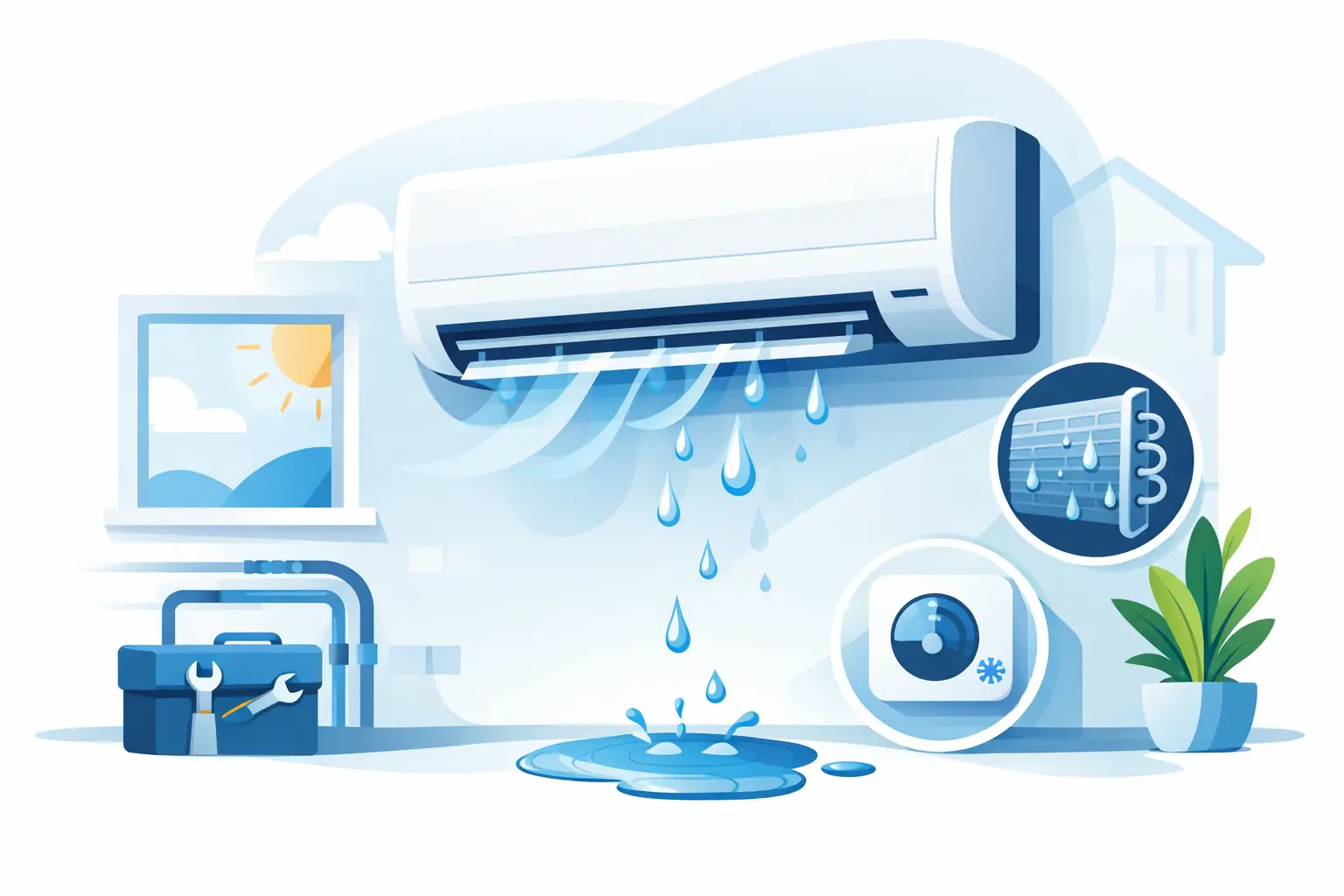
A puddle under the indoor unit usually shows up at the worst possible time – after a long day, during a humid week, or right when you need the room to cool fast. If you are asking why is aircon leaking water, the short answer is that moisture is not draining the way it should. The real cause, though, can range from a minor clog to a part failure that needs professional attention.
Air conditioners naturally produce water as they remove humidity from indoor air. Under normal conditions, that condensation collects in the drain pan and flows out through the drain line. When any part of that process is blocked, tilted, dirty, frozen, or damaged, water can back up and start dripping indoors. Some cases are simple. Others are a warning sign that the system has been struggling for a while.
Why is aircon leaking water indoors?
The most common reason is a clogged condensate drain line. Dust, dirt, algae, and slime can build up inside the line over time, especially when maintenance has been delayed. Once the line narrows or blocks completely, the water that should drain outside has nowhere to go, so it overflows from the pan or leaks around the unit.
Another frequent cause is a dirty air filter. When the filter is heavily clogged, airflow drops. That can make the evaporator coil too cold, which leads to ice forming on the coil. When that ice melts, the amount of water can exceed what the drain system can handle, and you end up with leaks inside the room.
A damaged or rusted drain pan can also be responsible, especially in older systems. Even if the drain line is clear, a cracked pan will let water escape before it reaches the outlet. In some cases, the issue is installation-related. If the indoor unit is not level or the drain pipe does not have the proper slope, water may pool in the wrong area instead of draining out smoothly.
Low refrigerant is another possibility. This is not the first thing most homeowners think of, but it matters. When refrigerant is low, pressure inside the system changes, the evaporator coil can freeze, and melting ice can create excess dripping. If the aircon is leaking water and cooling performance has dropped at the same time, refrigerant loss should be checked by a technician.
Common causes of aircon leaking water
Clogged drain line
This is the most likely issue in both homes and light commercial spaces. The drain line handles constant moisture, so buildup is not unusual. If the unit has not been serviced regularly, debris and microbial growth can create a blockage faster than many people expect.
You may notice dripping from the front panel, water stains on the wall, or a musty smell near the unit. In some systems, the leak starts small and only happens during longer cooling cycles. That can make it easy to ignore until the overflow becomes obvious.
Dirty filter and frozen coil
A neglected filter affects more than air quality. Restricted airflow changes the coil temperature and can cause frosting. Then, once the system cycles off or the ice begins to melt, water can drip faster than the pan and line can remove it.
This is one reason routine servicing matters. A leaking air conditioner is not always about drainage alone. Sometimes the leak is only the visible symptom, while poor airflow is the real problem behind it.
Cracked or overflowing drain pan
Drain pans wear out over time. Metal pans can rust, and plastic pans can crack. In older systems, this is a fairly common failure point. In newer systems, the pan may still overflow if the drain outlet is partially blocked or if the unit is running under unusually heavy humidity load.
There is a trade-off here. Replacing a pan may sound minor, but if access is difficult or the surrounding components are also worn, a technician may recommend a broader repair approach rather than fixing one isolated part.
Improper installation or poor leveling
If the indoor unit was installed at the wrong angle, condensation may not flow toward the drain as intended. The same issue can happen if the drain piping lacks the right downward slope. Water follows gravity, and a small installation error is sometimes enough to cause repeated leaking.
This tends to be overlooked because the unit may have cooled the space reasonably well for months before the leak became noticeable. But cooling and drainage are not the same thing. A system can still produce cold air while handling condensation badly.
Low refrigerant or coil issues
Low refrigerant usually comes with other symptoms, such as weaker cooling, longer run times, or ice on the coil or refrigerant lines. Because refrigerant systems are sealed, low charge often points to a leak somewhere in the circuit.
This is not a DIY fix. Adding refrigerant without finding the source of the leak only treats the symptom. It also risks further performance issues and higher operating costs.
What you can safely check first
If the leak is minor, there are a few basic checks you can do before booking service. Start with the air filter. If it is visibly dirty, clean or replace it based on the unit type and manufacturer guidance. Then check whether the indoor unit is still cooling normally or if airflow feels weak.
Look for obvious signs of ice around the coil area or refrigerant lines. If you see ice, switch the system off and let it thaw. Running it continuously in that condition can make the leak worse and may strain other components.
You can also inspect the area around the drain outlet if it is visible and accessible. If water is not coming out during operation, a blockage is possible. Still, forcing tools into the line without the right method can damage the piping or push debris deeper inside.
What you should not do is open sealed system components, attempt refrigerant work, or disassemble parts you are not trained to handle. Water leakage often looks simple from the outside, but the root cause is not always obvious.
When to call a professional
If water is dripping repeatedly, the ceiling or wall is getting wet, or the unit is no longer cooling properly, professional service is the safer choice. The same applies if the leak returns after you clean the filter or if you suspect the drain line is blocked inside the unit.
Commercial systems and higher-capacity setups need even more caution. A leak in an office, retail space, or technical environment can disrupt operations, damage finishes, and affect occupant comfort quickly. In more specialized cooling applications, even a small drainage issue can signal broader maintenance needs.
A trained technician can check the drain line, pan, coil condition, refrigerant level, pump operation if fitted, and installation angle in one visit. That saves time and reduces the risk of fixing the wrong issue first.
How to prevent future leaks
The most reliable prevention is regular maintenance. Cleaning filters helps, but it is only part of the picture. A proper service visit should also include checking drainage, coil cleanliness, system performance, and any early signs of wear.
Homes in humid climates usually need more consistent attention because the system is removing more moisture from the air. Heavy daily use, dusty conditions, and long operating hours can all speed up blockage and buildup. For landlords and property managers, preventive servicing is often less costly than dealing with interior water damage later.
For businesses, maintenance matters even more because leaks can affect customers, staff comfort, stock, or equipment. A dependable service partner can help reduce repeat issues by addressing not just the visible leak, but also the conditions that caused it.
Easy Cool Engineering Pte Ltd supports both residential and commercial customers with practical, reliable air conditioning care, from routine servicing to repairs that require deeper technical checks.
If your aircon is leaking water, treat it as an early warning rather than a minor inconvenience. A small drip today can turn into damaged walls, mold growth, or a larger repair if it keeps getting ignored.