

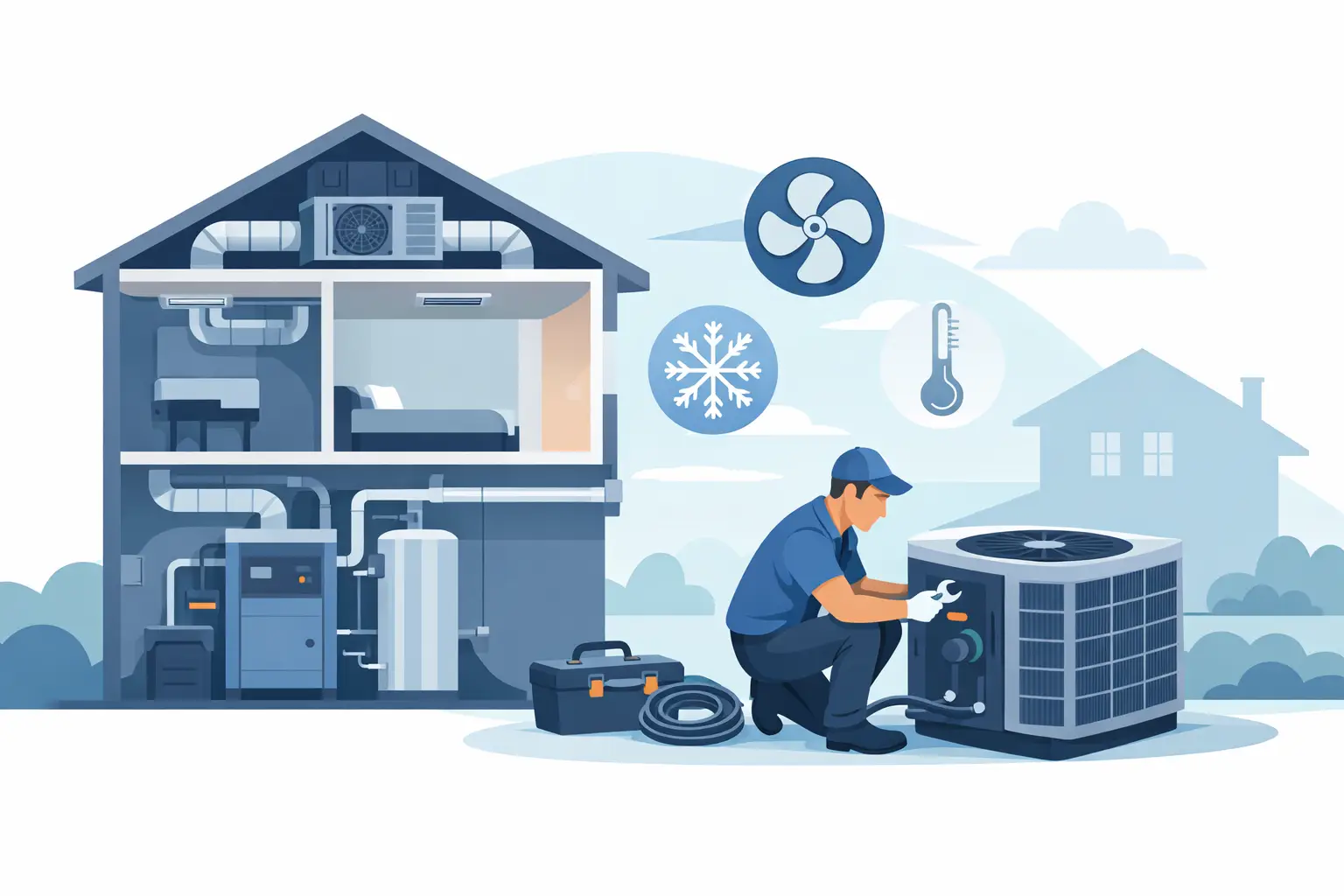
If your building has hot spots, noisy rooms, rising energy bills, or constant complaints about uneven temperatures, the issue is often bigger than the thermostat. Central cooling system installation is not just about adding new equipment. It is about designing a system that matches the layout, usage, and cooling demand of the property so it performs reliably day after day.
For homeowners, that can mean better comfort and lower operating costs. For offices, retail spaces, and facilities teams, it can mean fewer disruptions and more predictable performance. The best results come from getting the fundamentals right before any unit is mounted or any duct is connected.
What central cooling system installation actually includes
A proper installation starts with assessment, not hardware. The cooling load has to be calculated based on floor area, ceiling height, insulation, window exposure, occupancy, equipment heat, and how the space is actually used. A house with afternoon sun exposure has different demands than a restaurant kitchen or a multi-room office with server equipment.
From there, the installer looks at system type, duct layout, airflow balance, drainage, electrical capacity, controls, and service access. In many projects, the visible indoor and outdoor units are only one part of the job. The hidden parts, including refrigerant piping, ductwork, insulation, condensate drainage, and control wiring, often determine whether the system will run smoothly or become a source of recurring problems.
This is why central cooling system installation should never be treated as a simple equipment swap. Even when replacing an older system, existing ducts, return air paths, and electrical infrastructure may not be suitable for the new setup.
Why system sizing matters more than many people expect
Bigger is not automatically better. An oversized cooling system can cool a space too quickly without running long enough to control humidity well. That can leave rooms feeling cold but still uncomfortable. It also increases wear from frequent start-stop cycles.
An undersized system has the opposite problem. It runs longer, struggles during peak heat, and may never fully stabilize the indoor temperature. In commercial settings, that can affect staff comfort, customer experience, and even equipment performance.
Correct sizing sits in the middle. It depends on real operating conditions, not guesswork. That is especially important in mixed-use properties or buildings where some rooms are occupied all day while others are used only occasionally.
Residential and commercial needs are not the same
In homes, priorities usually center on comfort, quiet operation, energy efficiency, and practical installation with minimal disruption. Homeowners often want a system that cools evenly across bedrooms, living areas, and shared spaces without a major increase in monthly bills.
Commercial projects usually involve more variables. Business hours, occupancy shifts, heat-generating equipment, ventilation requirements, and maintenance access all affect installation choices. A retail store may need stable customer-facing comfort throughout the day, while an office may need zoning to support meeting rooms, open work areas, and IT rooms differently.
Industrial and mission-critical environments go further. Precision cooling requirements, redundancy planning, and tighter performance tolerances can all become part of the installation scope. In these cases, technical experience matters because cooling is tied directly to uptime, process stability, or compliance requirements.
The main decisions before installation begins
The first decision is whether the property needs a fully ducted central system, a variable refrigerant setup, or another configuration built around the building’s layout and cooling profile. There is no single best answer for every site.
A ducted system can be a strong choice when whole-property cooling and concealed air distribution are priorities. It can provide a cleaner look and consistent cooling across multiple rooms. The trade-off is that duct design, ceiling space, and installation access become more important.
Variable systems offer flexibility and can work well in properties with different usage patterns across zones. They are often attractive where control and scalability matter. The trade-off is that design quality and commissioning are critical. A flexible system still performs poorly if it is planned poorly.
Controls also deserve attention early. Programmable thermostats, zoning, and building management integration can make a major difference in operating efficiency. The right controls help align cooling output with actual occupancy instead of forcing the whole property into one fixed pattern.
What affects cost in central cooling system installation
Property owners often ask for a single number, but installation cost depends on several moving parts. System capacity is one factor, but not the only one. Layout complexity, duct routing, ceiling access, electrical upgrades, drainage work, control systems, and installation timing all influence the final price.
Replacement projects can be surprisingly complex if existing infrastructure is outdated or poorly configured. A lower quote may not include needed duct corrections, airflow balancing, or proper insulation. That can make the upfront number look attractive while creating higher operating costs later.
New installations usually allow for better planning, but they still require coordination with other trades. If cooling work is delayed until after ceilings, lighting, or partitions are completed, installation may take longer and cost more.
The better approach is to look beyond purchase price. A well-installed system often saves money through lower energy use, fewer service issues, and longer equipment life.
What a reliable installation process should look like
A dependable provider starts by understanding the property rather than pushing a standard package. Site measurements, usage patterns, access conditions, and customer priorities should shape the proposal.
Once the design is confirmed, installation should be organized to reduce disruption. That includes protecting the work area, coordinating equipment placement, managing piping and duct runs cleanly, and keeping communication clear throughout the project.
After physical installation, commissioning is where quality becomes visible. Airflow should be checked, controls tested, drainage verified, refrigerant performance confirmed, and temperature delivery reviewed across key areas. If a system is installed but not commissioned properly, small issues can remain hidden until they become comfort complaints or maintenance calls.
Clear handover also matters. Customers should know how to operate the controls, what maintenance is required, and what warning signs to watch for. A good installation does not end when the system turns on for the first time.
Common mistakes that cause problems later
One common issue is reusing poor ductwork to save time or budget. Leaky, undersized, or badly routed ducts can undermine a high-quality unit. Another is weak drainage planning, which can lead to water leaks, odors, and ceiling damage.
Poor equipment placement is another avoidable mistake. Outdoor units need adequate clearance and airflow. Indoor components need service access. If installation prioritizes convenience over performance, maintenance becomes harder and operating issues become more likely.
Skipping load calculations is also risky. Rules of thumb may seem fast, but they do not account for building-specific factors. That shortcut often shows up later as uneven cooling, high energy bills, or systems that struggle during peak conditions.
Why maintenance should be part of the installation conversation
Even the best installation needs ongoing care. Filters, coils, drains, refrigerant performance, and controls all need periodic attention to keep the system efficient and reliable. If maintenance is treated as an afterthought, performance usually declines faster than expected.
This matters for homeowners who want fewer breakdowns and for commercial clients who need continuity. Planned servicing helps catch airflow issues, drainage problems, and early component wear before they affect comfort or operations.
That is why experienced providers do more than install equipment. They look at the full life cycle of the system. A company with broad residential, commercial, and technical cooling experience, such as Easy Cool Engineering Pte Ltd, is typically better positioned to align installation quality with long-term service support.
Choosing the right installation partner
The right contractor should be able to explain recommendations clearly, not hide behind technical language. You should understand why a certain system is being proposed, what is included in the scope, how long the work will take, and what support is available afterward.
Look for practical signs of reliability. Does the provider assess your property carefully? Do they talk about airflow, controls, drainage, and access, not just unit brands? Do they have experience across residential and commercial applications if your needs are more complex? These details usually tell you more than a sales promise.
A strong installation partner helps you avoid short-term thinking. They focus on fit, performance, and serviceability so the system works well not only on day one, but through years of real use.
When central cooling is planned properly, comfort becomes one less thing to worry about. That is the real value of a good installation – a system that fits the space, supports the people using it, and keeps doing its job when you need it most.