

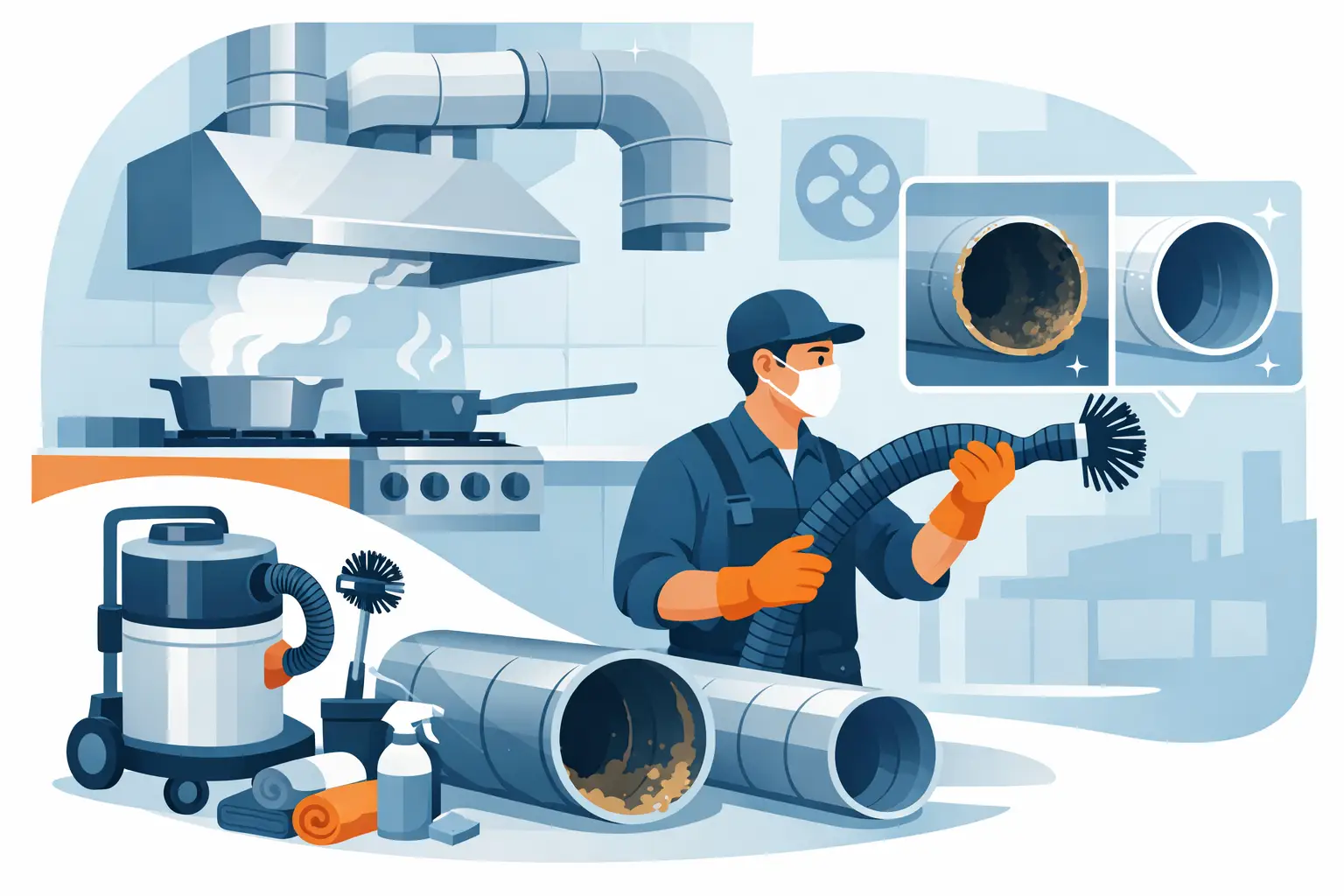
A busy kitchen can look fine on the surface while the ductwork above it tells a very different story. Grease builds up slowly, airflow drops, odors linger, and fire risk increases long before the problem becomes obvious. That is why a kitchen exhaust duct cleaning service is not just a maintenance item for restaurants and food businesses. It is part of keeping the kitchen safer, cleaner, and easier to operate day after day.
Why kitchen exhaust duct cleaning matters
Kitchen exhaust systems work hard every time cooking starts. Heat, smoke, grease particles, and vapor are pulled through the hood and into the duct system. Over time, that grease does not simply disappear. It sticks to filters, fan components, and the inside of the duct.
Once buildup starts, performance usually declines in small ways first. Staff may notice the kitchen feels hotter than usual. Smoke may clear more slowly. Greasy odors may hang around longer after service hours. These are practical warning signs, not minor inconveniences.
The larger concern is safety. Grease is combustible, and a dirty duct system can contribute to fire spread if a flare-up occurs in the cooking area. For commercial operators, that means higher operational risk, possible compliance issues, and greater pressure on kitchen staff during already busy service periods.
What a kitchen exhaust duct cleaning service typically includes
A proper kitchen exhaust duct cleaning service should go beyond wiping visible surfaces. The goal is to address the full path that grease and contaminants travel through the system.
Hood and filter cleaning
The hood is the most visible part of the system, and it often shows grease buildup first. Filters also trap a large amount of grease before air moves deeper into the duct. Cleaning both areas helps restore better airflow and reduces the amount of residue left behind during daily operation.
Duct interior cleaning
This is where hidden buildup becomes a real issue. Grease can coat the interior walls of the ductwork, especially in bends, joints, and longer runs. A thorough cleaning removes these deposits so the system can exhaust air more effectively.
Exhaust fan cleaning
The fan pulls contaminated air out of the kitchen, so if it is coated with grease, performance drops. A dirty fan may have to work harder, which can affect ventilation quality and put more strain on the equipment.
Access panel checks and service condition review
In many systems, access points are needed so technicians can reach internal duct sections safely and properly. During service, it is also useful to assess whether the system is still in serviceable condition or if repairs, adjustments, or replacement of some components should be considered.
Not every kitchen setup is the same. A compact food stall, a cafe, and a high-volume commercial kitchen will have different layouts, grease loads, and cleaning needs. That is why the right service approach depends on actual usage, not a one-size-fits-all schedule.
Signs you may need service sooner than expected
Some businesses wait until there is a visible problem, but kitchen exhaust issues often build gradually. If the kitchen feels stuffy, smells remain after cooking, or grease seems to reappear quickly on surrounding surfaces, the system may already be underperforming.
Noise can also be a clue. If the exhaust fan sounds strained or ventilation seems weaker than before, restricted airflow may be part of the problem. For commercial kitchens, staff feedback matters. If cooks and kitchen crews keep mentioning heat, smoke, or poor air movement, it is worth investigating the duct system instead of assuming it is just a busy day.
Another factor is cooking type. Kitchens that do heavy frying, grilling, or high-volume wok cooking usually generate grease faster than lighter-duty operations. In those cases, cleaning intervals may need to be shorter.
How often should duct cleaning be done?
There is no single answer that fits every property. The right frequency depends on kitchen volume, cooking methods, operating hours, and the type of food being prepared.
A lightly used kitchen may manage with less frequent service, while a busy commercial operation may need cleaning on a much tighter schedule. What matters most is not stretching the interval until visible grease becomes severe. Preventive service is usually more manageable and less disruptive than waiting for a system to become heavily contaminated.
For commercial operators, regular inspections can help set a practical cleaning schedule. That approach tends to work better than guessing, especially for businesses with seasonal demand or changing menu formats.
The difference between surface cleaning and proper duct cleaning
This is where many property owners and operators get caught out. A kitchen can look clean while the exhaust system remains dirty inside. Wiping the hood exterior and washing removable filters are useful routine tasks, but they are not the same as internal duct cleaning.
Proper service targets the parts of the system that daily staff cleaning cannot safely or fully reach. That is especially important in commercial environments, where grease accumulates inside enclosed duct runs and around fan assemblies.
If the service only focuses on visible surfaces, the main risk may still remain hidden overhead. For that reason, it helps to work with a provider that understands both cleaning requirements and the mechanical side of kitchen ventilation systems.
Why professional service makes a difference
Kitchen exhaust systems are not just cleaning jobs. They are working ventilation systems with operational, safety, and maintenance implications. A capable service team should understand how grease buildup affects airflow, how system design influences access, and where problems are most likely to occur.
That technical understanding matters when the kitchen is part of a larger facility. In commercial properties, ventilation performance can affect comfort, cleanliness, and day-to-day operations beyond the cooking area itself. A dependable service partner looks at the practical outcome, not just whether the hood looks cleaner when the job is done.
For businesses managing multiple maintenance needs, it also helps to work with a company that understands broader mechanical and ventilation systems. Easy Cool Engineering Pte Ltd supports both residential and commercial clients with service capabilities that extend beyond routine cleaning, which is useful when kitchen duct work intersects with wider cooling and building support needs.
What to expect when booking a kitchen exhaust duct cleaning service
The process should be clear from the start. A good provider will first assess the kitchen setup, usage level, and accessibility of the exhaust system. From there, the scope of work should be explained in straightforward terms.
For commercial clients, scheduling matters. Service may need to be arranged around business hours to minimize disruption. The cleaning itself should be carried out methodically, with attention to the hood, filters, internal duct sections, and fan components as required.
It is also reasonable to ask what is included before work begins. Some systems need a more extensive cleaning effort than others, and clarity on scope helps avoid mismatched expectations. If parts of the duct are difficult to access or if there are signs of wear, that should be raised clearly rather than ignored.
Choosing the right service partner
Price matters, but it should not be the only factor. With kitchen exhaust systems, poor-quality work can leave behind buildup in the areas that matter most. That may save money in the short term but create bigger maintenance or safety problems later.
A better approach is to look for a provider that is responsive, technically capable, and comfortable working across different property types. Homeowners with specialized kitchens, landlords managing rental properties, and commercial food operators all benefit from clear communication and a service team that can explain what the system needs without overcomplicating it.
It also helps when the company has wider experience in ventilation, mechanical systems, and maintenance support. That broader capability often translates into more practical problem-solving when a job is not straightforward.
Clean ducts support a better-running kitchen
A kitchen exhaust system does not need to fail completely to cause problems. Reduced airflow, trapped heat, and hidden grease buildup can quietly affect safety, comfort, and daily efficiency long before an emergency happens. Regular duct cleaning helps prevent those issues from building up in the background.
Whether you manage a food business, oversee a facility, or need support for a property with a working kitchen setup, timely service is a practical way to protect the system and the people using it. When the exhaust system is cleaned properly, the whole kitchen tends to work better and feel easier to manage.