

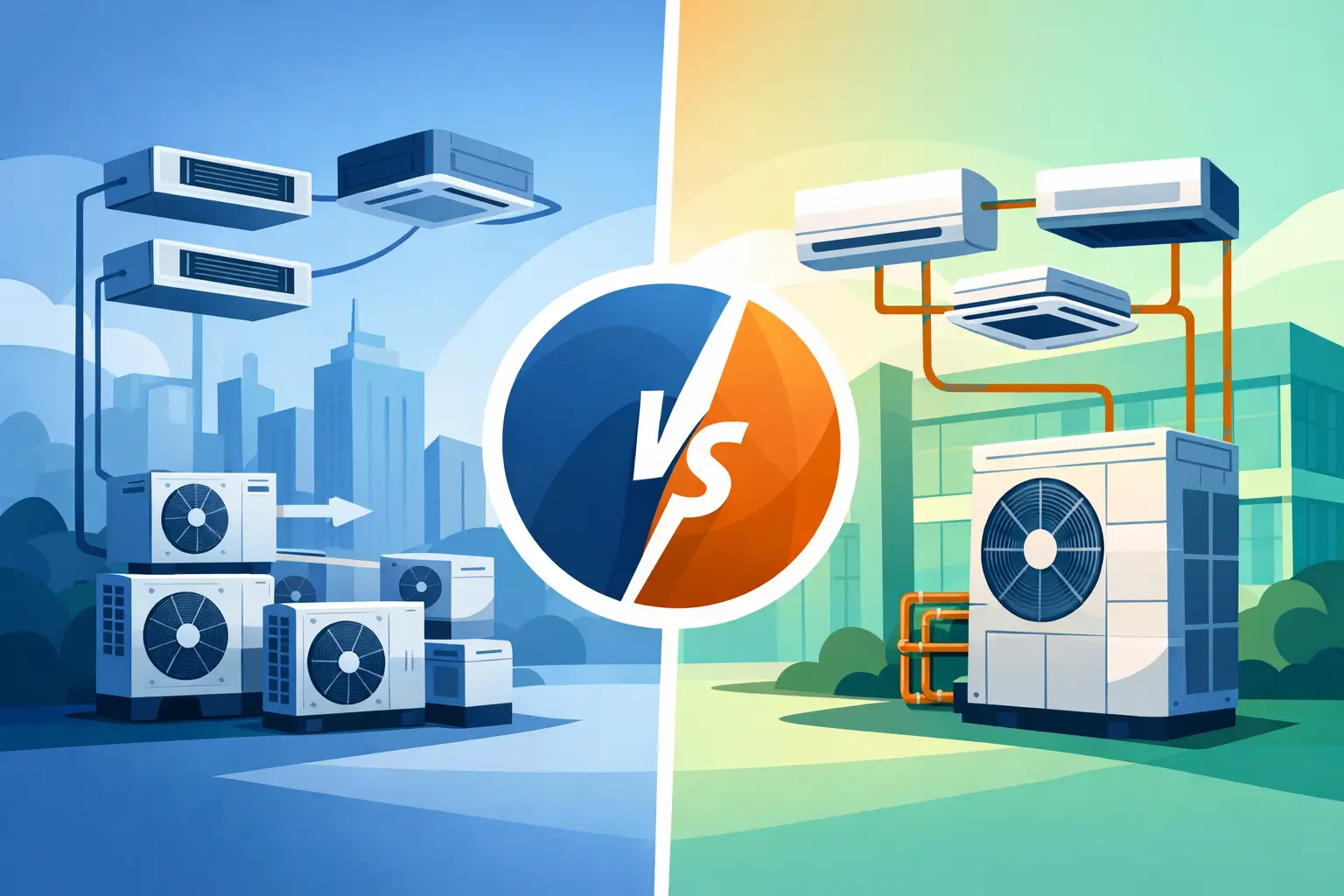
If you are comparing vrv vs vrf systems for a home, office, retail space, or larger facility, the first thing to know is that you are usually looking at the same type of HVAC technology. That surprises a lot of property owners, especially when two contractors use different terms and make them sound like separate categories. In most practical discussions, the real question is not which name is better. It is whether the system is designed, installed, and maintained correctly for your space.
VRV vs VRF systems: the simple answer
VRF stands for Variable Refrigerant Flow. VRV stands for Variable Refrigerant Volume. Both describe multi-split air conditioning systems that can control the amount of refrigerant sent to different indoor units based on demand.
The key distinction is mostly about branding. VRV is a trademarked term associated with Daikin, while VRF is the broader industry term commonly used across manufacturers. So when people ask about vrv vs vrf systems, they are often comparing a brand-specific label with a generic technical term, not two fundamentally different technologies.
That said, the equipment brand still matters. Controls, service access, spare parts, installation standards, and long-term support can vary from one manufacturer to another. So while the underlying concept is very similar, the ownership experience may not be identical.
How these systems work in real buildings
A VRF or VRV system connects one or more outdoor condensing units to multiple indoor fan coil units. Instead of running every indoor unit at the same fixed output, the system adjusts refrigerant flow according to the cooling or heating load in each zone.
That gives you better zoning control than a traditional split system. A conference room with full occupancy can call for more cooling while a nearby director’s office runs at a lower load. In a residential setting, bedrooms can be conditioned differently from the living area instead of forcing one temperature across the whole property.
This is one reason these systems are widely used in offices, larger homes, hotels, retail units, and mixed-use spaces. They are particularly useful where occupancy changes throughout the day and where comfort expectations differ by room or area.
Why the terminology causes confusion
For many buyers, the confusion starts during quotation stage. One vendor says VRF. Another says VRV. A third says multi-split inverter system. Without context, it can sound like three different solutions.
In reality, there is a lot of overlap. The better question is not what the label says on the proposal. The better question is what kind of system architecture is being offered, how many zones it supports, whether it is heat pump or heat recovery, and how well it matches the building load.
This matters because a technically suitable system will perform better than one selected mainly on terminology or brand familiarity. An oversized system can short cycle and waste energy. An undersized one may struggle during peak demand. Neither problem is solved by calling it VRV or VRF.
Where VRF and VRV systems make the most sense
These systems tend to make sense in projects where zoning, efficiency, and flexible indoor unit placement are important. Commercial offices are a common fit because different rooms often have different occupancy patterns. Retail environments also benefit, especially when storefront areas, storage rooms, and staff spaces have different cooling needs.
They can also be a strong option for landed homes, larger apartments, and multi-room residences where comfort control matters from room to room. For property owners who want a cleaner exterior with fewer outdoor units, a centralized multi-zone approach can be appealing.
For facilities teams, VRF-type systems can be attractive because they offer scalable control across multiple indoor units. But the trade-off is that they require experienced design and servicing. A basic approach that works for a single split unit is not enough for a larger variable refrigerant system.
The main benefits
The biggest advantage is zoning. Each indoor unit can serve a specific area, which improves comfort and avoids overcooling spaces that do not need it. That can translate to better energy performance, especially in buildings with variable occupancy.
Another benefit is design flexibility. These systems support different indoor unit types, including wall-mounted, cassette, concealed ducted, and floor-standing options. That helps designers and building owners match cooling delivery to the layout and use of the space.
Noise control can also be better than with some conventional setups, particularly indoors. And because the system adjusts output based on demand, it often runs more efficiently than older fixed-speed equipment.
Still, efficiency on paper is only part of the story. A well-installed conventional system may outperform a poorly designed VRF system in day-to-day use. Good engineering matters more than brochure claims.
The trade-offs buyers should understand
The first trade-off is upfront cost. VRF and VRV systems are generally more expensive than simpler split systems, both in equipment and installation. For a small property with straightforward cooling needs, the extra investment may not always make financial sense.
The second is service complexity. These systems rely on sophisticated controls, refrigerant management, and commissioning standards. When issues occur, diagnosis can require manufacturer-specific knowledge and specialized tools. That is manageable with the right service partner, but it is not as simple as servicing a basic single-split setup.
The third is planning. Piping lengths, branch controllers, indoor unit diversity, electrical requirements, and control integration all need to be coordinated properly. If this is rushed, you may end up with comfort complaints, poor efficiency, or higher maintenance costs later.
Installation quality matters more than the name
This is where many projects succeed or fail. Whether you call it VRV or VRF, installation quality has a direct impact on system life, efficiency, and reliability. Refrigerant piping must be sized and routed correctly. Indoor units must be positioned for actual airflow needs, not just convenience. Drainage, controls, insulation, testing, and commissioning all need careful attention.
For commercial clients, this also affects operations. A cooling issue in an office, shop, kitchen-adjacent area, or technical environment can disrupt staff, customers, and equipment. For homeowners, a bad installation often shows up as uneven temperatures, water leaks, noise, or higher utility bills.
That is why experience matters. A contractor should be able to assess room usage, layout constraints, expected load patterns, and servicing access before recommending a system. The right answer is not always the largest system or the most premium label.
Servicing and long-term ownership
Once installed, VRF and VRV systems need regular maintenance to stay efficient and reliable. Filters, coils, drainage, refrigerant conditions, control communications, and overall system performance should be checked on schedule. Skipping maintenance can lead to reduced cooling capacity, energy waste, and preventable breakdowns.
For landlords and facilities managers, planned servicing is especially important because small issues can affect multiple zones if left unresolved. In larger systems, one fault may not stay isolated for long.
It is also worth asking about parts support and technical backup before installation. Brand choice becomes more relevant here. Two systems may operate on the same core principle, but after-sales support can feel very different depending on the manufacturer and the service company behind it.
A provider with both residential and commercial cooling experience is often better positioned to match the system to the environment. In more demanding applications, such as high-load business spaces or precision cooling settings, that technical depth becomes even more valuable.
So which should you choose?
If you are deciding between vrv vs vrf systems, the practical answer is this: choose based on brand support, system design, service capability, and suitability for your building, not on the label alone.
If a Daikin solution is the right fit and you have confidence in the installer and support structure, a VRV-branded system can be an excellent option. If another manufacturer offers a VRF system that better suits your layout, budget, controls requirements, or maintenance plan, that may be the better choice.
For many customers, the decision comes down to three things. First, does the system match the actual cooling profile of the property? Second, is the installation team technically capable? Third, will you have dependable servicing after handover?
Those are the questions that protect comfort, operating cost, and equipment life over time. Easy Cool Engineering Pte Ltd works with both everyday air conditioning needs and more specialized cooling environments, so the focus stays on selecting a system that performs reliably in the real world, not just on paper.
The best cooling system is usually the one that fits your space, your usage, and your support plan from day one.