

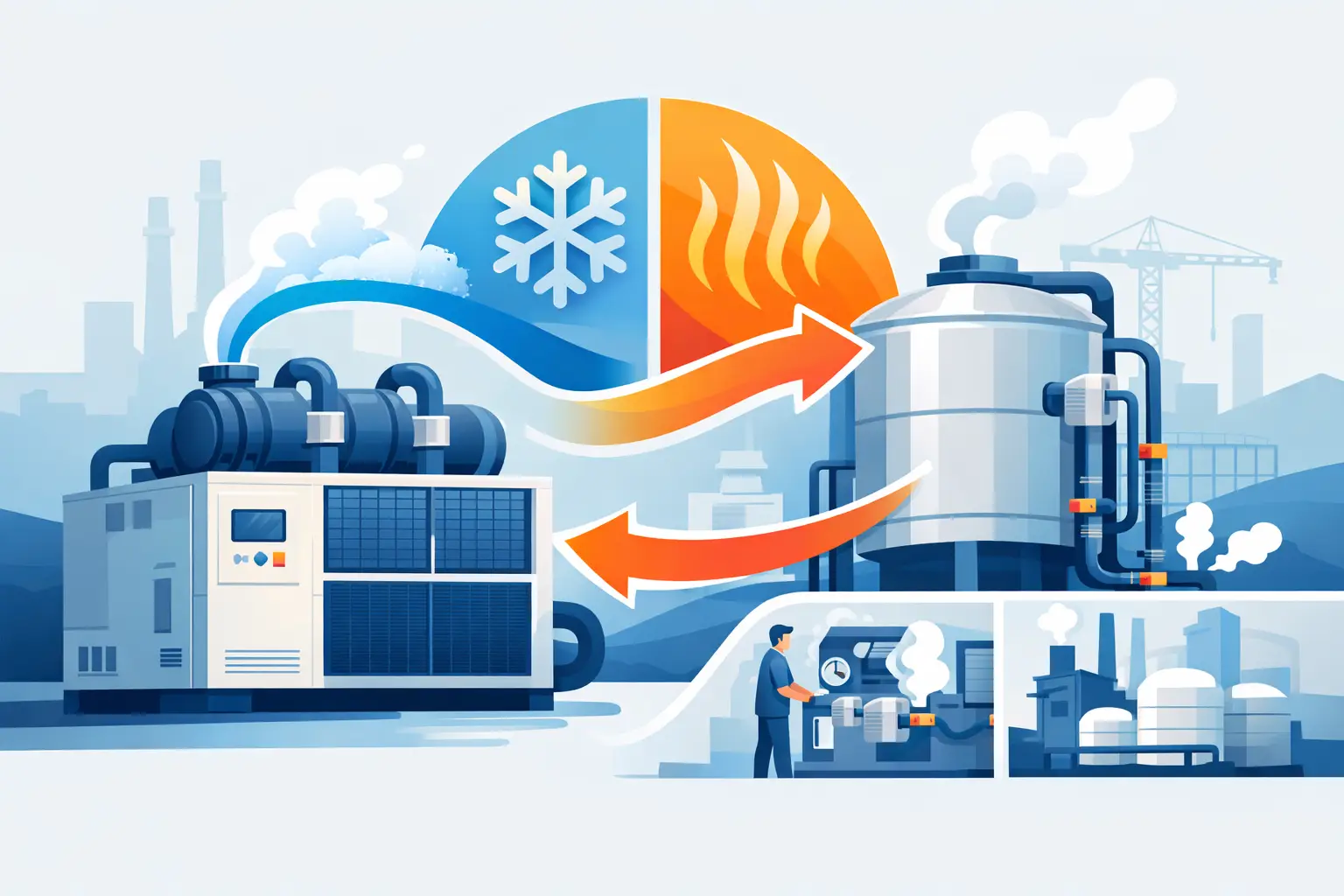
A factory chiller rarely fails all at once without warning. More often, the warning signs show up first – unstable temperatures, longer pull-down times, repeated alarms, rising energy use, or production teams noticing that cooling no longer feels consistent across the line. A good factory chiller recovery example helps make those warning signs easier to understand, especially for plant managers, facilities teams, and operations leaders who need practical decisions, not guesswork.
In industrial settings, chiller recovery is not just about getting a machine back online. It is about restoring dependable cooling without creating new risks for product quality, process stability, or operating cost. That matters even more in facilities where temperature control affects yield, compliance, or equipment protection.
What a factory chiller recovery example actually shows
When people ask for a recovery example, they are usually trying to answer one of three questions. First, how bad is the issue? Second, can it be repaired without a full replacement? Third, how quickly can stable performance return?
A useful example should cover more than the repair itself. It should show the symptom, the likely cause, the diagnostic process, the corrective work, and the post-repair results. Without that full picture, recovery sounds simpler than it really is.
In many factories, the root problem is not a dramatic component failure. It may be gradual fouling in the heat exchanger, refrigerant imbalance, a control fault, pump inefficiency, sensor drift, or poor maintenance history. These issues can overlap, which is why accurate diagnosis matters more than rushing to replace parts.
Factory chiller recovery example: from unstable cooling to normal operation
Consider a mid-sized manufacturing facility running a process chiller that supports production equipment with tight temperature tolerances. The maintenance team notices that supply water temperature is drifting above target during peak hours. Operators also report that cycle times are getting longer in the afternoon, and energy bills have increased over the previous two months.
At first glance, the chiller is still running, so the issue does not look urgent. That is a common trap. Partial performance loss can be more expensive than a complete shutdown because the system keeps consuming power while slowly affecting production quality.
A service team starts with a structured inspection. Operating pressures are reviewed, entering and leaving water temperatures are recorded, compressor loading is checked, and alarm history is pulled from the control panel. The condenser side shows poor heat rejection, and the evaporator approach temperature is wider than expected. Water flow readings also suggest reduced circulation efficiency.
Further inspection finds three contributing issues. The condenser tubes have scale buildup, one sensor is reading inaccurately, and the circulation pump is underperforming because of wear. None of these problems alone fully explains the performance drop. Together, they do.
The recovery plan is phased to reduce disruption. First, the heat exchanger is cleaned to restore heat transfer efficiency. Next, the faulty sensor is replaced and the controls are recalibrated so the chiller can respond correctly to actual load conditions. Then the pump issue is addressed, either through repair or replacement depending on the condition of the motor and impeller assembly.
Once the system is restarted, technicians verify suction and discharge conditions, confirm water flow, and trend temperatures under live load. The supply temperature returns to its design range, compressor cycling becomes more stable, and the process line reports normal cooling performance by the next operating shift.
That is a realistic factory chiller recovery example because it reflects how real failures happen. The fix is not always one dramatic part replacement. Often, recovery comes from identifying several smaller issues that together create a bigger operational problem.
Why factory chiller recovery is rarely just a repair job
Industrial cooling systems sit inside a larger process. That means the impact of failure depends on what the chiller supports. In one facility, reduced cooling may cause only comfort issues in adjacent spaces. In another, it may affect machine tolerance, finished product consistency, or cleanroom conditions.
This is why two factories with the same chiller fault may need different recovery approaches. If the load is mission-critical, the priority may be temporary stabilization first and full corrective work second. If there is production flexibility, a more complete shutdown and overhaul may make better financial sense.
There is also the question of age. Recovering an older chiller can still be worthwhile if the frame, compressor, and controls remain serviceable. But if failures are becoming frequent and parts are hard to source, recovery may only buy limited time. A responsible service recommendation should say that clearly.
The diagnostic steps that make recovery faster
The fastest repair is not always the fastest recovery. If technicians replace parts before confirming the real fault chain, the system may restart briefly and fail again under load. That is where downtime becomes expensive.
A disciplined recovery process usually begins with operating data. Pressure readings, temperature differentials, current draw, flow conditions, and control history provide a more reliable picture than visual inspection alone. From there, technicians can isolate whether the issue is mechanical, electrical, hydraulic, refrigerant-related, or controls-related.
Water quality is another major factor that gets overlooked. In many factory environments, poor water treatment contributes to fouling, corrosion, and blocked heat transfer surfaces. If that underlying issue is not corrected, recovery work may only offer short-term improvement.
For that reason, post-repair verification matters as much as the repair itself. A chiller should not be considered recovered simply because it turns on. It should be tested for stable performance across realistic load conditions, with readings documented so the facility has a usable baseline going forward.
Common causes behind recovery cases
Most factory chiller recovery calls fall into a few broad patterns. Heat exchanger fouling is one of the most common because it quietly reduces efficiency until process performance starts slipping. Refrigerant leaks or charge imbalance can also cause unstable cooling, especially if the issue has developed slowly and alarms have been ignored or misread.
Control problems are another frequent cause. A bad sensor, loose connection, calibration error, or controller logic issue can make a healthy mechanical system perform badly. Pump and flow issues also matter more than many teams expect. If water is not moving correctly, even a well-maintained chiller cannot transfer heat the way it should.
Then there is deferred maintenance. This is often the real background issue. When service intervals stretch too far, small performance losses stack up until the system no longer has enough margin to handle peak load.
What plant managers should take from a factory chiller recovery example
The main lesson is simple: do not judge chiller health by whether it is still running. A factory system can stay online while already creating energy waste, product risk, and avoidable wear.
The second lesson is that symptoms need context. High energy use alone does not confirm a compressor issue. Temperature drift alone does not always mean low refrigerant. Effective recovery depends on reading the whole system, not chasing one visible symptom.
The third lesson is to plan for recovery before the emergency happens. That means keeping maintenance records, knowing design setpoints, tracking trends, and having a qualified service partner who can support both urgent troubleshooting and long-term improvement. For facilities with specialized cooling demands, that technical depth matters. Easy Cool Engineering supports both general commercial cooling and high-precision chiller environments, which is often what manufacturers need when standard service approaches fall short.
When recovery is worth it and when replacement should be discussed
Recovery is usually worth pursuing when the fault is isolated, the core equipment is structurally sound, and the restored system can still meet the facility’s load profile with reasonable efficiency. In those cases, targeted repair is often the most cost-effective choice.
Replacement should be part of the conversation when major components are near end of life, repeated failures are causing production risk, or the chiller is oversized, undersized, or no longer suitable for the process. It is not always an either-or decision, either. Some factories recover the existing unit to protect short-term operations while planning a controlled upgrade later.
That balanced view is important because overselling replacement wastes capital, while overselling repair can prolong unreliable performance. The right answer depends on the equipment condition, downtime tolerance, process criticality, and budget horizon.
A practical way to think about any factory chiller issue is this: recovery is successful when cooling becomes stable, predictable, and supportable again. Not just running, but running with confidence. When a service team can identify the real cause, correct it properly, and verify the result under load, the factory gets more than a repaired machine. It gets its operating margin back.