

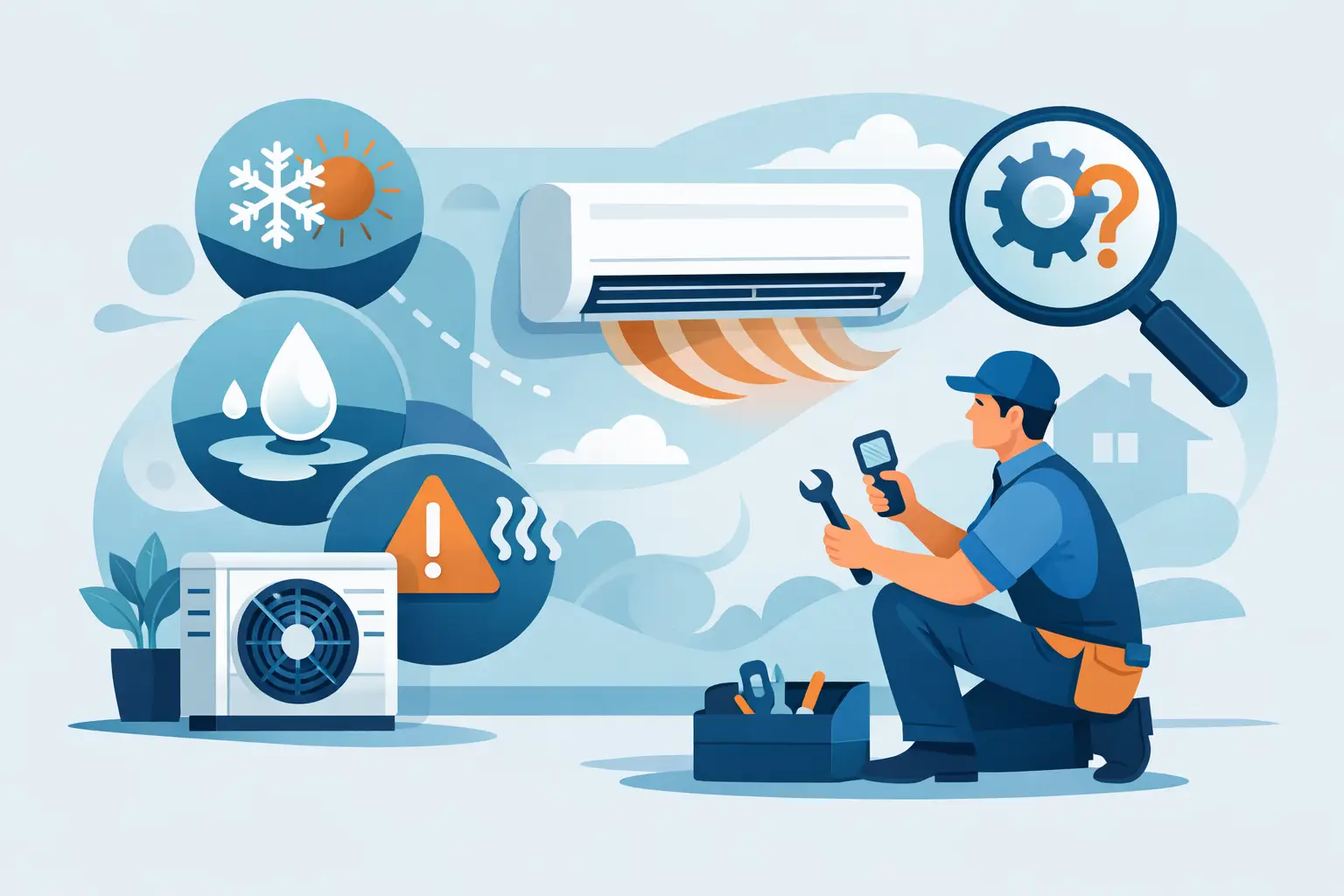
When your air conditioner starts blowing warm air on a hot afternoon or begins dripping water onto the floor, you usually need answers fast, not a long technical lecture. This aircon troubleshooting guide is built to help homeowners, tenants, landlords, and business operators identify common problems, rule out simple causes, and decide when it is time to call in a technician.
A good first step is to separate what feels urgent from what is actually dangerous. Weak airflow, uneven cooling, odd noises, and higher energy bills often point to maintenance or component issues. Burning smells, repeated breaker trips, or water near electrical parts should be treated more seriously. In those cases, switch the unit off and arrange professional support rather than trying to push the system through another day.
Aircon troubleshooting guide: start with the basics
Many aircon issues come from simple causes that are easy to miss. Before assuming the unit needs a major repair, check the thermostat settings, remote control mode, power supply, and air filter condition. A unit set to fan mode instead of cool mode can look like a breakdown when it is really just a settings problem.
It also helps to consider whether the issue affects one room, one indoor unit, or the entire property. If only one split unit is underperforming, the cause may be isolated to that section. If several zones are affected at once, the problem may involve the outdoor condenser, electrical supply, or overall system condition.
If the unit has not been serviced in a while, poor performance may not mean sudden failure. Dust buildup on filters and coils can reduce airflow, make the system work harder, and prevent steady cooling. In homes and offices with daily use, regular maintenance plays a big role in avoiding these avoidable breakdown patterns.
Why your aircon is not cooling properly
Warm or weak air is one of the most common complaints. Sometimes the cause is straightforward, such as a dirty filter that blocks airflow. Sometimes it points to a refrigerant issue, a thermostat fault, or a compressor problem. The difference matters because one can often be corrected through cleaning and servicing, while the other needs technical diagnosis.
If airflow is present but the air is not cold, start with the settings and filter. Then check whether doors or windows are open, whether the room is unusually crowded, or whether heat-generating appliances are making the load heavier than normal. A system may be functioning, but it can still struggle if the cooling demand has suddenly increased.
If the aircon runs for long periods without reaching the set temperature, there may be a deeper efficiency issue. Low refrigerant, dirty evaporator coils, faulty sensors, or an aging compressor can all reduce performance. In commercial spaces, oversized foot traffic, server heat, or poor ventilation design can create similar symptoms, so the right fix depends on the environment.
If the airflow feels weak
Weak airflow usually points to blockage or fan-related problems. A clogged filter is the easiest explanation and the best place to start. If the filter looks visibly dusty, cleaning or replacing it may improve performance quickly.
If the filter is clean but airflow is still low, the indoor coil may be dirty, the blower fan may be underperforming, or the ducting may have leakage in ducted systems. In offices and larger facilities, airflow problems can also trace back to balancing issues or ACMV-related faults rather than the aircon unit alone.
If the unit cools unevenly
One room freezing while another stays warm is not always a sign of damage. Sun exposure, room size, insulation, and usage patterns all affect results. However, uneven cooling can also mean sensor issues, blocked airflow, or a system that is no longer matched well to the space.
For multi-unit properties, it is worth checking whether every indoor unit receives the same maintenance attention. One neglected unit can create comfort complaints that seem bigger than the actual fault.
When the aircon is leaking water
Water leakage is another issue that customers notice quickly, especially when it starts staining walls or dripping onto furniture. In many cases, the problem comes from a blocked drain line, dirt buildup, or frozen coils that create excess condensation. The unit may still cool for a while, which is why some people delay action, but that usually makes the situation messier.
If you see water around the indoor unit, turn it off and check whether the filter is heavily clogged. Restricted airflow can cause the evaporator coil to get too cold and ice over. When that ice melts, water may overflow instead of draining properly.
A blocked drain line is also common. Dust, slime, and debris can stop normal drainage, forcing water back into the unit or onto the wall. This is one of the reasons routine servicing matters. It is not just about cooling performance. It also helps prevent indoor water damage and the mold issues that can follow.
If the leak appears to come from refrigerant lines, insulation failure, or recurring internal overflow, that is a better time to bring in a technician. Repeated leakage usually signals that the root cause has not been fully corrected.
Strange noises and smells in your aircon troubleshooting guide
Air conditioners are not silent, but they should sound consistent. A light hum or steady airflow is normal. Clicking, rattling, buzzing, grinding, or banging is not something to ignore.
Rattling may mean loose panels, screws, or debris inside the unit. Buzzing can point to electrical issues, motor strain, or loose components. Grinding often suggests motor bearing problems, while banging can indicate a more serious fan or compressor concern. Some noises are minor if caught early, but they can become expensive if the unit keeps running under stress.
Smells tell a similar story. A musty odor often means dirt, moisture, or mold buildup on the coil or in the drainage system. A burning smell may indicate electrical overheating or wiring problems. If the smell is sharp, persistent, or linked with visible smoke or breaker trips, switch the unit off immediately.
For homes, odor problems are often solved through a proper cleaning rather than a quick surface wipe. For restaurants, offices, and facilities with connected ventilation systems, the source can be more complex and may involve nearby ducts or broader airflow conditions.
When the aircon keeps turning on and off
Short cycling happens when the system starts, stops, and restarts too frequently. This can wear out components and push energy bills up. It may be caused by a dirty filter, thermostat misreading, refrigerant imbalance, electrical faults, or a unit that is too large for the space.
The reason matters because the fix is not always mechanical. An oversized system can cool too quickly without removing enough humidity, leaving the room feeling uncomfortable even though the temperature looks right. On the other hand, a small unit that is overworked may run almost nonstop and still not deliver steady comfort.
If cycling issues appear alongside poor cooling, ice buildup, or unusual noise, do not keep resetting the unit and hoping it improves. That usually masks the symptom without addressing the source.
What you can check safely before calling for service
You do not need to take apart the system to rule out the obvious. Check the thermostat or remote settings, confirm the power supply is stable, inspect the filter, and look for visible water leakage. Make sure vents are open and not blocked by furniture, curtains, or storage items.
If the outdoor unit is accessible, see whether leaves, dust, or debris are obstructing airflow around it. Keep the surrounding area clear, but avoid opening panels or touching electrical parts. That is especially important for larger systems, commercial setups, and VRV or ACMV equipment where improper handling can lead to bigger failures.
A reset may help in a limited number of situations, but repeated resets are not a repair strategy. If the same problem returns, the system is telling you something.
When professional aircon service is the right call
Some problems are simply not worth guessing through. If your aircon is tripping the breaker, leaking repeatedly, freezing up, making loud mechanical noise, or failing to cool after the basic checks, professional service is the safer move. The same applies if the system is older, heavily used, or responsible for cooling a business that cannot afford downtime.
Residential and commercial systems also differ in how faults show up. A home split unit may signal trouble through comfort issues and water leaks. A larger office, retail, or industrial setup may show it through inconsistent zones, rising operating costs, or poor temperature control in sensitive areas. Technical depth matters more in those cases because the problem may involve controls, airflow planning, or system integration rather than a single failed part.
Easy Cool Engineering Pte Ltd approaches these issues with the same practical goal customers care about most – getting the cooling back to normal with clear communication and the right level of service.
If your aircon is giving early warning signs, treat them as a chance to act before the repair becomes more disruptive. A quick check today can save you from a hotter room, a larger bill, and an avoidable breakdown tomorrow.