

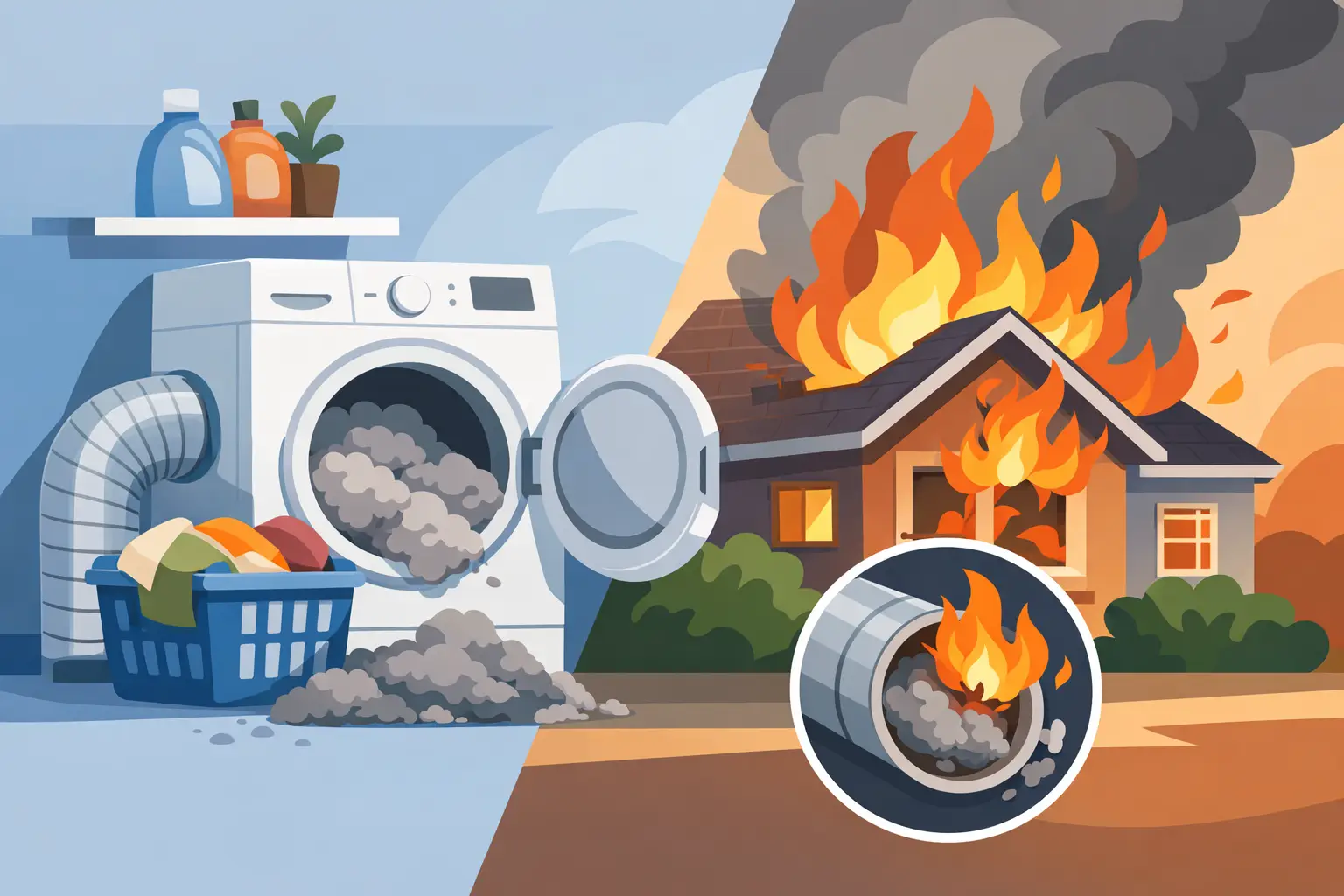
A load of laundry should not make your laundry room smell hot, feel unusually humid, or leave clothes damp after a full cycle. Can dirty dryer vents cause fires? Yes. Lint buildup can restrict airflow, trap heat, and create the conditions for a dryer fire. Regular vent cleaning is a practical step that protects your home, reduces wasted energy, and helps your dryer perform as it should.
Can Dirty Dryer Vents Cause Fires? Yes.
Every dryer produces lint, including newer models and units with a lint screen. The screen catches a portion of those fibers, but fine lint can still move past it and collect inside the dryer, exhaust duct, exterior vent hood, and bends in the vent line.
Lint is highly flammable. By itself, it does not guarantee a fire, but it becomes a serious concern when airflow is restricted. A blocked vent prevents hot, moist air from leaving the dryer efficiently. The appliance then runs hotter and longer, placing added stress on heating components, motors, and electrical connections. If lint is exposed to sufficient heat or a spark, it can ignite.
The risk may be greater where the vent route is long, has several turns, passes through a wall or ceiling, or has not been cleaned for years. Birds’ nests, outdoor debris, crushed flexible ducts, and improperly installed venting can create the same airflow problem. A clean lint screen is helpful, but it is not a substitute for cleaning the entire exhaust path.
Why Restricted Airflow Creates a Fire Risk
A dryer is designed to move heat, moisture, and lint-laden air out of the home. When that air has nowhere to go, drying performance drops. Many homeowners respond by running an extra cycle, but longer operation can make the underlying problem worse.
As heat accumulates, lint inside the dryer cabinet or vent duct can dry out and become easier to ignite. Restricted airflow can also cause safety sensors to trip, heating elements to overwork, and mechanical parts to wear prematurely. In gas dryers, poor venting may also affect how combustion gases are exhausted, which makes proper installation and maintenance especially important.
Not every slow-drying dryer has a blocked vent. A worn heating element, faulty thermostat, clogged lint screen, overloaded drum, or damp clothes from an inefficient washer spin cycle can also be responsible. However, vent obstruction is common enough that it should be checked promptly rather than ignored.
Warning Signs Your Dryer Vent Needs Attention
The clearest warning sign is clothing that takes more than one normal cycle to dry. If towels, jeans, or bedding are consistently damp after a cycle that once worked well, reduced airflow may be the cause.
Pay attention to the dryer itself. The top or sides may feel unusually hot, the laundry room may become hot and humid, or you may notice a burning or musty smell. The dryer may shut off during a cycle, display an airflow error, or leave the laundry unusually hot at the end of drying.
Check the outdoor vent while the dryer is running. You should generally see the exterior flap open and feel a steady flow of warm air. A weak airflow, a flap that does not open, or visible lint collecting around the outlet can point to a blockage. Do not place your hands deep inside the outlet or try to remove a nest or packed debris while the appliance is operating.
Other signs worth addressing include lint around the dryer connection, a damaged or crushed duct behind the unit, and a dryer that needs increasingly long cycles despite routine lint-screen cleaning. These issues affect both safety and operating cost.
What Homeowners Can Do Between Professional Cleanings
Good everyday habits reduce lint accumulation and make problems easier to spot early. Clean the lint screen before every load, not only when it looks full. A thin coating from dryer sheets or fabric softener can also reduce airflow through the screen, so wash it occasionally with warm water, mild dish soap, and a soft brush. Let it dry completely before reinstalling it.
Avoid overloading the dryer. Crowded loads restrict tumbling and airflow, so clothes take longer to dry and generate more heat. It is also wise to avoid running the dryer while everyone is asleep or when nobody is home. If a problem develops, you want to notice it quickly.
Keep the area around the dryer clear of boxes, paper, cleaning products, and loose fabric. Make sure the appliance has sufficient space and that its vent connection has not been pinched when the dryer was pushed back into place.
For the exterior vent, remove loose surface lint and make sure the cover can open freely. Do not install a fine screen over the outlet unless it is specifically designed and approved for dryer use. Screens may appear useful for keeping pests out, but they can trap lint and restrict exhaust.
When to Schedule Dryer Vent Cleaning
Most households benefit from a professional dryer vent inspection and cleaning about once a year. However, the right schedule depends on how often the dryer is used and how the vent system is configured.
A larger household that runs multiple loads each week may need more frequent service. The same is true for shared laundry rooms, rental properties, salons, gyms, hospitality facilities, and other commercial settings where towels or uniforms are dried regularly. Long vent runs, rooftop discharge points, multiple elbows, and concealed ductwork can also require closer attention.
If the dryer has started taking too long to dry, do not wait for the annual appointment. Schedule an inspection as soon as possible. Prompt service can remove accumulated lint, identify damaged ducting, and confirm that the exhaust path is moving air correctly.
A professional cleaning should address more than the lint screen area. A trained technician can assess the vent route, remove buildup from accessible duct sections, check connections, inspect the exterior termination, and identify issues such as disconnected joints, excessive bends, or unsuitable duct materials. Depending on the installation, some repairs or rerouting may be recommended to improve safe airflow.
Avoid Quick Fixes That Hide the Problem
It is tempting to use a small brush, vacuum attachment, or leaf blower and assume the duct is clear. These tools can help with light, accessible lint, but they may not reach packed buildup in long runs or sharp bends. In some cases, they can push lint farther into the system or loosen a duct connection behind a wall.
Another common mistake is repeatedly resetting a dryer that overheats or shuts down. Safety controls are there for a reason. If the dryer smells burnt, becomes excessively hot, trips a breaker, or stops mid-cycle, turn it off and arrange for qualified service. Do not continue operating it until the cause has been checked.
Flexible plastic or foil-style vent hoses deserve particular attention. They can sag, tear, and collect lint more easily than properly installed rigid or semi-rigid metal ducting. Local building requirements vary, but a technician can help determine whether the vent material and installation are appropriate for your property.
A Safer, More Efficient Laundry Routine
Dryer vent maintenance is not only about fire prevention. Clear airflow helps clothes dry in fewer cycles, which can reduce energy use and lessen wear on fabrics and appliance components. For landlords and facilities teams, it also supports a more dependable laundry area and may help avoid disruption caused by preventable equipment failures.
Easy Cool Engineering approaches appliance cleaning with the same practical focus used across home and commercial mechanical services: identify the source of the problem, perform the work carefully, and help customers keep essential equipment operating safely. For dryer concerns, an inspection is often the quickest way to separate a simple maintenance need from a venting or appliance issue that needs repair.
If your dryer is running hot, taking longer to dry, or showing signs of poor airflow, treat it as a maintenance priority rather than a minor inconvenience. A clean, properly vented dryer gives you a safer laundry routine and one less household risk to worry about.