

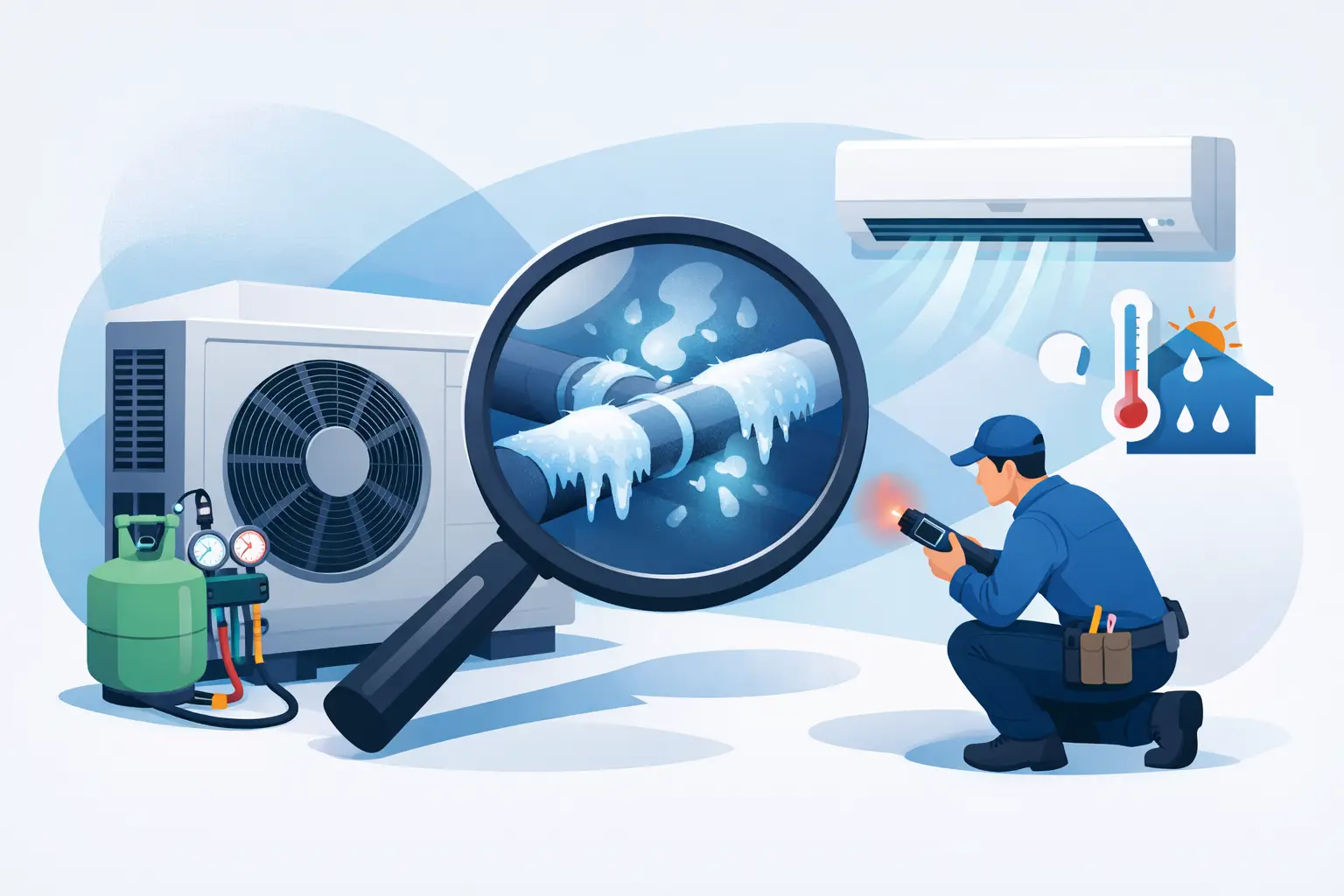
A refrigerant leak rarely announces itself with a dramatic breakdown. More often, the air conditioner runs longer, rooms feel slightly warmer, and utility costs begin to creep up. Knowing how to spot refrigerant leaks early can help homeowners avoid a complete loss of cooling and help facility teams prevent disruption to offices, retail spaces, and other occupied areas.
Refrigerant is the substance that absorbs heat indoors and releases it outside. It is not a fuel that an air conditioner normally uses up. A properly sealed system should maintain its refrigerant charge for years. When levels are low, there is usually a leak that needs to be located and repaired, not simply topped off.
Signs That Point to a Refrigerant Leak
One symptom alone does not prove a leak. A dirty filter, blocked drain, failing fan, thermostat issue, or poor insulation can create similar comfort problems. However, several of the following signs appearing together warrant a professional inspection.
Cooling is weak or uneven
The most common warning sign is air that feels less cool than usual, even though the system is running. You may notice that it takes much longer to reach the thermostat setting, or that certain rooms remain warm while others are comfortable. In a ductless mini-split system, one indoor unit may underperform while another unit on the same property appears normal.
For commercial systems, weak cooling can show up as hot spots near workstations, meeting rooms, server areas, or retail displays. Do not assume the equipment is simply undersized, especially if it previously cooled the space effectively. A change in performance deserves attention.
The system runs longer and energy bills rise
Low refrigerant reduces the system’s ability to move heat. To compensate, the compressor may run for extended cycles or operate nearly continuously during warm weather. This can raise energy usage without delivering the comfort you expect.
Compare recent bills with the same season last year, while accounting for changes in occupancy, weather, and thermostat settings. A sudden increase is not a diagnosis by itself, but it is useful information for an HVAC technician. It can also indicate dirty coils, airflow restrictions, or aging components, all of which should be checked.
Ice forms on refrigerant lines or coils
Frost or ice on the larger insulated copper line outside, the indoor evaporator coil, or the indoor unit is a visible concern. With too little refrigerant, coil temperatures can drop low enough to freeze moisture from the air. Restricted airflow from a dirty filter can also cause icing, which is why the source must be diagnosed properly.
If you see ice, turn the cooling mode off and allow the unit to thaw. Continuing to run an iced-up system can strain the compressor and may lead to a more expensive repair. Avoid chipping ice off the coil or opening equipment panels. Coils and fins are easily damaged, and electrical components may be exposed.
You hear hissing, bubbling, or unusual sounds
A noticeable hissing sound near refrigerant piping may indicate gas escaping through a small opening. Bubbling or gurgling can occur when refrigerant and oil move through a system with a low charge. These noises may be intermittent and are often easier to hear shortly after startup or shutdown.
Not every hiss is a refrigerant leak. Air movement through vents, condensate drainage, and normal refrigerant flow can make mild sounds. The concern is a new, persistent, or clearly localized noise, especially when it appears alongside weak cooling or ice formation.
Look for Physical Clues Without Opening the System
You do not need to handle refrigerant lines to notice useful clues. Start by observing the air conditioner during normal operation. Check whether the indoor unit is producing a steady flow of cool air, whether the outdoor unit is running unusually long, and whether there is visible frost on accessible piping.
Also look for oily residue around exposed line connections, service valves, coils, or beneath the outdoor unit. Refrigerant often carries a small amount of compressor oil, so a leak can leave a greasy film that attracts dust. This is a strong reason to schedule service, although a clean-looking system can still have a leak in a hidden section of piping or coil.
Pay attention to a sharp chemical or sweet odor, particularly in an enclosed room. Modern refrigerants may have little noticeable smell, so odor is not a reliable test. Still, if an unfamiliar odor occurs with poor cooling, ventilate the area if practical and arrange an inspection. If anyone experiences dizziness, nausea, or breathing discomfort, move to fresh air and seek appropriate assistance.
Why Refrigerant Leaks Should Not Be Ignored
A small leak can become a larger operational problem. As refrigerant levels fall, the compressor works under conditions it was not designed to handle. Compressor replacement is usually far more costly than repairing a leak identified early.
There is also an environmental consideration. Refrigerants must be recovered, handled, and charged by qualified professionals using the correct equipment and procedures. Releasing refrigerant is not a safe do-it-yourself task, and adding more refrigerant without fixing the source only delays the problem.
For landlords and property managers, recurring tenant complaints about warm rooms should be logged with dates, affected areas, and operating conditions. This gives the service team a clearer starting point and helps distinguish a refrigerant issue from an airflow, controls, or capacity issue. For businesses, early reporting can protect stock, employee comfort, sensitive equipment, and operating continuity.
How Professionals Confirm a Refrigerant Leak
A qualified HVAC technician does more than check whether the system feels cold. The diagnosis begins with system performance, including temperatures, pressures, airflow, and electrical operation. These measurements help determine whether low refrigerant is likely or whether another fault is causing similar symptoms.
The technician may then inspect fittings, coils, valves, and accessible piping for oil marks or damage. Depending on the system and suspected leak location, professional leak detection may involve an electronic detector, soap solution at accessible joints, ultraviolet dye used appropriately, or pressure testing with approved methods. Each method has limits. A tiny leak in a concealed coil may require more time to confirm than a loose flare connection in an accessible line.
Once the leak is found, the correct sequence is repair, test, evacuate the system as needed, and recharge it to the manufacturer’s specified amount. Simply adding refrigerant may restore cooling temporarily, but it is not a complete repair when the system is leaking.
What You Can Do Before Service Arrives
A few simple checks can protect the equipment and make the visit more efficient. Replace or clean the air filter if it is dirty and you can do so safely. Make sure furniture, boxes, or landscaping are not blocking airflow around indoor returns, supply vents, or the outdoor unit. Record when the problem started, which rooms are affected, and whether you saw ice, heard noises, or noticed a change in energy use.
Do not use leak-sealing additives, attempt to tighten refrigerant fittings, or buy a recharge kit. These shortcuts can damage service equipment, contaminate the system, create safety risks, and make a proper repair harder. If the unit is frozen, switch off cooling and let it thaw before the technician arrives unless the equipment manual or your service provider gives different instructions.
When to Schedule HVAC Service
Arrange prompt service when weak cooling persists after a clean filter and clear airflow check, when ice appears on the unit or piping, or when hissing and oily residue are present. A system that runs but cannot maintain a safe temperature in a server room, production area, food-service setting, or other critical space may require urgent attention.
For residences, acting early is often the most practical choice. A technician can determine whether the problem is a refrigerant leak, drainage issue, dirty coil, fan fault, or another repair need before prolonged operation creates additional wear. Reliable cooling starts with paying attention to small changes – then letting trained professionals identify the cause and restore the system correctly.