

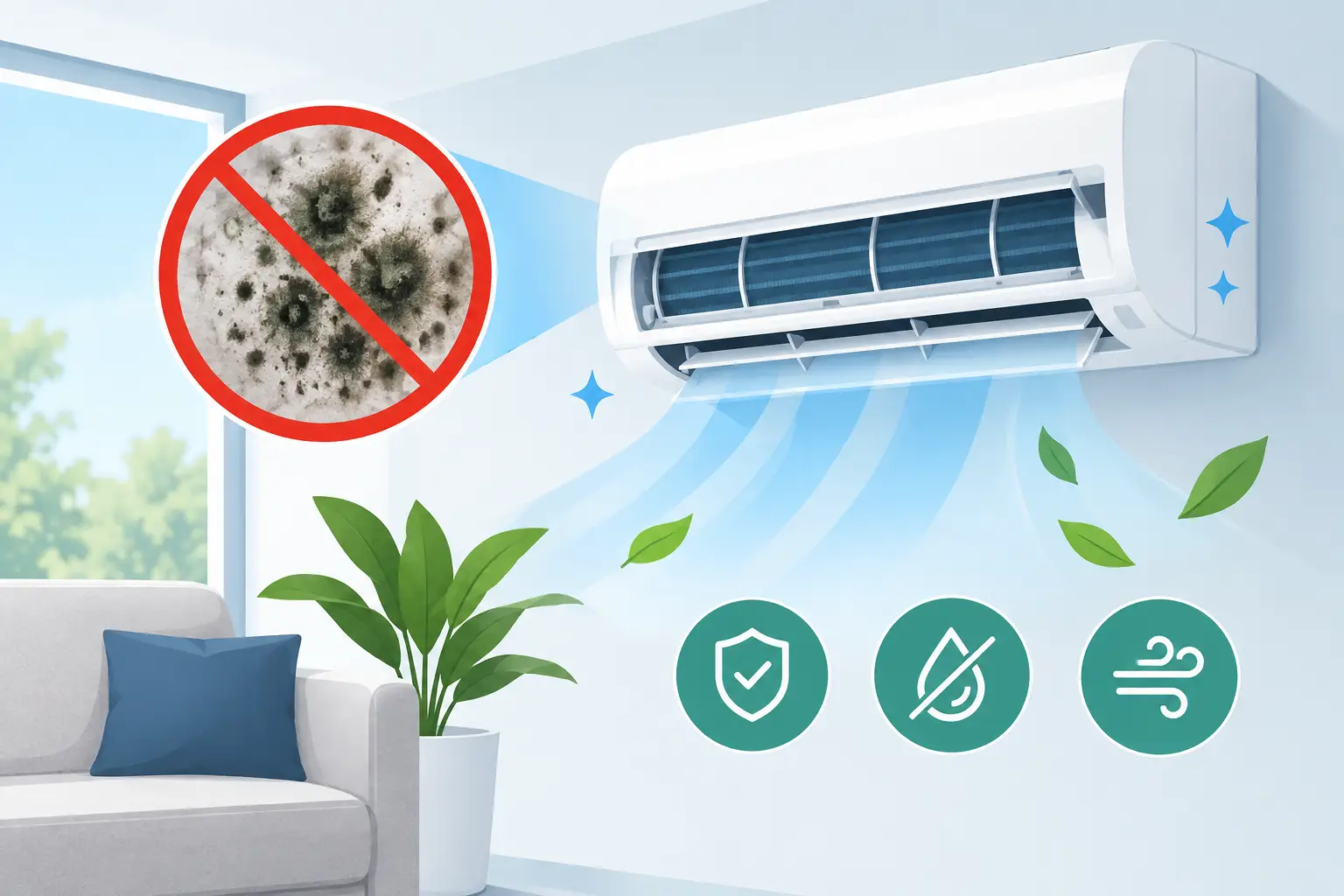
A musty smell when your air conditioner starts is not something to mask with air freshener. It is often a sign that moisture and dust have collected inside the unit. Effective aircon mould prevention focuses on removing the conditions mold needs to grow: trapped moisture, organic debris, poor drainage, and long periods without proper cleaning.
For homes, that means more comfortable cooling and cleaner indoor air. For offices, retail spaces, and other commercial properties, it also means fewer occupant complaints, less downtime, and better protection for the cooling equipment you rely on every day.
Why Mold Grows Inside Air Conditioners
An air conditioner naturally creates condensation as it cools warm air. Under normal conditions, that water drains away through the condensate system. Problems begin when moisture remains on the evaporator coil, in the drain pan, along the drain line, or behind dirty filters.
Dust, skin cells, and other airborne particles collect on surfaces inside the indoor unit. When those materials stay damp, they can support mold growth. Singapore’s warm, humid climate makes this more likely, but any air-conditioned space with high humidity or limited maintenance can face the same issue.
Mold is not always visible from the outside. You may first notice a damp or sour odor, reduced airflow, water dripping from the indoor unit, or dark spotting around vents and louvers. These symptoms do not always confirm mold on their own. A drainage blockage, dirty coil, or bacterial buildup can produce similar signs. A proper inspection is the sensible next step rather than assuming the cause.
Aircon Mould Prevention Starts With Daily Use Habits
Small operating habits can make a real difference between service visits. The goal is to avoid leaving the system damp and dirty after it has done its cooling work.
Give the Indoor Unit Time to Dry
If your unit has a fan-only, self-clean, or coil-dry setting, use it according to the manufacturer’s instructions. Running the fan briefly after cooling can help evaporate remaining moisture from internal components. Some newer systems perform this automatically.
This is helpful, but it is not a substitute for cleaning. A fan setting cannot remove built-up dust, clear a blocked drain, or wash mold from a heavily soiled coil. Think of it as a moisture-control habit that supports regular maintenance.
Avoid Extreme Temperature Settings
Setting the thermostat very low does not cool a room faster in most systems. It can cause the unit to run hard, create more condensation, and make the room uncomfortably cold. A moderate, stable setting reduces unnecessary cycling and supports more consistent humidity control.
The best setting depends on room size, occupancy, sunlight, insulation, and the system’s capacity. If one room is always humid despite regular operation, the issue may be an undersized unit, poor airflow, or a building moisture problem rather than user settings alone.
Keep Doors, Windows, and Vents Managed
Open windows during air conditioning operation allow humid outdoor air to enter continuously. The system then has to remove more moisture, increasing the chance of condensation-related issues. Keep windows and exterior doors closed when cooling is on, particularly during humid weather.
Do not block return-air grilles or supply vents with furniture, curtains, boxes, or display materials. Restricted airflow can leave the coil colder and wetter than it should be while reducing the unit’s ability to dehumidify the room effectively.
Clean Filters Before They Become a Moisture Problem
Filters are the first line of defense against dust entering the indoor unit. When they become clogged, airflow drops. The evaporator coil may stay damp longer, while dirt bypasses or accumulates around areas that are harder to access.
For many residential split systems, checking filters every two to four weeks is practical, especially in homes with pets, frequent cooking, nearby construction, or high daily usage. Washable filters should be cleaned gently, fully dried, and reinstalled correctly. Never operate the system for extended periods without a filter unless a technician has advised it.
Commercial systems may use different filter types and service schedules. Offices with high occupancy, retail spaces near entrances, kitchens, and facilities with dust-generating operations often require more frequent checks. A facilities manager should base the schedule on actual loading conditions, not only a calendar reminder.
Protect Drainage and Condensate Flow
A clear drain line is central to mold prevention. Every cooling cycle produces water. If that water cannot leave the system, it may pool in the drain pan, leak into ceilings or walls, and create a persistent damp environment.
Check for warning signs such as dripping from the indoor unit, bubbling or gurgling sounds, water marks near the unit, or recurring musty odors shortly after cleaning. These can indicate a partial blockage, poor drain slope, pump issue, or a problem with the drain pan.
Avoid pouring harsh chemicals into an air conditioner drain line as a routine DIY fix. The wrong product can damage components, create fumes, or fail to address sludge farther along the line. Professional servicing can safely flush the drainage system and confirm that condensate is flowing as intended.
What Professional Aircon Cleaning Should Address
A quick wipe of the front cover improves appearance, but it does not address the places where mold and moisture collect. A thorough service should assess the indoor unit’s filters, evaporator coil, blower wheel, drain pan, drain line, and general operating condition.
The right cleaning method depends on the equipment condition. Routine servicing is often sufficient when the system is maintained consistently and there are no signs of major buildup. A more intensive chemical wash or overhaul may be appropriate when airflow is poor, drainage is repeatedly blocked, odors return quickly, or internal parts have substantial dirt accumulation.
More intensive cleaning is not automatically better for every unit. It involves greater disassembly and should be performed only when justified by the condition of the equipment. An experienced technician can explain what is needed, what is not, and whether a separate repair is required.
At Easy Cool Engineering, technicians can support routine air conditioning maintenance as well as more complex cooling requirements. The same practical approach applies in a bedroom, office, retail unit, or larger facility: identify the moisture source, clean the affected components properly, and restore dependable operation.
Control Humidity Beyond the Air Conditioner
Air conditioning helps reduce humidity, but it cannot solve every source of moisture in a building. Bathrooms without adequate exhaust, indoor laundry drying, plumbing leaks, wet carpets, and poorly sealed windows can all keep a room humid even when the air conditioner is operating.
If mold keeps returning, look beyond the unit. Check whether the room feels damp when the system is off, whether condensation forms on windows, and whether water leaks are present nearby. A dehumidifier may help in certain spaces, but it should complement, not hide, an unresolved drainage, ventilation, or building-envelope issue.
For commercial properties, humidity management may involve the wider ACMV system, outdoor-air settings, duct condition, and occupancy patterns. Facilities with sensitive equipment or critical operations should use a planned maintenance program rather than waiting for odors or leaks to appear.
When to Schedule Service Promptly
Do not wait for a minor smell to become visible growth or water damage. Schedule an inspection promptly if you notice any of the following:
- A persistent musty odor that returns after filter cleaning
- Water dripping, staining, or pooling near an indoor unit
- Weak airflow or uneven cooling from a previously reliable system
- Dark marks around louvers, vents, or the air outlet
- Frequent drain clogs or a unit that shuts down unexpectedly
If anyone in the space has allergies, asthma, or respiratory sensitivity, address recurring odors and suspected mold without delay. While an air conditioner is not always the source of indoor air concerns, a clean, well-drained system is an essential part of a healthier indoor environment.
A clean air conditioner should cool quietly, drain reliably, and leave the room feeling comfortable rather than damp. Set a maintenance schedule that matches how your system is used, and act early when odors, leaks, or airflow changes appear. That simple discipline keeps aircon mould prevention practical, cost-conscious, and far easier than dealing with an avoidable breakdown later.