
Best Aircon Filters for Allergies: What Works
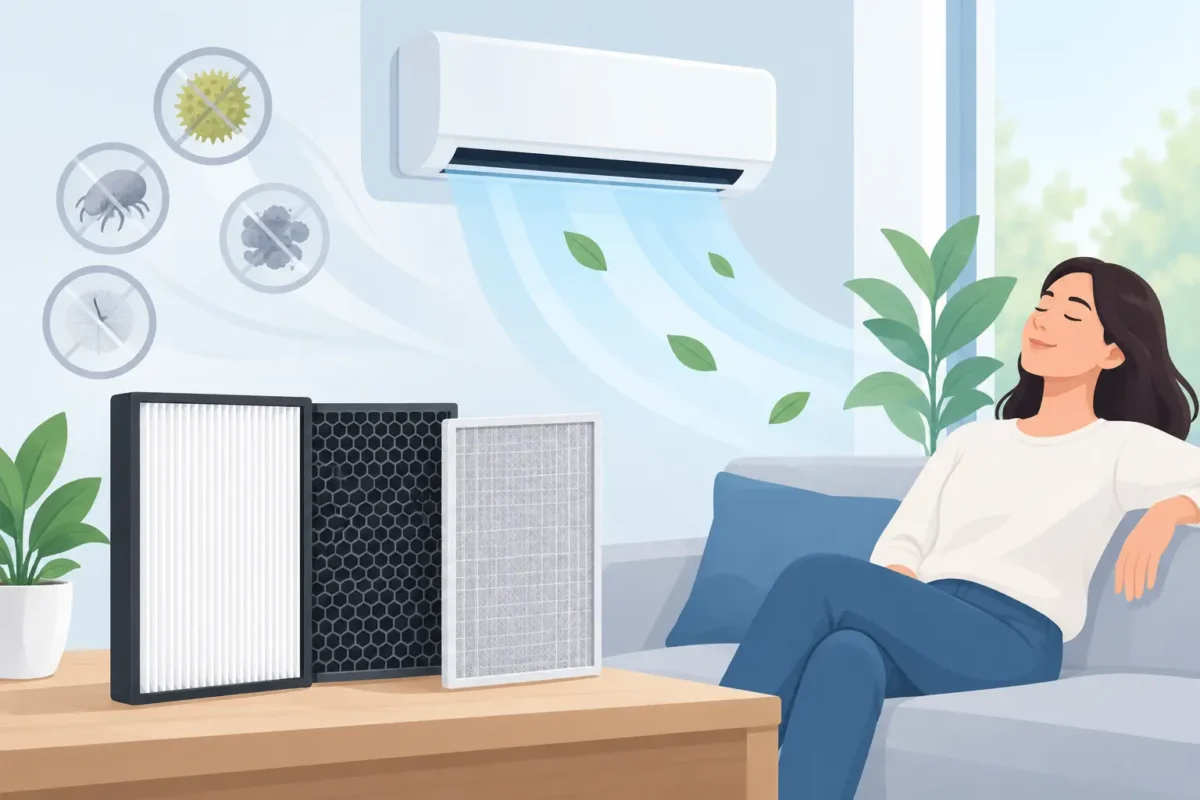
A filter that looks clean can still be holding dust, pollen, pet dander, and other fine particles that irritate allergy sufferers. Choosing the best aircon filters for allergies is not simply about buying the highest-rated filter available. The right choice depends on your air conditioning system, airflow requirements, and how consistently the filter is maintained.
For many homes, the biggest improvement comes from using a properly fitted, suitable-rated filter and replacing or cleaning it on schedule. A filter that is too restrictive can reduce airflow, make the system work harder, and create comfort problems. The goal is cleaner indoor air without compromising the reliable cooling your household depends on.
What an Aircon Filter Can and Cannot Do
Air filters are designed to capture airborne particles before they enter the air handler, blower, and cooling components. This protects the system from dust buildup while reducing the amount of particulate matter circulated through conditioned spaces.
For allergy concerns, the particles that matter most often include pollen, dust mites and their debris, pet dander, mold spores, and fine household dust. A better filter can capture more of these particles, but it is not a complete indoor air quality solution. Allergens can remain in carpets, curtains, bedding, upholstery, ducts, and damp areas where mold may grow.
A good filter is one part of a practical plan. Regular AC cleaning, humidity control, vacuuming, and addressing moisture issues all contribute to a more comfortable indoor environment. If someone in the home has severe allergies or asthma, medical guidance should remain the first point of reference.
Best Aircon Filters for Allergies: Start With MERV
For central air conditioning systems that use replaceable panel filters, the Minimum Efficiency Reporting Value, or MERV rating, is the most useful starting point. In general, a higher MERV rating captures smaller particles more effectively. However, higher is not automatically better for every AC unit.
MERV 8: A Practical Baseline
A MERV 8 filter usually captures common larger airborne particles such as lint, pollen, and dust. It is a reasonable upgrade from a basic fiberglass filter and typically allows good airflow in many residential systems.
For a home with mild seasonal allergies and no pets, MERV 8 may provide a sensible balance of filtration and system efficiency. It is also often appropriate where the manufacturer has not approved higher-resistance filters.
MERV 11 to 13: Often the Better Range for Allergies
For many households managing allergies, MERV 11 to MERV 13 filters offer a stronger balance. They are more effective at trapping finer dust, pet dander, mold spores, and smaller airborne particles than lower-rated filters.
MERV 11 is often a dependable choice for homes with pets, frequent dust, or recurring allergy symptoms. MERV 13 provides finer filtration and can be helpful when the system is designed to handle it. Before moving to MERV 13, check the equipment manual or ask a qualified technician. A filter that restricts airflow too much can lead to frozen evaporator coils, reduced cooling performance, and higher energy use.
HEPA Filters: Highly Effective, but Usually Not for Standard AC Returns
True HEPA filters are designed to capture extremely small particles at very high efficiency. They are widely used in portable air purifiers, healthcare settings, and specialized filtration equipment. They are not usually suitable as a direct replacement for a standard central AC filter.
The reason is airflow resistance. Most residential systems are not engineered to pull air through a dense HEPA filter. Installing one without a compatible system can strain components and reduce cooling. If HEPA-level filtration is a priority, a properly sized standalone air purifier is often more practical than forcing a HEPA filter into an existing aircon return.
Check Which Type of Aircon You Have
Not every air conditioning system accepts the same type of filter. This is especially important in homes using ductless mini-split or wall-mounted aircon units.
Central HVAC systems commonly use disposable pleated filters placed at a return grille or inside the air handler. These are where MERV ratings are most relevant. The filter must match the correct length, width, and thickness. An incorrectly sized filter lets unfiltered air bypass the frame, reducing its value and allowing dust to enter the equipment.
Ductless split systems generally use washable mesh screens behind the indoor unit cover. These screens capture larger dust particles but do not typically offer the same fine-particle filtration as a MERV-rated central filter. Some models have optional secondary filters, such as electrostatic, deodorizing, or antibacterial inserts. Their effectiveness and replacement requirements vary by manufacturer.
For ductless units, regular cleaning matters even more. Dust collected on the mesh filter, evaporator coil, blower wheel, and drain area can affect airflow, cooling output, and indoor air freshness. A clean filter alone cannot compensate for a dirty indoor unit.
Filter Material and Fit Matter More Than Marketing
Pleated filters are generally more effective than thin fiberglass filters because they provide a larger surface area for particle capture. Look for a well-constructed filter with a sturdy frame and clear airflow direction markings. The arrow should point toward the air handler or in the direction air is moving through the system.
Avoid treating labels such as “allergen defense” or “premium air” as proof of performance. Check the stated MERV rating and confirm that the product is compatible with your system. A MERV 13 filter from a reputable manufacturer may be an excellent choice, but only if the equipment can maintain proper airflow with it installed.
Electrostatic washable filters can be appealing because they are reusable. Their performance varies, and they need thorough cleaning and complete drying before reinstallation. A poorly cleaned reusable filter may hold onto accumulated dust, while a damp one can contribute to moisture concerns. For households that prefer predictable filtration performance, quality disposable pleated filters are often the simpler option.
Replace or Clean Filters Before They Become a Problem
Filter schedules depend on occupancy, pets, outdoor air quality, construction dust, and system runtime. A home with two pets, open windows, or frequent cooking may need attention much sooner than a lightly occupied home.
As a general operating routine, inspect disposable central AC filters monthly and replace them every one to three months as needed. A visibly gray, dusty, or bowed filter should be replaced promptly. Do not wait for it to become fully blocked.
Washable mini-split filters should usually be cleaned every two to four weeks during regular use. Gently vacuum loose dust first, then rinse according to the manufacturer’s instructions. Let the filter dry completely before placing it back in the unit. If the indoor unit smells musty, leaks water, blows weakly, or has visible buildup behind the filter, professional servicing may be needed.
Do Not Ignore Humidity, Coils, and Airflow
Allergy comfort is not only about catching particles. Humidity plays a major role because excessive moisture can encourage mold and dust mites. An AC system that cools poorly, cycles unpredictably, or drains incorrectly may not be removing humidity as it should.
A clogged filter can also create a chain reaction. Restricted airflow can cause the evaporator coil to become excessively cold and freeze. When airflow falls, cooling becomes less consistent, energy consumption may rise, and the indoor unit may not manage humidity effectively.
Routine maintenance helps prevent these issues. A professional service can assess filter condition, coil cleanliness, drainage, blower performance, refrigerant-related symptoms, and overall system operation. For homes and facilities where comfort complaints keep returning, the right answer may be a system inspection rather than another filter change.
A Sensible Choice for Most Allergy-Prone Homes
If your central system supports it, a MERV 11 filter is often a reliable starting point for allergy-conscious households. Consider MERV 13 when the equipment manufacturer approves it and airflow remains within specification. For ductless aircon systems, keep the washable screens clean and arrange deeper cleaning when dust buildup affects the indoor coil or blower.
The best filter is the one your system can handle, fits correctly, and is maintained consistently. Clean airflow should not be an occasional project. It is a simple part of keeping your cooling system comfortable, efficient, and ready for the people who rely on it every day.