
Clean Washing Machine Filter in 6 Easy Steps
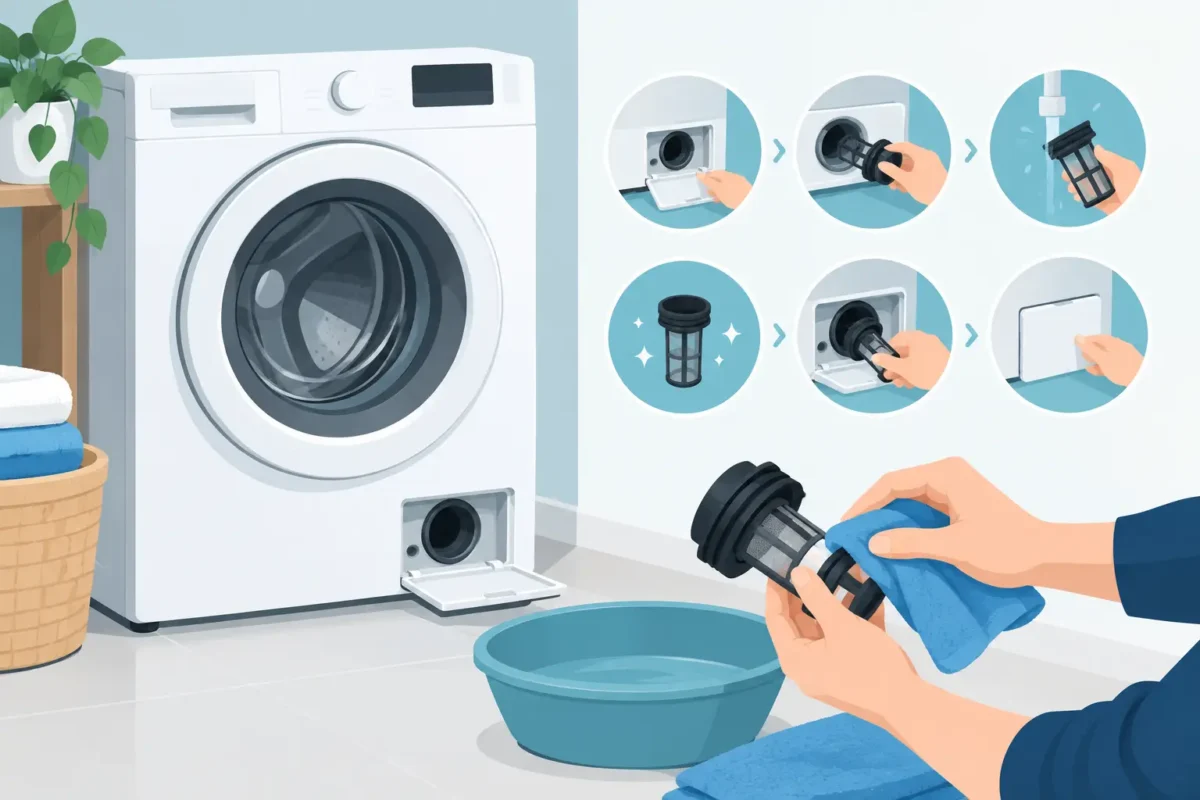
A washer that leaves clothes smelling musty, takes too long to drain, or shows a drainage error is often dealing with a simple but overlooked issue: a dirty filter. Learning how to clean washing machine filter compartments correctly can help restore normal water flow, reduce odors, and protect the appliance from unnecessary strain.
For many front-load washers, the filter is designed to collect lint, hair, small items, and debris before they reach the drain pump. It does useful work, but it cannot keep doing it indefinitely without attention. A quick, careful cleaning every few months is usually far easier than dealing with a flooded laundry area or a washer that will not complete a cycle.
Why a Washing Machine Filter Gets Dirty
Every load sends more than water and detergent through the machine. Fabric lint, pet hair, tissue fragments, loose threads, coins, buttons, and residue from detergent can collect in the filter area. Homes with pets, young children, or frequent laundry loads may see buildup sooner.
A clogged filter can restrict drainage. When water cannot leave the drum efficiently, the washer may pause mid-cycle, spin poorly, make unusual noises, or leave garments wetter than expected. Standing water and residue can also create unpleasant odors inside the machine.
Not every washing machine has a user-accessible filter. Many top-load models use a self-cleaning pump system, while most front-load machines have a drain pump filter behind a small access panel near the bottom front of the appliance. Check the owner’s manual before opening any panel. The location and procedure vary by brand and model.
What to Prepare Before You Start
Cleaning the filter is straightforward, but water will usually come out when the drain filter is opened. Preparing the area first prevents a small maintenance task from becoming a cleanup job.
Unplug the washer and allow it to cool if it has recently run a hot cycle. Place several old towels, a shallow tray, or a baking pan below the filter access panel. Keep a small container nearby for debris and have gloves ready if you prefer not to handle lint and trapped items directly.
If your washer has a small emergency drain hose beside the filter cap, use it first. This lets you release water in a controlled way. If there is no hose, open the filter cap slowly and pause as water drains into the tray. Avoid pulling the cap out all at once.
How to Clean a Washing Machine Filter
1. Turn off the power and locate the access panel
Switch off the washing machine and unplug it from the outlet. On many front-load units, the filter access panel is near the lower right or lower left corner. It may open with a gentle pull, a coin, or a small flat tool.
Do not force the panel or filter cap. If it feels stuck, check the appliance manual for the correct release method. Forcing plastic components can damage the housing or create a leak point.
2. Drain the remaining water
Lay towels directly under the access area. If an emergency drain hose is present, remove its stopper and direct the water into a shallow container. Empty the container as needed, then replace the stopper securely.
Without a drain hose, turn the filter cap counterclockwise only a little at a time. Let the water run out gradually, pause to empty the tray, and continue until the flow slows. There may be more water than expected after a completed wash cycle, especially if the washer stopped due to a drainage issue.
3. Remove the filter carefully
Once the water has drained, unscrew the filter fully and pull it straight out. You may find lint, hair, coins, paper clips, small socks, or other objects caught in the filter. Remove everything you can see.
Check the filter for cracks, warped plastic, or damaged threads. A damaged filter should not be reinstalled as though nothing is wrong. It may not seal properly and can allow water to leak from the pump area.
4. Rinse and clean the filter
Rinse the filter under warm running water. Use a soft brush or old toothbrush to remove residue from the mesh, grooves, and threads. Do not use sharp tools that could tear a mesh screen or scratch the plastic.
If residue is greasy or stubborn, wash the filter with a small amount of mild dish soap and rinse it thoroughly. Strong cleaners and abrasive pads are unnecessary and may damage the component. The goal is to remove buildup without weakening the filter.
5. Inspect the filter housing
Look inside the filter cavity with a flashlight. Remove visible lint or debris from the opening, but do not reach deeply into the pump area with your fingers. The impeller behind the filter may have small blades, and some models have tight internal spaces.
If you can see the impeller, it may move slightly when gently touched. That is often normal. However, if it is completely jammed, broken, or blocked by an item you cannot safely remove, stop there. Continued use can place stress on the drain pump.
6. Reinstall and test the washer
Wipe the filter seal and the surrounding housing clean. Reinsert the filter straight, then turn it clockwise until snug. It should feel secure, but overtightening can damage the threads or seal.
Close the access panel and run a short rinse-and-spin cycle without laundry. Watch the filter area for leaks and listen for unusual drain noises. If the washer drains normally and remains dry around the panel, the job is complete.
How Often Should You Clean the Filter?
For a typical household, checking the drain filter every three to six months is a sensible routine. If you wash heavily soiled work clothes, pet bedding, towels, or large family loads several times a week, inspect it more often.
It also makes sense to clean the filter whenever the washer shows a drainage-related error, has a persistent odor, or leaves water in the drum. Cleaning the filter will not solve every appliance problem, but it is one of the first practical checks when draining becomes slow.
Do not confuse filter cleaning with cleaning the washing machine drum. The filter catches physical debris, while a drum-cleaning cycle helps reduce detergent residue, mineral deposits, and odor-causing buildup inside the tub. Both matter, but they address different areas of the appliance.
Common Mistakes to Avoid
The most common mistake is opening the filter without towels or a tray. Even a small amount of trapped water can spread quickly across a laundry-room floor. Another is reinstalling the filter with debris still caught in the seal, which can cause a slow leak after the next cycle.
Avoid using excessive force if the cap will not turn. A stuck cap may be caused by compacted debris, a cross-threaded installation, or a model-specific locking mechanism. The owner’s manual is the best first reference, particularly if your washer is still under warranty.
It is also worth being realistic about what filter cleaning can fix. A clean filter will not repair a failed drain pump, a kinked drain hose, a blocked household drain line, or an electronic control fault. If the same drainage problem returns shortly after cleaning, professional inspection is the safer next step.
When Professional Washing Machine Cleaning Helps
A filter clean is good routine care, but it may not be enough when odors persist, water remains in the drum, or the appliance has not received maintenance for years. Internal residue can build up around the drum, hoses, pump area, and detergent drawer, especially when low-temperature washes and excess detergent are common.
Professional washing machine cleaning can be useful for households that want a more thorough service without dismantling components themselves. It is particularly practical for landlords preparing a property, busy families managing frequent loads, or owners who notice repeated drainage and odor concerns.
Easy Cool provides appliance cleaning support with a practical focus on cleanliness, reliable operation, and minimal disruption. A technician can assess whether the issue is routine buildup or a sign that a part needs repair.
A clean filter is a small piece of maintenance, but it can make laundry feel more dependable. Keep a simple reminder on your calendar, use the right detergent amount, and address drainage changes early before they turn into a larger appliance problem.