

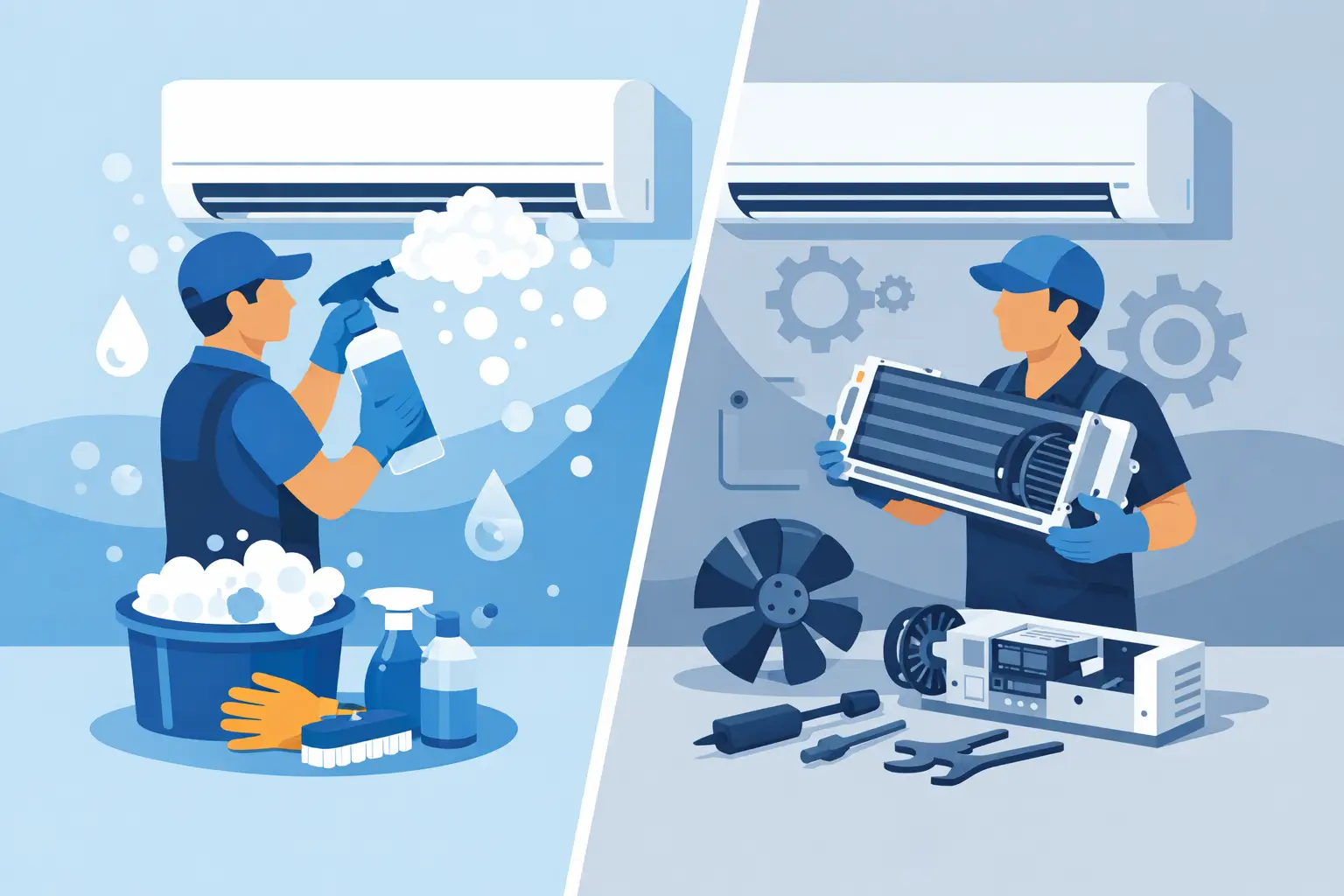
A wall-mounted air conditioner that is blowing but not cooling, dripping water, or giving off a musty smell does not always need the same level of service. In the aircon chemical wash vs overhaul decision, the right choice depends on what is happening inside the unit, how long the problem has been present, and whether basic servicing has already failed to restore performance.
A chemical wash is usually the more targeted option for dirt buildup and reduced airflow. An overhaul is a deeper restoration service for units with more serious contamination, drainage problems, or recurring performance issues. Choosing correctly can protect your equipment, reduce unnecessary cost, and help prevent an avoidable breakdown during a hot day.
Aircon Chemical Wash vs Overhaul: The Main Difference
Both services go beyond routine air conditioner maintenance. A standard service generally includes cleaning accessible filters, checking basic operation, and clearing minor dirt around key components. Chemical washing and overhauling are more intensive because they address grime that regular cleaning cannot remove effectively.
A chemical wash focuses on cleaning the indoor evaporator coil, blower area, filters, drain pan, and drainage line using approved cleaning solutions. The technician may remove selected components to gain access, flush the drainage system, and test the unit once it is reassembled. Its purpose is to remove accumulated dust, mold, grease, and residue that can restrict airflow or cause odors.
An aircon overhaul involves substantially more dismantling. The indoor fan coil unit is taken apart so individual components can be thoroughly cleaned and inspected. Depending on the unit and the diagnosed issue, the process may include cleaning the coil and blower wheel, treating the drain pan and pipe, checking electrical parts, replacing worn insulation or drainage components, and conducting a full operational test after reassembly.
The exact scope can differ by air conditioner model and service provider. A reliable technician should explain what is included before work begins, especially if replacement parts or refrigerant-related repairs may be required.
When a Chemical Wash Is Usually Enough
A chemical wash is often the practical choice when the unit is still generally working but has lost some cooling strength or airflow. It is suitable for a system affected mainly by dirt and moisture buildup rather than a major mechanical fault.
For homeowners, common signs include a room that takes longer to cool, weak air coming from the vents, a mild unpleasant smell at startup, or occasional water droplets from the indoor unit. These symptoms can occur when the evaporator coil and blower wheel are coated with dust, or when the drain line is partially restricted.
A chemical wash can also be a sensible option after a long period without maintenance. In homes with pets, heavy cooking, frequent window opening, or high humidity, indoor units may collect debris faster than expected. Cleaning the affected areas can improve airflow, reduce odor-causing residue, and help the system operate with less strain.
For offices and retail spaces, a chemical wash may be appropriate when one or several fan coil units have declining airflow but the broader air conditioning system is still operating normally. It can be planned around operating hours to minimize disruption while restoring comfort for staff and visitors.
Chemical washing is not a cure for every cooling problem. If the unit has a failed capacitor, a damaged fan motor, a refrigerant leak, or a faulty control board, cleaning alone will not resolve the root cause. A proper assessment prevents paying for a cleaning service when a repair is actually needed.
When an Aircon Overhaul Makes More Sense
An overhaul is typically recommended when contamination is severe, problems keep returning, or the unit has not responded to routine servicing or a previous chemical wash. It is a more involved service, so it should be based on the condition of the equipment rather than used as a default upgrade.
Recurring water leakage is one of the clearest reasons to investigate an overhaul. A blocked drain pipe may sometimes be cleared with a targeted flush, but repeated leaks can point to heavy buildup in the drain pan, deteriorated insulation, poor drainage alignment, or contamination inside areas that are difficult to access without dismantling the unit.
Persistent odor is another consideration. If a musty smell returns shortly after cleaning, residue may remain on the blower wheel, coil, drain pan, or internal casing. An overhaul gives the technician access to clean these components more comprehensively and identify moisture-related conditions that encourage odor formation.
Consider an overhaul when you notice several of these issues together:
- Cooling has become noticeably weak despite regular maintenance.
- Water leakage returns after the drain line has been cleared.
- Airflow remains poor after filters and accessible components are cleaned.
- The indoor unit has heavy visible dirt, mold-like residue, or persistent odor.
- The system has been neglected for years or has a history of repeated service calls.
Commercial properties may also need an overhaul when a fan coil unit is affecting a specific room, tenant area, or work zone. In these settings, the decision should account for equipment age, operating hours, maintenance records, and the cost of downtime. A technician can help determine whether restoration is worthwhile or whether repair or replacement planning is the better long-term move.
Cost, Time, and Equipment Risk
A chemical wash normally costs less and takes less time than an overhaul because it involves less dismantling. It is often the right value when the system is moderately dirty and its main components are functioning properly. For many residential units, it can restore noticeable cooling and airflow without the expense of a full teardown.
An overhaul costs more because it requires additional labor, careful disassembly, detailed cleaning, reinstallation, and testing. The added work can be worthwhile when dirt is deeply embedded or repeated issues indicate that surface-level cleaning has not been enough. However, it is not automatically the better service simply because it is more extensive.
There is also an equipment-age factor. Older units can have brittle plastic clips, worn insulation, aging wiring, and parts that may no longer be readily available. Careful dismantling is part of professional work, but older equipment carries a higher likelihood that an existing worn component will need attention once the unit is opened. The best service recommendation weighs the condition of the unit against its remaining useful life.
If refrigerant pressure or cooling output is a concern, ask for diagnostic checks before assuming that dirt is the only issue. Refrigerant does not get “used up” through normal operation. Low refrigerant generally indicates a leak that should be located and repaired, not simply topped up without investigation.
How to Decide Before Booking Service
Start with the unit’s behavior. If cooling and airflow have gradually declined, there is no major leak, and the system has not been neglected for years, a chemical wash may be the sensible first step. If water leakage, odors, or weak airflow keep returning after previous maintenance, request an assessment for a deeper overhaul.
It also helps to consider the maintenance history. A unit serviced on schedule may only need targeted chemical cleaning when performance drops. A unit that has gone several years without proper care is more likely to have buildup in areas that require a fuller dismantling.
Be cautious of blanket recommendations. No technician can responsibly determine the right service from a symptom alone without inspecting the unit. Ask what condition was found, which components will be cleaned, whether any parts appear worn, and what result the service is expected to achieve. Clear answers make it easier to compare scope and pricing fairly.
For landlords and property managers, documenting the work performed is especially useful. A record of cleaning, repairs, and recurring faults supports better budgeting and helps identify units that are becoming costly to maintain. For businesses, scheduled servicing across multiple units can reduce emergency calls and avoid discomfort in customer-facing or work-critical areas.
Keep the Fix Proportionate to the Problem
The best air conditioner service is not always the deepest one. It is the one that addresses the actual source of the problem, is carried out carefully, and leaves the system tested for reliable operation. Easy Cool Engineering approaches service recommendations with that practical focus, whether the need is a household fan coil cleaning or a more complex cooling system assessment.
If your air conditioner is showing early signs of reduced performance, arrange an inspection before the issue becomes a leak, shutdown, or repeated repair expense. A clear diagnosis can tell you whether a chemical wash is the right reset or whether an overhaul will give the unit the thorough attention it needs.