

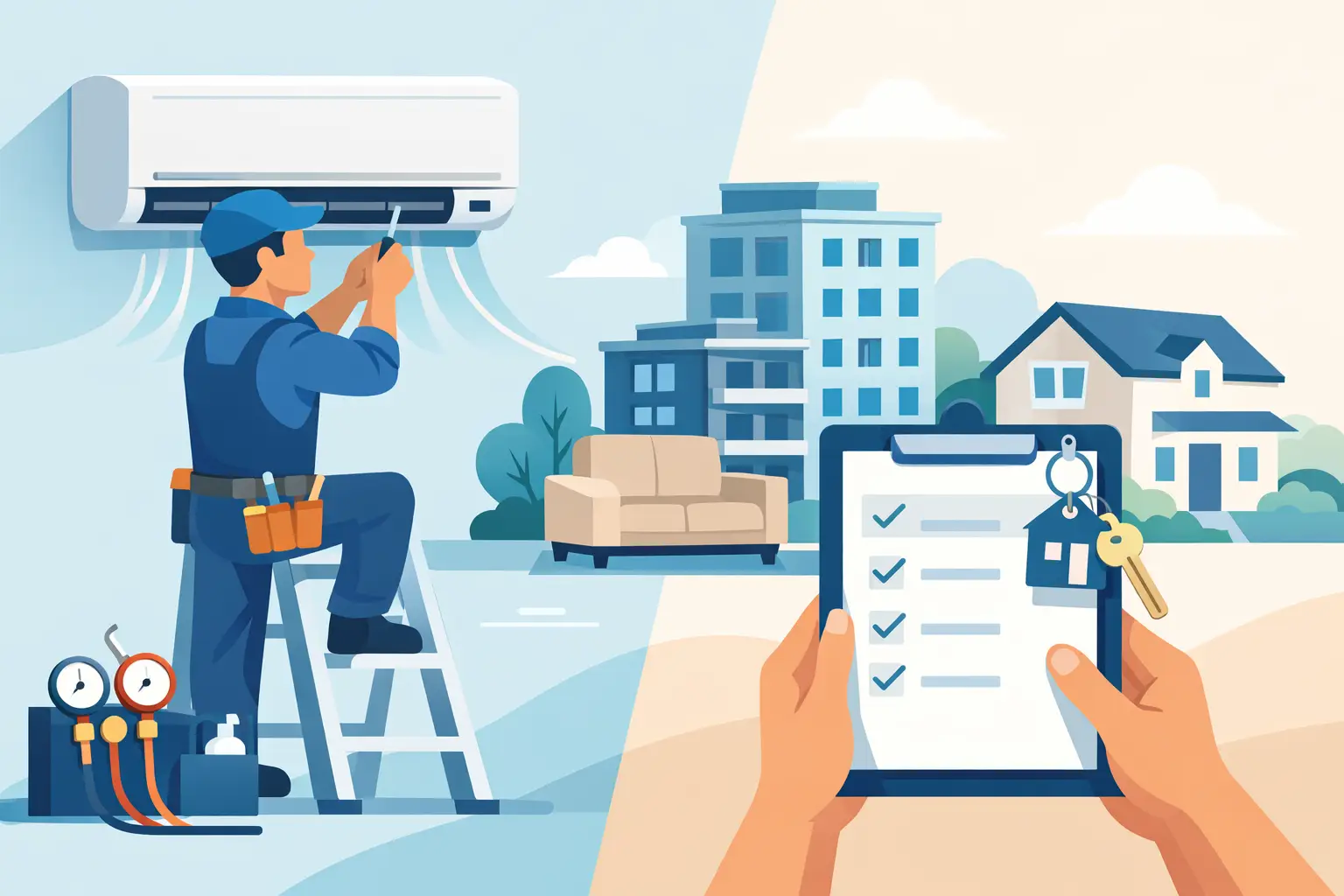
A tenant usually does not complain about the air conditioner until it stops cooling on a hot night, starts leaking onto the floor, or sends the power bill up fast. By that point, a small maintenance issue has already turned into a repair call, a scheduling problem, and a frustrated conversation. That is why aircon servicing for rental property owners is less about routine housekeeping and more about protecting the condition of the unit, the comfort of the tenant, and the value of the property.
For landlords and property managers, air conditioning maintenance sits in that category of work that is easy to postpone and expensive to ignore. A system can appear to be working fine while dirt builds up on filters, drainage starts slowing, and internal parts are placed under more strain than they should be. In a rental, where usage patterns vary from one tenant to the next, that risk can grow quickly.
Why aircon servicing for rental property matters
Rental properties are different from owner-occupied homes in one simple way. The person using the system every day is not always the person paying for long-term upkeep. Some tenants are careful and proactive. Others run the air conditioning for long hours, rarely clean filters, and wait until performance drops before reporting a problem.
That does not mean tenants are careless by default. It simply means landlords need a maintenance plan that does not depend on good habits alone. Scheduled service helps keep the system stable regardless of occupancy patterns.
Regular servicing can reduce the chance of common problems such as weak airflow, water leaks, bad odors, dirty coils, and inefficient cooling. It also creates a record that the system has been professionally maintained. That can help when there is a dispute over wear and tear, especially at move-out.
There is also a practical financial angle. Emergency repairs usually cost more than planned maintenance, not only because of the repair itself but because of the disruption around it. If a tenant cannot use a bedroom comfortably, wants a same-day fix, or threatens to leave at renewal, the real cost goes beyond the technician’s invoice.
What landlords should expect from proper servicing
Not all service visits are equal. A basic maintenance appointment should cover more than a quick filter rinse and visual check. For most residential rental units, proper servicing includes cleaning accessible components, checking drainage, assessing cooling performance, and identifying early signs of wear before they become breakdowns.
The exact scope depends on the type of system and its condition. A newer split system in a lightly used apartment may only need standard scheduled maintenance. An older unit in a high-occupancy rental may need deeper cleaning more often, especially if it has already shown signs of leaking, noise, or reduced cooling.
Landlords should also understand that servicing is not the same as repair. A maintenance visit helps preserve performance and catch issues early, but if a fan motor, capacitor, sensor, or control board is already failing, repair work may still be needed. That is not a sign that servicing failed. It is often the reason servicing matters in the first place.
How often should a rental property’s air conditioning be serviced?
There is no perfect schedule that fits every property. Usage matters. So does the age of the system, the number of indoor units, the tenant profile, and whether the property is occupied full-time.
As a general rule, a rental with regular daily aircon use benefits from servicing every few months. If the unit is used heavily, has multiple occupants, or has a history of drainage and cooling issues, a shorter interval may make sense. If the property is occupied less often or used lightly, the schedule can sometimes be adjusted.
The key is consistency. Waiting until a tenant reports poor cooling is not a maintenance plan. It is reactive repair management. A predictable service schedule helps control cost and makes access easier to coordinate with the tenant.
For landlords with several units, standardizing this schedule across properties can save time and reduce missed maintenance. It also makes budgeting more accurate because servicing becomes a planned operating expense rather than an occasional surprise.
The landlord-tenant question: who is responsible?
This is where many rental situations become unclear. In most cases, landlords are responsible for maintaining fixed systems that are part of the property, especially if the air conditioning was included with the rental. But lease terms matter, and so does how the expectation is communicated at move-in.
A practical approach is to separate routine professional servicing from simple day-to-day care. The landlord or property manager arranges scheduled maintenance. The tenant is expected to use the system properly, avoid misuse, and report issues early.
That arrangement tends to work better than pushing full maintenance responsibility onto the tenant. Many tenants will not know what signs to watch for or when to arrange service. Some will delay because they do not want strangers entering the unit. Others may hire the cheapest provider available, which does not always protect the equipment.
Clear communication helps. Let the tenant know when service is due, how long it will take, and why it benefits them as well. A well-maintained system cools better, smells cleaner, and is less likely to fail at the worst time.
Signs your rental unit needs attention sooner
Even with a service schedule in place, some issues should be checked right away. Water leaking from the indoor unit is one of the most common. Sometimes the cause is a clogged drain line. Sometimes it points to a larger maintenance issue. Either way, it should not be left for later because it can damage ceilings, walls, flooring, or furniture.
Weak cooling is another sign. If the thermostat setting looks normal but the room never reaches a comfortable temperature, the system may be dirty, low on refrigerant, or working harder than it should. Strange noise, musty odor, and short cycling are also warning signs.
In a rental property, speed matters. Tenants often judge a landlord’s responsiveness by how quickly comfort issues are handled. Fast action does not only protect the equipment. It protects the rental relationship.
Choosing the right service partner for rental properties
A rental property needs more than a one-time technician visit. It benefits from a service partner who can show up reliably, communicate clearly, and work around access limitations with minimal disruption.
That is especially important when the landlord is not on-site. You need accurate reporting, honest recommendations, and a clear distinction between what is urgent and what can be planned. A dependable provider should be able to service common residential systems efficiently while also recognizing when a problem points to a larger installation or system-performance issue.
This is where technical depth matters. A company that handles both everyday residential servicing and more demanding cooling environments tends to bring a stronger diagnostic mindset to routine work. Easy Cool Engineering Pte Ltd is built around that kind of service reliability, combining day-to-day aircon support with broader technical capability across residential and commercial systems.
Cost control without cutting corners
Landlords naturally want to manage expenses, especially when maintaining multiple units. But the cheapest service option is not always the most cost-effective one. If a rushed appointment misses a blocked drain, dirty coil, or weakening component, the follow-up repair can cost far more than the savings from the low initial price.
A better way to think about aircon servicing for rental property is as cost control through prevention. Regular maintenance supports system efficiency, lowers the risk of emergency visits, and helps extend the useful life of the equipment. It also reduces the odds of tenant complaints turning into bigger occupancy issues.
There are still trade-offs. A newer property with newer systems may not need the same level of intervention as an older unit with a long service history. A landlord with one condo unit may prioritize convenience. A property manager handling multiple apartments may focus on response time, reporting, and recurring maintenance planning. The right service arrangement depends on the property portfolio, not just the air conditioner itself.
A better standard for rental maintenance
Air conditioning is one of those systems that tenants notice immediately when it works well and even more quickly when it does not. For rental owners, staying ahead of servicing is one of the simplest ways to reduce avoidable stress, protect the asset, and keep the property easier to rent. A scheduled visit may feel routine, but it often prevents the kind of call that disrupts everyone’s day.