

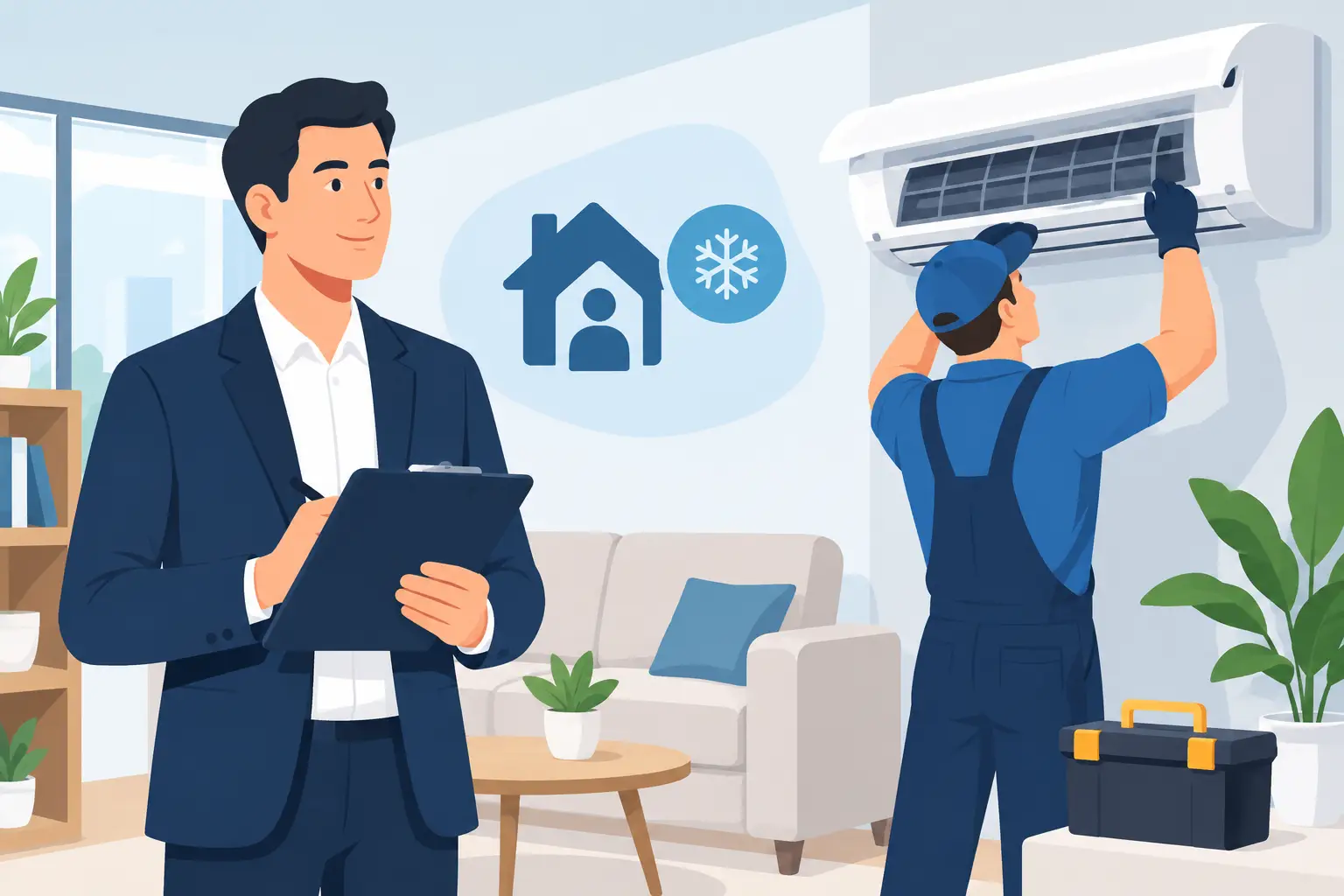
A tenant reports warm air on the first hot weekend of the year. The real problem is not only the failed air conditioner. It is the unclear expectation that follows: Who calls for service, who pays, and how quickly must the issue be handled? The best landlord aircon responsibilities are clear before a breakdown occurs, written into the lease, and supported by prompt professional service.
For rental homes, dependable cooling protects comfort, property condition, and the landlord-tenant relationship. Responsibilities can vary by state, city, building type, and lease terms, so this guide is practical information rather than legal advice. A local attorney or housing authority can clarify the rules that apply to a specific property.
Best Landlord Aircon Responsibilities Start With a Working System
When an air conditioning system is provided as part of the rental, the landlord should generally deliver it in safe, functional condition at move-in. That means the equipment should cool as intended, operate without obvious electrical or drainage problems, and be reasonably clean and maintained.
A move-in inspection is one of the simplest ways to prevent later disagreement. Record the thermostat setting, visible condition of indoor and outdoor units, filter condition, remote controls, and any existing noises or performance issues. Photos and a signed condition report give both parties a reliable starting point.
Local habitability laws matter here. In some locations, cooling is a legal habitability requirement; in others, heating receives more specific legal protection than air conditioning. Even where air conditioning is not legally required, a landlord who advertises or supplies it may still be responsible for keeping that amenity operational under the lease.
Landlord Duties During the Tenancy
A landlord’s role is usually to maintain the equipment, arrange qualified repairs, and address failures caused by normal wear. Air conditioners are mechanical systems. Capacitors weaken, drain lines clog, refrigerant problems develop, and compressors can fail despite careful use. These are property maintenance issues, not tenant-caused damage.
Schedule Preventive Service
Routine service is less disruptive and often less expensive than an emergency repair. Before the cooling season, a qualified technician can inspect electrical components, clean coils where needed, check condensate drainage, assess cooling performance, and identify developing faults.
The right frequency depends on use, climate, equipment age, pets, indoor air quality, and whether the property has central HVAC, ductless mini-splits, or window units. A lightly used system may need a basic annual inspection, while a heavily used rental or multi-unit property may benefit from more regular maintenance. The goal is not unnecessary service calls. It is preventing avoidable leaks, poor cooling, higher energy use, and premature equipment failure.
Respond Within a Reasonable Time
Landlords should provide a clear method for reporting air conditioning problems and acknowledge requests quickly. A system that is running but not cooling, leaking water, tripping breakers, producing burning smells, or making loud mechanical noises requires timely attention.
The urgency depends on the circumstances. Loss of cooling during mild weather may allow for a scheduled appointment. During extreme heat, especially where young children, older adults, or medically vulnerable occupants are present, the response should be accelerated. Water leaking from an indoor unit can also become urgent because it may damage ceilings, walls, flooring, or electrical systems.
Good communication is part of the repair process. Let the tenant know when service is booked, whether access is needed, and what temporary precautions to take. If parts must be ordered, explain the expected timeline rather than leaving the occupant uncertain.
Use Qualified Service Providers
Air conditioning repairs can involve electrical systems, refrigerant handling, condensate drainage, ductwork, and equipment-specific diagnostics. A quick fix from an unqualified provider can create a larger problem, particularly when the issue involves a refrigerant leak, control board, compressor, or drainage fault.
For landlords managing several properties, working with a dependable service partner helps keep maintenance records consistent and tenant communication organized. Easy Cool Engineering supports residential and commercial cooling needs with maintenance, repair, and installation services designed around the condition of the system and the property’s operating requirements.
What Tenants Should Usually Handle
Tenants are not typically responsible for age-related repairs or routine mechanical failure. They do, however, play a key role in day-to-day care and early reporting.
The lease can reasonably require tenants to use the equipment as instructed, keep vents unobstructed, avoid modifying the system, and report unusual performance promptly. If the property uses replaceable filters that tenants can safely access, the lease should state whether the tenant must replace them and how often. A dirty filter can restrict airflow, reduce comfort, and place unnecessary strain on the equipment.
Tenants should also avoid actions that can cause damage, such as setting the thermostat to extreme temperatures, blocking outdoor condenser airflow, forcing windows or doors open while cooling, or using an air conditioner with a known leak. These actions do not automatically make a tenant liable, but documented misuse or negligence may affect responsibility for repair costs.
The key distinction is simple: normal use and normal wear belong with the landlord; damage caused by misuse may belong with the tenant. The lease should define this distinction carefully rather than relying on assumptions after a failure.
Put Aircon Responsibilities in the Lease
The strongest rental agreements do not merely say that “air conditioning is included.” They set out how the system will be maintained and what each party must do when there is a problem.
A useful air conditioning clause should identify the equipment included with the property, whether it is a required service or an optional amenity, and the process for requesting repair. It should also address maintenance access, filter replacement, tenant reporting duties, liability for negligent damage, and the landlord’s right to select the service provider.
Avoid vague language such as “tenant is responsible for AC maintenance” unless the intended scope is clearly explained. That phrase can unfairly shift major repair obligations or create disputes over what maintenance means. A better approach separates minor occupant tasks, such as accessible filter changes, from professional inspections, repairs, cleaning, and replacement decisions.
For furnished rentals, vacation properties, and buildings with individual mini-split units, specify whether remotes, batteries, and user-cleanable filters are included. For central systems, clarify access rules for mechanical closets, roof equipment, and thermostats. Details that feel minor at signing often become important when temperatures rise.
When Replacement Becomes the Landlord’s Decision
Repeated repairs can cost more than a planned replacement. Landlords should consider replacement when an older system has frequent breakdowns, struggles to maintain temperature, uses excessive energy, requires an expensive major component, or has repair needs that keep returning.
Replacement is not always the automatic best choice. A newer unit with an isolated drain or electrical issue may be worth repairing. Conversely, an aging system that still runs may impose high utility costs and produce recurring tenant complaints. A professional assessment should consider equipment age, repair history, parts availability, cooling capacity, efficiency, and the condition of related components such as ducts, insulation, and drainage.
If replacement work requires access or a period without cooling, give tenants as much notice as practical. Scheduling during milder weather can reduce disruption, but urgent failures do not always allow for ideal timing.
A Better Process for Avoiding Disputes
Most air conditioning disputes come down to delayed reporting, unclear lease language, or poor documentation. A practical process keeps everyone aligned: inspect the system at move-in, maintain it on a sensible schedule, require tenants to report faults early, document service visits, and communicate repair timelines clearly.
Landlords should keep invoices, inspection reports, photos, tenant requests, and records of any damage caused by misuse. Tenants should keep copies of maintenance requests and follow reporting instructions. This documentation is useful for repair planning and can also help resolve disagreements fairly.
Cooling equipment will eventually need attention. The most helpful closing thought is to treat air conditioning as an ongoing property responsibility, not a last-minute emergency. Clear terms, preventive care, and responsive service give tenants a more comfortable home while helping landlords protect the value of the property.