

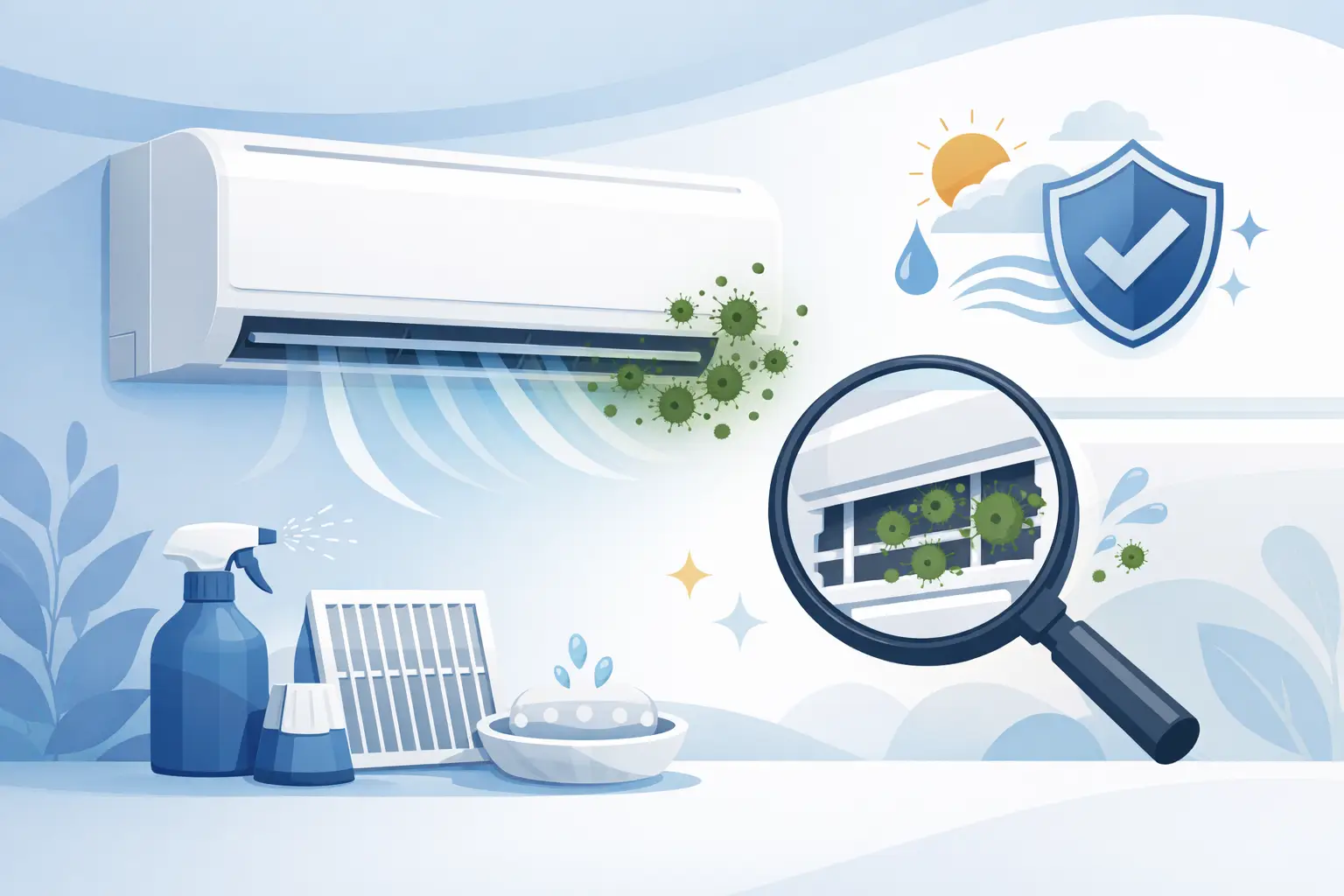
A sour, musty smell when the air conditioner starts is not something to cover up with a room spray. It often means moisture and organic debris are sitting inside the unit, creating the conditions for mold growth. The best ways to prevent mouldy aircon problems come down to controlling moisture, keeping key components clean, and servicing the system before small buildup becomes a bigger indoor air quality concern.
For homeowners, this can protect comfort, energy efficiency, and the life of the air conditioner. For offices, retail spaces, and facilities, it also helps reduce complaints, odors, and avoidable disruption. The right routine depends on how often the system runs, how humid the property is, and whether occupants notice early warning signs.
Why Air Conditioners Become Moldy
An air conditioner removes heat and humidity from the air. As warm indoor air passes over the cold evaporator coil, moisture condenses and should flow through the drain pan and drain line. That process is normal. Problems begin when water does not drain properly or when dust collects on damp surfaces.
Air filters, evaporator coils, drain pans, blower wheels, and drainage pipes can all hold dust, skin cells, and airborne particles. In a damp environment, that debris can support mold and mildew growth. The result may be a musty odor, reduced airflow, water dripping from the unit, or dark spotting around vents and indoor components.
High humidity makes the issue more likely, but a moldy air conditioner is not always caused by humidity alone. A clogged drain line, an overdue filter change, incorrect installation slope, or a unit that is oversized and short-cycles can all contribute. This is why cleaning only the visible front cover may not solve the source of the problem.
Best Ways to Prevent Mouldy Aircon Buildup
Clean or replace filters on schedule
The filter is the first line of defense against dust entering the indoor unit. When it becomes clogged, airflow drops and more debris can settle around the coil and blower. A dirty filter can also make the unit work harder, increasing energy use while reducing cooling performance.
For washable filters, clean them according to the manufacturer’s instructions and allow them to dry fully before reinstalling them. A damp filter put back into a closed air conditioner can add to the moisture problem. Disposable filters should be replaced on the recommended schedule, with more frequent changes in homes with pets, construction dust, smokers, or high daily air conditioner use.
Keep the drain pan and drain line clear
Condensate drainage is one of the most critical areas for mold prevention. Water should leave the indoor unit freely. If the drain pan has standing water or the drain line is partially blocked, moisture can remain inside the system long enough for mold, algae, and bacteria to develop.
Watch for water dripping from the indoor unit, stains on nearby walls or ceilings, gurgling sounds, or an air conditioner that smells worse after it has been running for a while. These are practical reasons to arrange professional inspection rather than waiting for a complete blockage. A technician can clean the drainage system properly and check whether the unit is draining at the correct angle.
Use the right cooling and drying settings
Running an air conditioner very cold for short bursts is not always the best approach in humid conditions. If a system cools a room too quickly and shuts off before it has removed enough moisture, the space may feel clammy even at a low temperature. That excess humidity can encourage mold around vents, walls, and indoor unit components.
Use a stable, reasonable temperature setting and avoid constantly switching the system on and off. If your unit has a dry mode, it may be useful when humidity is high and the room does not need heavy cooling. The best setting depends on the space, the equipment type, and outdoor conditions, so persistent humidity issues may need a technician to assess system sizing and performance.
Clean the indoor unit beyond the cover
Wiping the exterior louvers is helpful, but odors often originate deeper inside the system. The evaporator coil, blower wheel, and drain pan are harder to reach and may collect sticky dust over time. Once buildup is established in these areas, it can circulate an unpleasant smell whenever the fan operates.
Routine air conditioner servicing should include inspection and cleaning of the parts that affect airflow and drainage. A more thorough aircon chemical wash may be appropriate when there is heavy dirt, persistent odor, poor cooling, or drainage trouble. It should not be treated as an automatic requirement for every unit, however. The right cleaning method depends on the condition of the air conditioner and should be recommended after inspection.
Give the unit a chance to dry
In very humid locations, moisture can remain on internal components after cooling stops. Some systems have an auto-clean, self-dry, or fan-dry function that continues the fan briefly after the compressor shuts down. When available, this feature can help dry the coil and reduce the damp conditions mold prefers.
If your system does not have this function, running fan-only mode for a short period after heavy cooling may help in some situations. This is not a replacement for cleaning or drainage maintenance, but it is a useful habit when the air conditioner has been running for many hours.
Habits That Protect Indoor Air Quality
Keep doors and windows closed while the air conditioner is operating, especially during hot or humid weather. Open windows allow humid outdoor air to enter continuously, making the equipment work harder to remove moisture. Address indoor moisture sources as well, including leaks, wet laundry drying indoors, or poorly ventilated bathrooms.
Do not block supply or return vents with furniture, curtains, or storage. Restricted airflow can create uneven temperatures and leave some areas damp. In commercial settings, avoid stacking cartons or equipment directly beneath indoor units where a small drainage leak could go unnoticed.
It also helps to pay attention to patterns. If a musty smell appears only when the air conditioner first turns on, the coil or blower may need cleaning. If the odor continues throughout operation, there may be mold in the unit, ductwork, drain system, or even elsewhere in the room. A professional assessment can distinguish an air conditioner issue from a wider building moisture problem.
When to Schedule Professional Aircon Service
Regular maintenance is easier and usually less disruptive than responding to an odor, leak, or loss of cooling. Homes with frequently used split systems often benefit from scheduled servicing several times a year, while commercial systems may need a maintenance plan based on operating hours, occupancy, and system complexity.
Arrange prompt service if you notice persistent musty odors, visible dark residue, weak airflow, water leaks, unusual noises, repeated drain clogs, or occupants experiencing irritation when the system runs. These signs do not always confirm mold, but they deserve attention. Continuing to operate an affected unit without checking the cause can spread odor and contamination through the conditioned space.
For larger ACMV, VRV, or ducted systems, preventive maintenance should include more than filter cleaning. Coil condition, condensate drainage, fan operation, duct cleanliness, insulation, controls, and overall humidity management all affect whether moisture remains where it should not. This is particularly relevant in offices, retail sites, kitchens, and facilities where downtime can affect operations.
Easy Cool Engineering approaches maintenance as a way to keep cooling systems dependable, not simply as a response to a breakdown. A qualified technician can identify whether the issue requires standard servicing, drainage cleaning, a deeper wash, repair work, or adjustments to improve airflow and moisture control.
A clean-smelling air conditioner is usually the result of small, consistent actions: dry filters, clear drains, stable settings, and timely professional care. If the unit already smells damp or musty, acting early gives you the best chance of restoring fresh, reliable cooling before the problem spreads.