

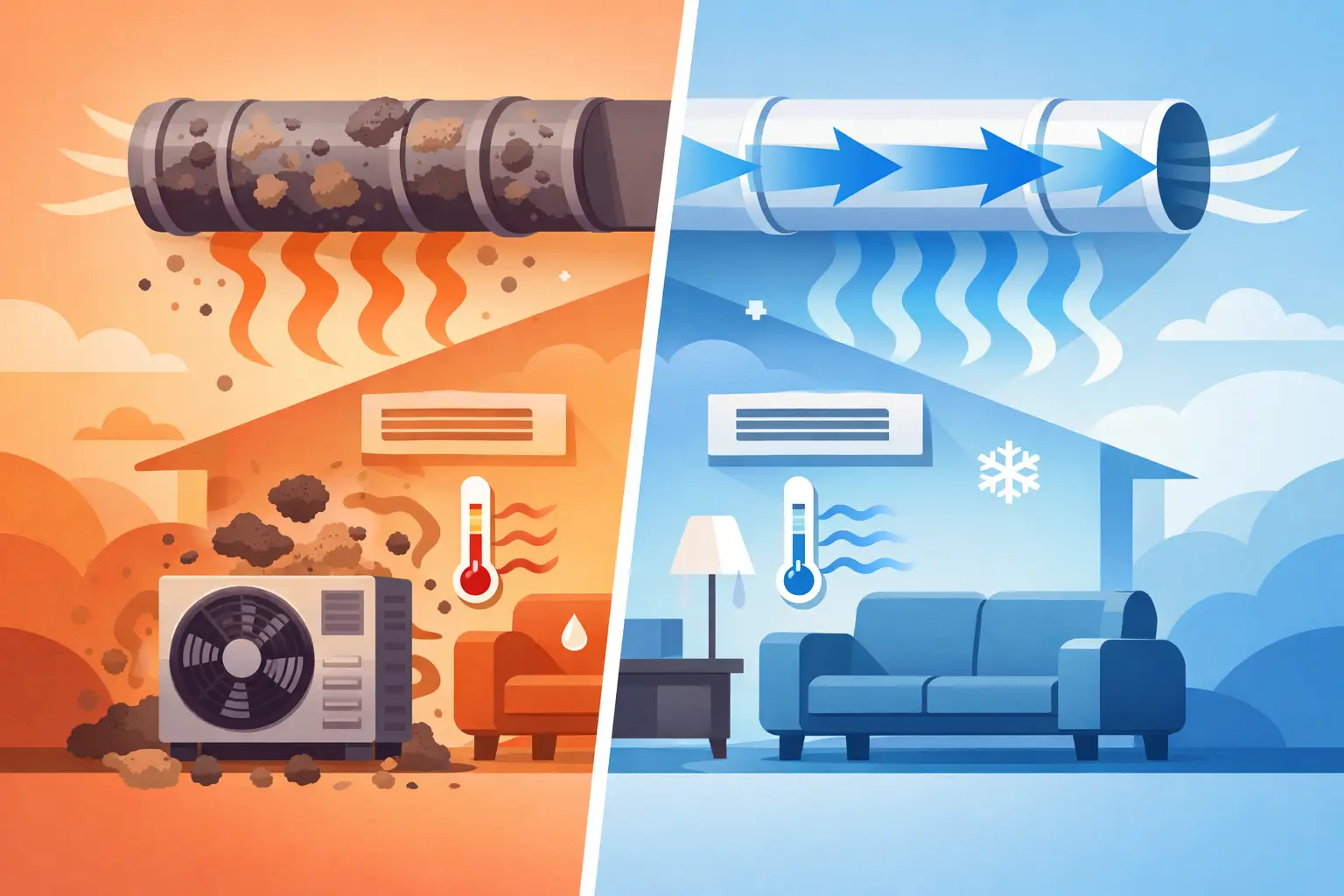
A thermostat set to 72°F does not guarantee that every room will feel like 72°F. If the living room is comfortable while bedrooms stay warm, or your AC seems to run for long periods without catching up, can clogged ducts affect cooling? Yes. Restricted or contaminated ductwork can reduce the amount of conditioned air reaching your rooms, creating uneven temperatures and unnecessary strain on the system.
Duct problems are not always the only cause of weak cooling. A dirty filter, undersized equipment, refrigerant issue, thermostat problem, or aging blower can produce similar symptoms. Still, when airflow is the main complaint, the duct system deserves a careful inspection.
How Clogged Ducts Affect Cooling Performance
Your air conditioner removes heat from indoor air, cools that air through the indoor coil, and relies on the blower and ductwork to distribute it through the building. Supply ducts carry cooled air to rooms. Return ducts bring warmer indoor air back to the system to be cooled again.
When dust, construction debris, pest material, loose insulation, or other obstructions narrow those pathways, the blower has to push against greater resistance. Less air may reach distant rooms, and the system can take longer to bring the space to the set temperature. The result is often a home that feels cool in one area and uncomfortable in another.
A partial blockage can be enough to make a difference. It does not take a duct packed solid with debris to affect performance. A heavily soiled return grille, a collapsed flexible duct, or a supply run pinched behind a renovation can restrict airflow more than homeowners expect.
In commercial spaces, the impact can be broader. Restricted airflow may leave conference rooms, retail zones, or work areas warmer than the rest of the building. For facilities with specialized cooling requirements, airflow performance should be assessed promptly rather than treated as a minor comfort issue.
Clogged Ducts Are Not the Same as Leaky Ducts
Both conditions can cause poor cooling, but they work differently. A clog restricts airflow inside the duct. A leak allows cooled air to escape into an attic, crawl space, ceiling void, or other unconditioned area before it reaches the room.
Ducts can also be poorly designed, undersized, disconnected, or damaged. These issues may produce many of the same warning signs as a clog: weak airflow, hot spots, higher energy use, and long cooling cycles. That is why a professional diagnosis should look at the complete air distribution system rather than assuming that duct cleaning alone is the answer.
Cleaning is useful when there is confirmed buildup or contamination. It will not correct a crushed duct, an improperly balanced system, or an AC unit that is too small for the space. The right repair depends on what is actually restricting comfort.
Signs Your Ductwork May Be Restricting Airflow
Start with what you can see and feel at the vents. A weak stream of air from one or more supply registers, especially when other rooms receive normal airflow, can point to a branch duct issue, a closed damper, or an obstruction. A return grille that quickly collects dust may also indicate that the system is working harder to pull air through the home.
Other common signs include rooms that stay warm in the afternoon, noticeable differences between floors, musty odors when the system starts, and dust returning soon after cleaning. You may also hear whistling, rattling, or unusually loud airflow from vents. Those sounds can occur when air is forced through a narrowed passage or when duct connections are loose.
A rising utility bill is worth attention, but it is not proof of clogged ducts by itself. Seasonal weather, thermostat habits, electricity rates, and equipment condition all affect operating costs. Look for a pattern of reduced comfort combined with longer run times or reduced airflow.
What Actually Clogs Air Ducts?
Normal household dust is one source, particularly when filters are not changed on schedule. Renovation work can introduce drywall dust, sawdust, and insulation particles into uncovered vents. Pest activity can leave nesting materials or droppings, while deteriorating duct liner or insulation can shed material into the air path.
Moisture is a separate concern. Condensation, roof leaks, plumbing leaks, or poor drainage around the indoor unit can create conditions that support microbial growth. If there is visible mold-like growth, water damage, or a persistent musty smell, the moisture source must be corrected. Cleaning without addressing the water problem only treats the symptom.
Flexible ducts deserve special attention because they can sag, kink, or collapse if not properly supported. This is not technically a clog, but it restricts airflow in much the same way. In older properties, duct sections may also have accumulated damage from previous repairs, remodeling, or pest access.
Why Poor Airflow Can Stress Your AC System
An air conditioner is designed to operate within a specific airflow range. When too little air passes across the indoor evaporator coil, the coil can become excessively cold and may freeze. Ice on the coil further blocks airflow, so a relatively small airflow problem can become a more serious cooling failure.
Restricted return airflow can also make the system run longer to satisfy the thermostat. That can add wear to the blower motor and other components while leaving occupants uncomfortable. In severe cases, the equipment may shut down on a safety control or suffer damage that costs more to repair than an earlier inspection would have.
More airflow is not always better, either. Duct systems need the correct balance for the equipment and layout. Opening every vent, closing vents in unused rooms, or changing blower settings without diagnosis can shift pressure in ways that create new problems. A qualified technician can measure airflow and identify whether the issue is a blockage, leakage, equipment fault, or system design limitation.
Practical Checks Before Scheduling Service
There are a few safe steps property owners can take before calling for help. Replace or clean the HVAC filter according to the manufacturer’s recommendations, making sure it is installed in the correct direction. Check that supply registers and return grilles are not blocked by furniture, rugs, curtains, or storage.
Confirm that vents are open and that the thermostat is set correctly. If you recently had construction work done, check whether vents were covered during the project and whether dust entered the system. Take note of which rooms have weak airflow and when the issue is most noticeable. These details make troubleshooting faster.
Avoid pushing objects, vacuum hoses, or chemical sprays deep into ducts. You may damage flexible ductwork, dislodge connections, or spread debris further into the system. Do not remove panels from the indoor unit unless you are trained to do so. Electrical components, sharp metal edges, and coil damage are real risks.
When Professional Duct and AC Service Makes Sense
Professional assessment is recommended when airflow remains weak after a filter change, when there are strong odors, when debris is visible inside registers, or when one part of the property consistently does not cool. It is also appropriate after extensive remodeling, water intrusion, pest activity, or a sudden increase in dust around the home.
A proper service visit should go beyond a quick look at the vents. The technician can inspect the filter, blower, evaporator coil, drain system, accessible duct runs, dampers, and connections. Depending on the findings, the solution may involve duct cleaning, repairing a damaged section, sealing leaks, correcting support for flexible ducts, cleaning the AC components, or addressing a separate equipment problem.
For offices, retail locations, kitchens, and other commercial facilities, scheduling maintenance before peak cooling demand helps reduce disruption. Facilities with complex ACMV, VRV, or precision cooling systems should use a service partner familiar with the operational requirements of the equipment. Easy Cool Engineering approaches cooling concerns with that full-system perspective, helping customers address the cause rather than guessing at a single fix.
Keep Airflow Problems From Returning
The most effective prevention is consistent maintenance. Use the correct filter type and replace it on time, keep return grilles clear, and arrange routine AC servicing so dirty coils, drains, and blower components do not compound an airflow issue. After renovation work, inspect the system before returning it to normal operation.
Pay attention to changes instead of waiting for a complete failure. A room that gradually gets warmer, a vent that grows quieter, or a system that runs longer than usual is often giving you an early opportunity to act. Restoring clean, properly balanced airflow can protect comfort now and help your cooling system perform more reliably through the next hot stretch.