
Does Duct Cleaning Save Energy? What to Expect
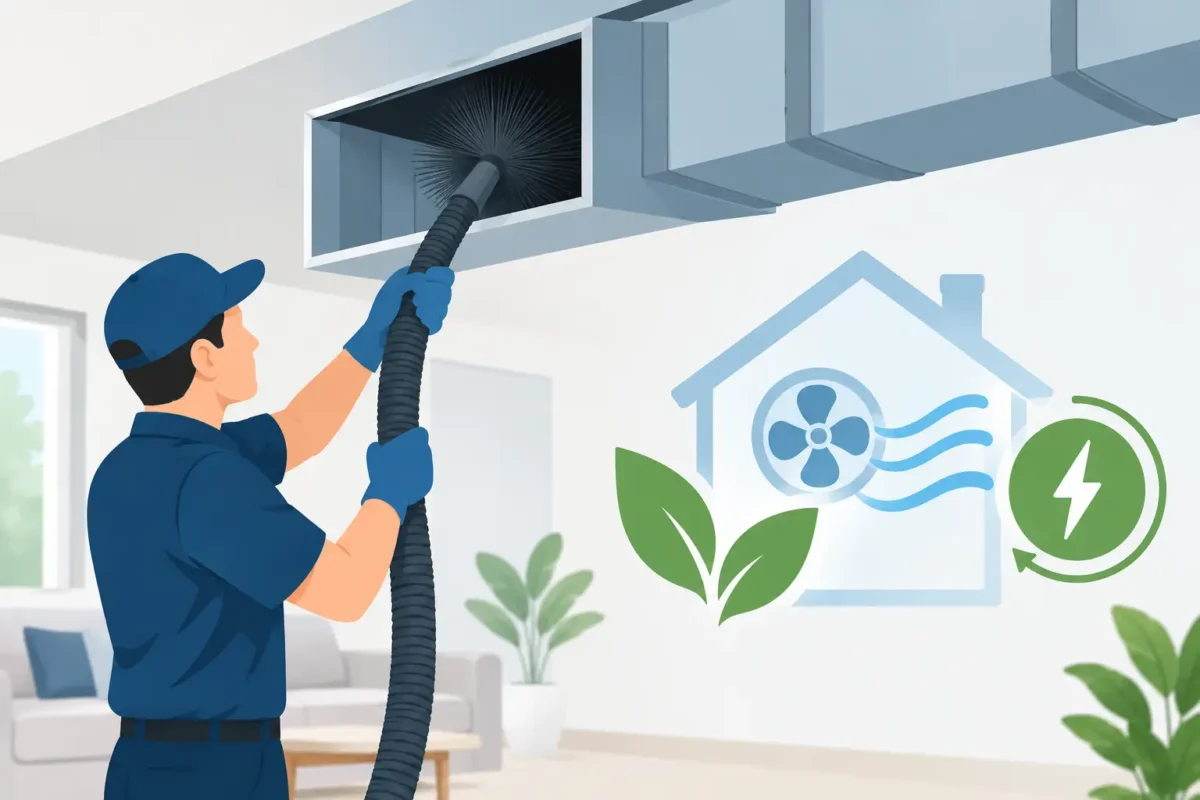
A cooling bill that keeps rising can make duct cleaning sound like an easy fix. But does duct cleaning save energy? Sometimes, yes – particularly when heavy buildup is restricting airflow or a duct issue is forcing your HVAC system to work harder. In many homes and commercial spaces, however, the larger savings opportunity lies with the air conditioner itself, duct sealing, insulation, and consistent maintenance.
The practical answer is that duct cleaning is not a guaranteed energy-saving service on its own. It is most valuable when it solves a real airflow or cleanliness problem. Knowing the difference helps you spend maintenance dollars where they will have the greatest effect.
Does Duct Cleaning Save Energy in Every Building?
No. A light layer of normal household dust inside ducts does not usually create enough resistance to noticeably change energy use. Your AC system will not suddenly become dramatically more efficient simply because clean-looking ducts are cleaned.
Duct cleaning can help when contamination is substantial. Thick dust, renovation debris, pest nesting material, loose insulation, or objects lodged in the ductwork can reduce the free movement of air. When less conditioned air reaches the rooms, occupants may lower the thermostat, run the system longer, or assume the equipment is too small. All of those responses can increase energy consumption.
The key issue is airflow. Air conditioners and heat pumps are designed to move a specific volume of air across the indoor coil. If the return or supply path is obstructed, the system may take longer to cool a space and deliver uneven comfort from room to room. Cleaning the obstruction can restore proper operation, but it is restoring lost performance rather than creating new efficiency.
For commercial properties, the same principle applies at a larger scale. Offices, retail spaces, and facilities with complex air distribution systems can experience comfort complaints because of blocked grilles, dirty return pathways, disconnected ducts, or poorly balanced airflow. Duct cleaning may be part of the solution, but a proper inspection should identify the actual cause before work begins.
When Duct Cleaning Is Worth Considering
A visual inspection is more useful than a routine schedule based only on time. Duct cleaning may be appropriate after major remodeling, if occupants notice dust blowing from vents, or when there is visible debris near accessible sections of the duct system. It can also make sense after a pest issue has been resolved, since nesting material and droppings should be removed safely rather than left inside the air path.
Persistent musty odors deserve attention too, although cleaning ducts is not always the answer. Moisture around the evaporator coil, drain pan, insulation, or indoor unit can cause odors that travel through the system. Cleaning ducts without correcting the moisture source can leave the underlying problem in place.
Consider an assessment if you are seeing several signs at once:
- Certain rooms receive much weaker airflow than others.
- Dust quickly returns around vents despite regular housekeeping.
- The system runs longer than usual to reach the set temperature.
- There is visible debris, pest evidence, or construction dust in accessible duct sections.
- Occupants report odors or discomfort when the AC starts.
These signs do not automatically prove that ducts are the problem. They are a reason to have a qualified technician check the system as a whole.
A Dirty Filter Is Often the Bigger Issue
Before arranging duct cleaning, check the air filter. A clogged filter is one of the most common and avoidable causes of reduced airflow. It can make the blower work harder, reduce cooling capacity, and allow the indoor coil to become dirty over time.
For many households, replacing or cleaning the filter on schedule delivers more reliable efficiency benefits than duct cleaning. The right interval depends on the filter type, whether there are pets, the amount of dust in the property, and how often the system runs. A technician can also confirm that the filter fits correctly. Gaps around a poorly fitted filter allow dust to bypass it and collect where it should not.
Leaky Ducts Waste More Energy Than Dusty Ducts
If ducts run through an attic, crawlspace, ceiling void, garage, or other unconditioned area, air leaks can be a major source of energy loss. Cooled air can escape before it reaches the living or working area, while warm, humid air may be drawn into the system through return-side leaks.
Cleaning the interior of leaky ductwork will not stop that loss. Sealing joints, reconnecting loose sections, and insulating ducts where appropriate usually provide a more direct efficiency improvement. In older properties, crushed flexible ducts and poorly supported runs can also restrict airflow. These issues call for repair or replacement, not just cleaning.
What Actually Reduces Cooling Energy Use
The most effective approach is targeted HVAC maintenance. Duct condition matters, but it is one part of an interconnected system that includes the thermostat, filter, blower, coil, refrigerant circuit, drain system, and air distribution network.
Start with the basics: keep filters clean, make sure supply vents and return grilles are not blocked by furniture, and keep doors and windows properly sealed when cooling is running. Set the thermostat to a realistic temperature rather than making large adjustments that force extended runtimes. Ceiling fans can also improve comfort by circulating air, allowing some occupants to use a slightly higher cooling setting.
Professional AC servicing adds another layer of protection. A technician can clean the indoor coil and blower components when needed, check the condensate drain, inspect electrical connections, assess refrigerant performance, and identify airflow concerns. These tasks directly affect how reliably and efficiently the system operates.
For facilities managers, planned maintenance is especially valuable because small performance problems can spread across a larger building. Uneven temperatures, high humidity, and repeated tenant complaints may point to a control issue, a failing fan, a dirty coil, a duct design limitation, or an equipment capacity mismatch. Treating every complaint as a duct-cleaning issue can waste time and budget.
What to Expect From a Proper Duct Assessment
A dependable service provider should not promise a specific percentage of energy savings from duct cleaning before inspecting the system. The result depends on the amount of contamination, the duct layout, the condition of the air handler, and whether other faults are present.
A useful assessment begins with accessible ducts, vents, filters, and the indoor equipment. The technician should look for debris, visible mold-like growth, moisture damage, loose connections, collapsed duct sections, and signs of air leakage. If cleaning is recommended, ask what areas will be cleaned and what problem the work is expected to address.
The cleaning method matters. Proper work should remove debris rather than simply push it farther into the system or release it into occupied areas. Technicians should protect floors and furnishings, use suitable containment and vacuum equipment, and take care around delicate components. If biological growth is suspected, the moisture source must be investigated and corrected before the issue returns.
Be cautious with broad claims that every home needs duct cleaning every year or that cleaning alone will solve allergies, odors, or high utility bills. Those claims overlook the many other factors that affect indoor air and HVAC performance.
A Better Way to Decide
If your cooling system is performing normally, filters are maintained, and there is no visible contamination or airflow complaint, duct cleaning may not be urgent. Put your attention toward regular AC service, sensible thermostat settings, and sealing obvious air leaks around the building envelope.
If you have recently renovated, found pest debris, noticed airflow problems, or suspect dirty ducts are contributing to poor comfort, schedule an inspection first. A qualified technician can separate a cleaning need from a coil, filter, drain, duct leak, or equipment issue.
Easy Cool Engineering approaches cooling service with that practical mindset: identify the condition affecting performance, recommend the work that fits the system, and avoid treating every problem with the same service. Clean ducts can support healthier airflow and better operation when there is a genuine buildup problem. The most meaningful energy savings come from maintaining the entire cooling system so every component can do its job properly.