
Ducted Versus Cassette Aircon: Which Fits?
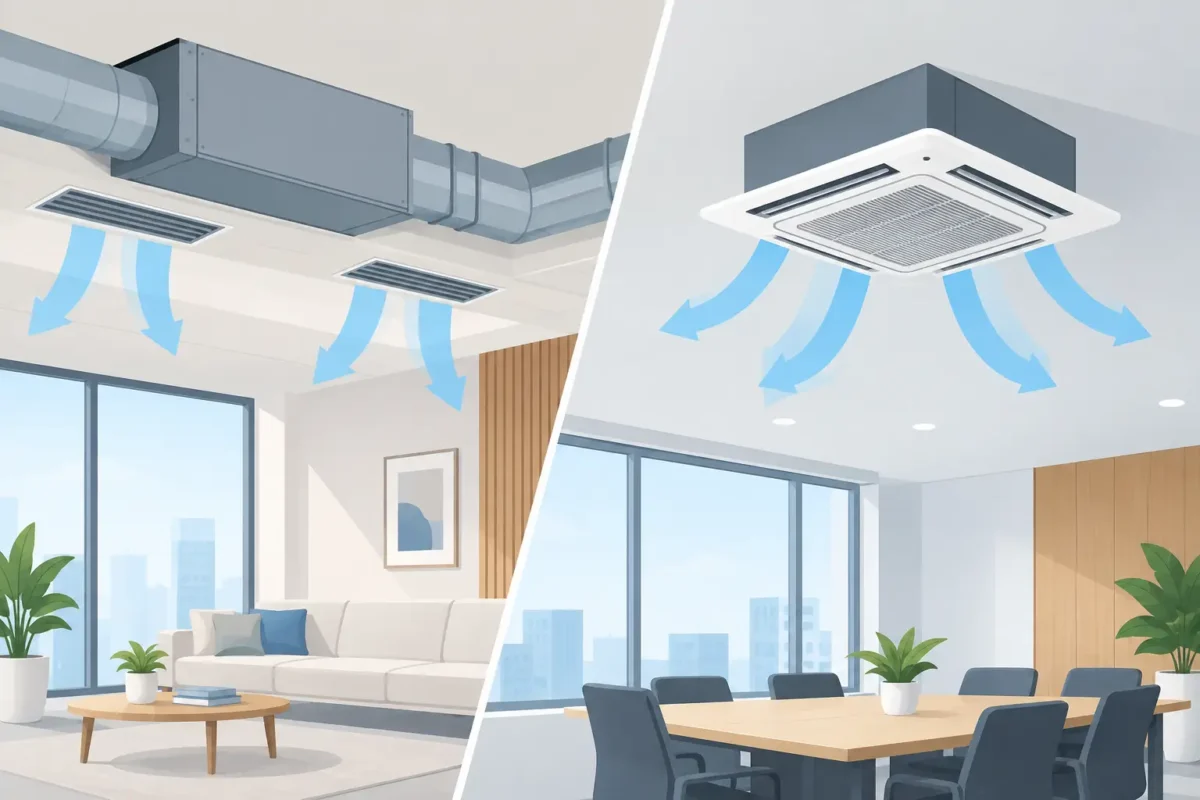
A ceiling can do more than hide wiring and pipes. It can shape how evenly a room cools, how much equipment remains visible, and how disruptive future maintenance will be. When comparing ducted versus cassette aircon, the right choice usually comes down to the layout of the property, ceiling space, room usage, and how much control you need in each area.
Both systems can deliver reliable comfort when designed and installed correctly. However, they solve different problems. Ducted air conditioning is often selected for a clean, whole-space appearance and coordinated cooling across multiple rooms. Cassette units are commonly chosen for open areas that need strong, wide air distribution from a compact ceiling-mounted system.
Understanding Ducted Air Conditioning
A ducted system uses a concealed indoor fan coil unit connected to a network of ducts. Conditioned air travels through the ducts and enters rooms through discreet ceiling grilles or diffusers. The indoor equipment, drain piping, refrigerant lines, and most of the air distribution components are hidden above the ceiling.
This configuration works especially well when a property has sufficient ceiling void space and the renovation or construction plan allows access for duct routing. A single ducted fan coil may serve several rooms, although the exact arrangement depends on the system design, capacity, and zoning requirements.
For homeowners, the main appeal is visual. Bedrooms, living areas, and hallways can be cooled without a wall-mounted unit in every room. For offices, retail spaces, and hospitality settings, ducted air conditioning can provide a more polished finish while keeping equipment out of sight.
Ducted systems also offer flexibility in diffuser placement. Instead of blowing air from one wall, supply grilles can be positioned to suit the room shape and furniture layout. This can help reduce hot spots in long living rooms, meeting spaces, or irregularly shaped commercial interiors.
That said, ducted air conditioning requires careful planning. Duct sizes, return-air paths, insulation, condensate drainage, and access panels all affect performance and serviceability. A system that is poorly sized or difficult to access may cool unevenly, use more energy, or make maintenance unnecessarily complicated.
What Is a Cassette Air Conditioner?
A cassette air conditioner is an indoor unit installed within the ceiling, with a visible decorative panel sitting flush or nearly flush with the ceiling surface. Most cassette units distribute air in multiple directions, often through four-way outlets. The result is broad airflow from a central point in the room.
Cassette units are typically a practical choice for larger open-plan spaces. They are frequently used in offices, classrooms, shops, restaurants, studios, and reception areas where people are spread throughout the room. Because the air is delivered from the center of the ceiling, a cassette can often cool the space more evenly than a wall-mounted unit placed at one end.
For homes, cassettes can be suitable in a large living and dining area, particularly where a false ceiling is already planned. They can deliver strong cooling without taking up wall space that might otherwise be used for windows, artwork, storage, or cabinetry.
Unlike ducted systems, a cassette generally serves the immediate room or defined zone where it is installed. This can be an advantage when different areas have different occupancy patterns. An office may cool the meeting room only when it is in use, while a retail operator may run cooling in the customer area without conditioning storage spaces unnecessarily.
Ducted Versus Cassette Aircon: The Main Differences
The most noticeable difference between ducted and cassette air conditioning is how each system distributes air. Ducted systems move air through concealed ducts to multiple grilles, while cassette units release air directly from the ceiling-mounted indoor unit.
This affects both coverage and control. A ducted system can provide a coordinated cooling solution for several rooms or a larger connected area. A cassette is more localized, making it well suited to a single open space that needs broad airflow from above.
Aesthetics are another consideration. Ducted air conditioning is the more concealed option because only the grilles are visible. A cassette panel remains visible, but it is generally neater and less intrusive than a wall-mounted split unit. The better choice depends on whether you prefer a fully integrated ceiling design or do not mind a visible ceiling panel.
Installation requirements also differ. Ducted systems need adequate room for ductwork, insulation, return-air ducts or grilles, and service access. Cassette systems need ceiling space as well, but without the same level of duct routing. If ceiling height is limited or the project is a retrofit with minimal renovation work, a cassette may be easier to accommodate than a full ducted layout.
Comfort, Airflow, and Zoning
Comfort is not only about reaching a low temperature. Good air conditioning should circulate air evenly, manage humidity, avoid excessive drafts, and match cooling output to the way a space is used.
A ducted system can create a very balanced feel when its grilles are properly positioned and the duct design is matched to the required airflow. In a multi-room home, separate zones and controls may allow occupants to cool only the areas they are using. However, zoning adds components and requires thoughtful system design. It should not be treated as an afterthought.
Cassette units are effective where central, multi-directional airflow is needed. In a busy office or dining area, this can help prevent one side of the room from feeling much warmer than the other. The placement still matters. A cassette located directly above desks, dining tables, or seating areas may cause discomfort if the air throw is not adjusted appropriately.
For spaces with enclosed rooms, ducted air conditioning often provides the more cohesive solution. For one large space with changing occupancy, a cassette may offer simpler room-by-room operation.
Installation Cost and Long-Term Value
The initial cost of either option depends on more than the unit itself. Capacity, equipment type, pipe runs, electrical work, drainage, ceiling modifications, controls, and access requirements all influence the final project cost.
Ducted air conditioning often has a higher installation cost because it involves duct fabrication and installation, diffusers, return-air provisions, insulation, and more extensive ceiling work. It can be a worthwhile investment when a property is undergoing a major renovation, when multiple rooms need a consistent appearance, or when the design calls for concealed cooling throughout.
Cassette systems may require less duct-related work, but they are not automatically low-cost. Ceiling mounting, drain pumps where necessary, refrigerant piping, wiring, and access provisions still need professional attention. In commercial spaces, several cassette units may be needed to cover a large floor area, which can change the overall budget.
The right comparison is not simply which system costs less on installation day. Consider how long you expect to occupy the property, whether the space may be reconfigured, how often different areas are used, and the likely maintenance needs over time.
Maintenance Access Matters More Than Many Owners Expect
Every air conditioning system needs regular cleaning, inspection, and performance checks. Filters, coils, drain lines, blowers, electrical connections, and refrigerant operation all affect cooling efficiency and indoor comfort.
With a ducted system, accessible service panels are essential. Technicians need to reach the fan coil, filters, drain pan, and key duct connections without damaging the ceiling. Return-air grilles should also be positioned so filters can be cleaned or replaced easily. Concealed equipment should never mean inaccessible equipment.
Cassette units require cleaning of filters, drain components, blower sections, and ceiling panels. Their central location can make access straightforward when a suitable service opening is available, but furniture and ceiling height should be considered. In commercial settings, maintenance should be scheduled around operating hours to minimize disruption.
Regular servicing also helps identify drainage issues early. Water leaks from either system are often linked to blocked drain lines, poor insulation, or installation-related concerns that should be addressed before they damage ceilings, finishes, or equipment.
Which System Is Right for Your Property?
Choose ducted air conditioning when you want a highly concealed finish, need to cool several connected rooms, and have enough ceiling space for proper ductwork and maintenance access. It is particularly suited to full renovations, new builds, upscale residential interiors, and commercial projects where a coordinated ceiling design matters.
Choose cassette air conditioning when you need strong, even airflow in an open space and want each area to operate more independently. It is often a practical fit for living and dining rooms, offices, retail floors, restaurants, and other shared spaces with varied occupancy.
Some properties benefit from a mixed approach. A home may use ducted cooling for bedrooms and circulation areas, with a cassette unit in a large open living room. A commercial facility may use cassettes in customer-facing areas and a ducted system in private offices. The most effective layout follows the way people actually use the space, not a one-size-fits-all equipment preference.
A professional site assessment should review room dimensions, heat load, windows, occupancy, ceiling conditions, drainage routes, electrical capacity, and future service access before equipment is selected. Easy Cool Engineering can help property owners and facilities teams evaluate these details and plan a cooling solution that fits the space and the work required to keep it running well.
The best system is the one that remains comfortable, accessible, and efficient long after the ceiling is closed. Plan for maintenance from the start, and your air conditioning decision will be easier to live with every day.