

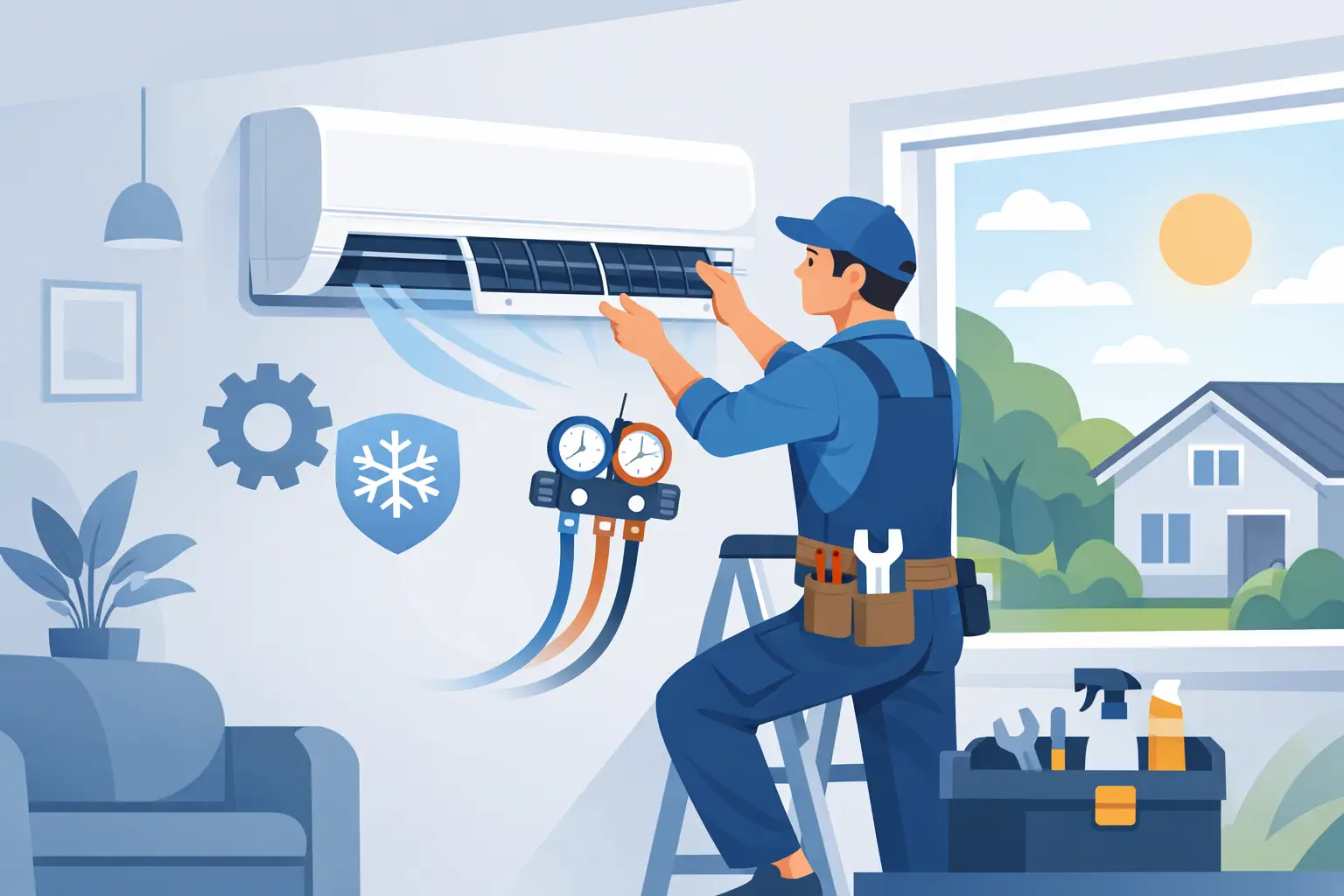
A home aircon maintenance guide is most useful before your system stops cooling on the hottest day of the year. A weak airflow, musty smell, rising energy bill, or water dripping from an indoor unit usually starts as a small maintenance issue. Addressing it early helps protect comfort, avoid disruption, and reduce the chance of a more expensive repair.
Home air conditioning systems work hard through long cooling seasons. Whether you use central air, a ductless mini-split, or a window unit, a few consistent checks can keep the equipment cleaner and more efficient. The goal is not to turn homeowners into technicians. It is to know what you can safely handle, what to watch for, and when professional support is the better choice.
Start With the Air Filter
The filter is the simplest maintenance item and one of the most influential. Its job is to capture dust, fibers, pet hair, and other airborne particles before they reach the indoor components. When it becomes clogged, your system has to work harder to pull air through it. That can reduce airflow, increase energy use, and leave rooms feeling unevenly cooled.
Check a standard disposable filter every month during heavy use. Many homes need a replacement every one to three months, but the right interval depends on the household. Homes with pets, smokers, nearby construction, or family members with allergies may need more frequent changes. A lightly used system in a low-dust home may not.
Use the filter size and type recommended by the equipment manufacturer. A very high-efficiency filter can be beneficial for indoor air quality, but it may restrict airflow if the system was not designed for it. If you are unsure, a qualified technician can recommend a suitable filter rating for your unit and household needs.
Keep Indoor Airflow Clear
Your aircon cannot cool effectively if supply and return vents are blocked. Walk through the home and make sure furniture, curtains, rugs, and storage boxes are not covering grilles. Closed vents can also create pressure problems in some central systems, so avoid shutting multiple vents in an attempt to force more cooling into one room.
For ductless systems, keep the area around the indoor head clear. Wipe the exterior casing and gently dust the louvers when the unit is switched off. If the washable mesh filters are accessible, remove and rinse them according to the manufacturer instructions, then allow them to dry completely before reinstalling. Never operate the system with wet filters.
A mild dusty smell at startup can happen after a period of nonuse. A persistent musty odor, however, may point to moisture and microbial buildup on the coil, drain pan, or blower components. Household surface cleaning will not always reach these areas safely. This is a good reason to arrange professional aircon cleaning rather than masking the smell with fragrance.
Give the Outdoor Unit Room to Work
For central and ductless split systems, the outdoor condenser releases heat from your home. It needs steady airflow to do that job. Leaves, grass clippings, dirt, and overgrown landscaping can trap heat around the unit and make cooling less efficient.
Turn the system off before checking the area. Clear loose debris from around the condenser and maintain open space on all sides, following the equipment manufacturer’s clearance guidance. Do not stack items on top of the unit or cover it while it is running. A cover may be useful during a long off-season in some climates, but a fully enclosed cover can hold moisture against the equipment.
You can gently rinse exterior fins with a garden hose using low pressure, directing water from the inside out where possible. Do not use a pressure washer. The thin aluminum fins bend easily, and damaged fins restrict airflow. If the coil is heavily matted with dirt or the fins are crushed, professional cleaning is the safer option.
Watch the Condensate Drain
Air conditioning removes humidity as it cools. That moisture needs a clear path out through the condensate drain. When the drain line clogs, water can back up into the unit, cause leaks, damage ceilings or walls, and trigger a system shutdown.
Check around the indoor unit, air handler, or closet for standing water, stains, or unusual humidity. For a ductless unit, look for dripping from the front panel or wall-mounted head. Outside, confirm that the drain outlet is not blocked by mud, mulch, or insects.
Some homeowners flush an accessible drain line with a manufacturer-approved method. The right approach varies by system design, and forcing liquid into the wrong opening can create a mess or damage components. If there is already a blockage, repeated leaking, or a drain pan full of water, schedule service. A technician can clear the line, inspect the pump if one is installed, and identify why the drain is clogging.
Use Settings That Support the System
Good maintenance includes how you operate the aircon. Set a comfortable temperature and avoid large, frequent changes. Dropping the thermostat dramatically will not cool the home faster. It only makes the system run longer in an attempt to reach an unnecessarily low setting.
A programmable or smart thermostat can help maintain a steady schedule. During cooling season, adjust the temperature modestly when the home is empty, then return it before occupants arrive. The best setting depends on climate, insulation, household preferences, and humidity levels, so there is no single number that suits every home.
Keep doors and windows closed when the aircon is running, especially in humid weather. Ceiling fans can also improve comfort by moving cooled air through the room. They do not lower the room temperature on their own, but they may allow you to choose a slightly higher thermostat setting.
What Homeowners Should Not Try to Repair
Basic cleaning is helpful, but certain work should be left to trained professionals. Air conditioning equipment includes electrical connections, moving parts, pressurized refrigerant, and delicate coils. Attempting a repair without the right tools can create a safety risk, void a warranty, or turn a manageable fault into a larger one.
Call for professional service if you notice any of the following:
- The unit blows warm air or takes much longer than usual to cool.
- Airflow is weak even after changing or cleaning the filter.
- Ice forms on refrigerant lines, coils, or the indoor unit.
- The system makes grinding, buzzing, banging, or persistent rattling sounds.
- You smell burning, notice repeated breaker trips, or see water leaking indoors.
These symptoms can have several causes. Low refrigerant, for example, is not a routine top-up issue. Refrigerant operates in a sealed system, so a low level may indicate a leak that needs to be found and repaired. Likewise, frozen coils may be caused by restricted airflow, a dirty coil, a blower issue, or a refrigerant problem. Proper diagnosis matters.
Schedule Professional Maintenance Before Peak Season
A professional maintenance visit goes beyond changing a filter. A technician can inspect electrical components, assess airflow, clean coils and drain sections as needed, check operating performance, and identify worn parts before they fail. For most residential systems, an annual service visit before the peak cooling period is a practical baseline.
Some homes benefit from more frequent attention. This may include systems that run almost year-round, homes with pets or high indoor dust, rental properties with frequent occupant changes, and equipment in humid areas where drain and coil buildup happens faster. Older units may also need closer monitoring because small performance changes can signal developing wear.
For homeowners who prefer a dependable maintenance plan, Easy Cool Engineering can help align servicing with the system type, usage pattern, and condition of the equipment. Clear communication about what was inspected and what needs attention makes it easier to plan rather than react to a breakdown.
Keep a Simple Service Record
Save the dates of filter changes, maintenance visits, repairs, and any unusual symptoms. A short note on your phone is enough. Record model numbers, filter sizes, and thermostat settings that work well for your household.
This history is useful when comparing energy bills, troubleshooting recurring issues, or preparing to sell or rent the property. It also helps a technician understand whether a problem is new, seasonal, or part of a pattern.
Reliable cooling is rarely about one major task. It comes from small checks done consistently, paired with professional service when the system shows signs that cleaning alone will not solve. Taking care of your aircon now gives your home a better chance of staying cool, dry, and comfortable when you need it most.