

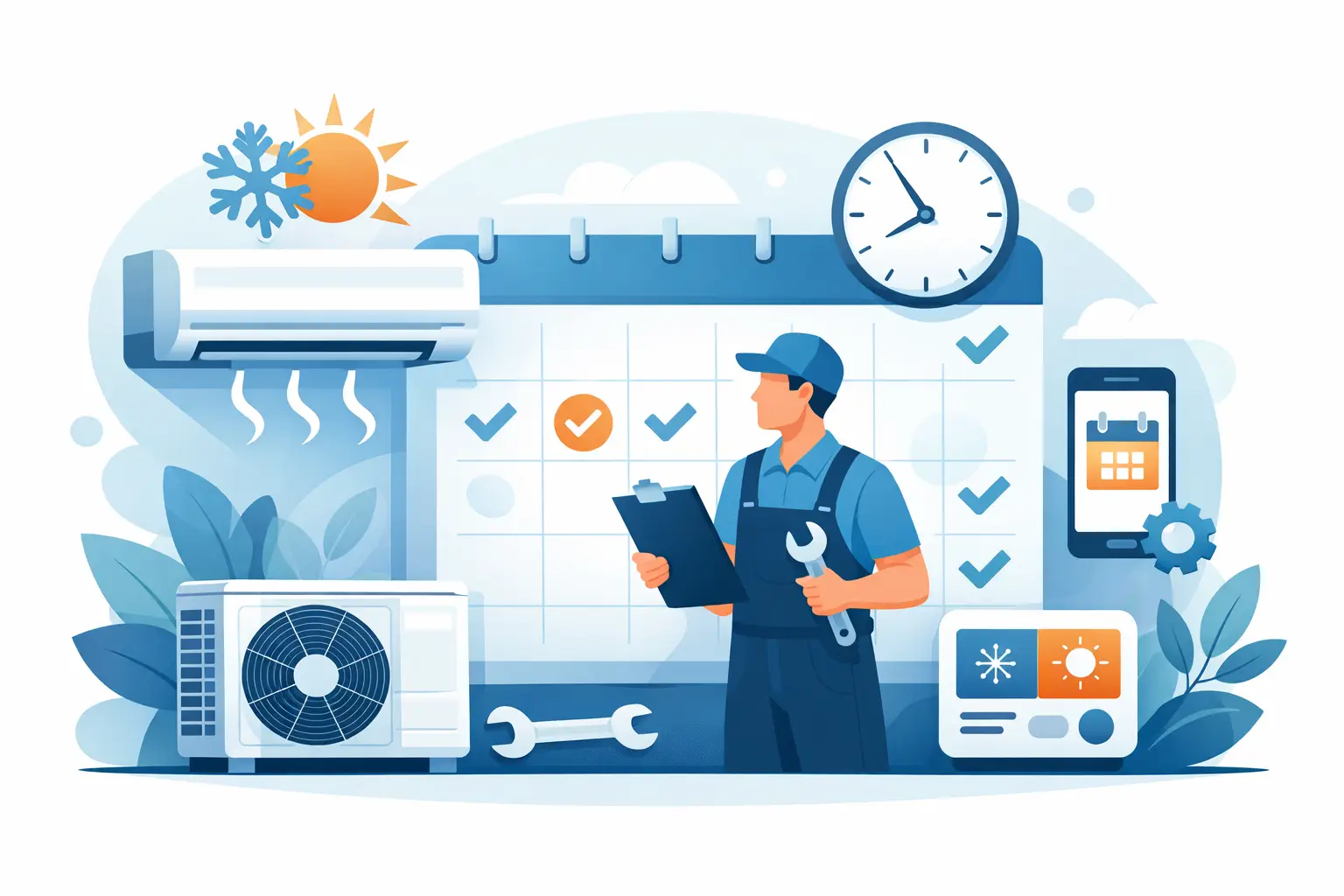
A hot afternoon is a poor time to find out your air conditioner is struggling. The most effective way to avoid an urgent repair call is to know how to schedule seasonal AC servicing before temperatures rise and while there is still time to address small issues.
For most homes, two planned service visits each year provide a practical baseline: one before the main cooling season and another after heavy use. Commercial properties may need a different schedule based on operating hours, equipment type, occupancy, and the importance of continuous cooling. The right plan is not about booking service as often as possible. It is about arranging timely inspections that keep the system efficient, reliable, and easier to manage.
When to Schedule Seasonal AC Servicing
For a typical central air conditioning system, schedule a professional visit in spring, ideally four to eight weeks before you expect to use cooling every day. This gives a technician time to clean key components, check refrigerant performance, inspect electrical connections, and identify wear before the system is placed under sustained demand.
A second visit in early fall can be useful after a long, demanding summer. This appointment focuses on the effects of heavy operation: dirty filters, debris around the outdoor unit, drainage concerns, unusual vibration, and components that may have weakened during peak use. In milder climates, one thorough annual service may be enough. In hot, humid, or dusty areas, twice-yearly maintenance is usually the safer choice.
Do not wait for the first heat wave to book. Service calendars fill quickly when temperatures change suddenly, and a non-urgent maintenance visit can become harder to arrange. Booking ahead also gives you more flexibility to choose a convenient day rather than accepting the next available appointment.
Match the Timing to Your Property
A household with light AC use may be well served by one spring tune-up, provided filters are changed regularly and the system has no performance concerns. Homes with pets, allergies, several indoor units, or frequent daily cooling often benefit from a spring and fall schedule.
For rental homes, arrange seasonal servicing before new tenants move in or before the expected high-use period. This helps document the condition of the equipment and reduces the chance that a tenant faces an avoidable cooling problem.
Offices, retail spaces, restaurants, and other commercial properties should plan around business operations. A service visit during low-traffic hours or before a busy season reduces disruption. Systems supporting server rooms, production areas, medical spaces, or other temperature-sensitive operations may require more frequent preventive maintenance and a clear response plan for faults.
How to Schedule Seasonal AC Servicing Step by Step
Start by looking at the equipment you have, not just the date on the calendar. Note whether the property uses central AC, ductless mini-splits, packaged units, VRV or VRF equipment, or a larger commercial cooling system. The service scope, expected appointment time, and maintenance frequency can differ significantly.
Next, contact a qualified AC service provider before the seasonal rush. Explain the number of units, their approximate age, the type of system, and any concerns you have noticed. Useful details include weak airflow, rooms that cool unevenly, rising utility bills, water leaks, musty odors, unusual noises, or a thermostat that does not hold the set temperature.
Ask what the scheduled service includes. A proper seasonal visit should be more than a quick visual check. Depending on the system, it may include cleaning or evaluating filters, inspecting coils, checking condensate drainage, confirming thermostat operation, testing electrical components, assessing refrigerant-related performance, and examining the outdoor unit for blockage or damage. The technician should explain any findings clearly and distinguish between routine maintenance, recommended repairs, and work that can safely wait.
Before confirming the appointment, choose a time when someone can provide access to indoor equipment and answer basic questions about system performance. Clear space around indoor air handlers, vents, thermostats, and the outdoor condenser. If the outdoor unit is behind a gate or near stored items, make sure it is accessible. These simple preparations help the visit go smoothly and allow the technician to focus on the equipment.
Finally, put the next service date on your calendar before the technician leaves. Many property owners rely on memory, then realize months have passed when cooling demand returns. A recurring calendar reminder for early spring and early fall is simple and effective. If your service provider offers a maintenance plan or appointment reminder program, it can reduce the effort of staying on schedule.
What to Ask Before You Book
The goal is not to turn a service call into a technical interview. A few direct questions can help you understand the work and avoid surprises. Ask whether the quoted visit includes inspection, cleaning, performance testing, and a written explanation of any recommended repairs. Confirm whether the provider services your specific equipment type and whether there are separate charges for parts, deep cleaning, or after-hours work.
It is also reasonable to ask about technician qualifications, scheduling windows, and what happens if a problem is found during the appointment. A dependable provider will explain the next steps without pressure and provide clear information before proceeding with additional work.
For commercial sites, ask whether the provider can coordinate around your operating hours, meet site access or safety requirements, and maintain records for multiple units. Facilities teams often need more than a single service visit. They need consistent reporting, practical maintenance recommendations, and confidence that a technician understands the impact of downtime.
Do Not Confuse Routine Care With Professional Service
Between appointments, homeowners can support AC performance by replacing or cleaning filters according to the manufacturer’s guidance, keeping supply and return vents unobstructed, and removing leaves or loose debris from around the outdoor condenser. Watch for standing water near indoor equipment and keep an eye on changes in comfort or energy use.
These tasks are helpful, but they do not replace professional servicing. Electrical checks, coil condition, drainage performance, refrigerant-related concerns, and internal component wear require trained assessment. Trying to resolve those issues without the right tools can damage equipment or create a safety concern.
Call for service sooner rather than waiting for the seasonal appointment if the system blows warm air, cycles on and off repeatedly, trips a breaker, leaks water, makes grinding or buzzing sounds, or produces a burning smell. Seasonal maintenance is designed to prevent many problems, but no schedule can guarantee that a component will never fail.
Build a Schedule That Fits Real Usage
The best maintenance schedule reflects how hard the system works. A newer unit in a lightly used home may need less attention than an older system cooling a busy household all summer. Similarly, a commercial system that runs long hours or serves a high-heat environment needs closer oversight than equipment in a small office with limited occupancy.
Age matters, but it is not the only factor. Systems that have had repeated repairs, poor airflow, drainage problems, or inconsistent temperatures deserve a more proactive approach. Seasonal servicing gives you a chance to make informed repair or replacement decisions before the equipment fails at the worst possible time.
Keep a simple service record with appointment dates, technician findings, repairs completed, and filter changes. This is useful for homeowners tracking equipment history, landlords managing multiple properties, and businesses planning budgets. It also helps a technician see whether the same issue is returning or whether performance has changed over time.
A well-timed AC service appointment is a small piece of property maintenance that can protect comfort when it matters most. Book before demand peaks, share clear information about your system, and treat any early warning signs as a reason to act, not a reason to wait.