

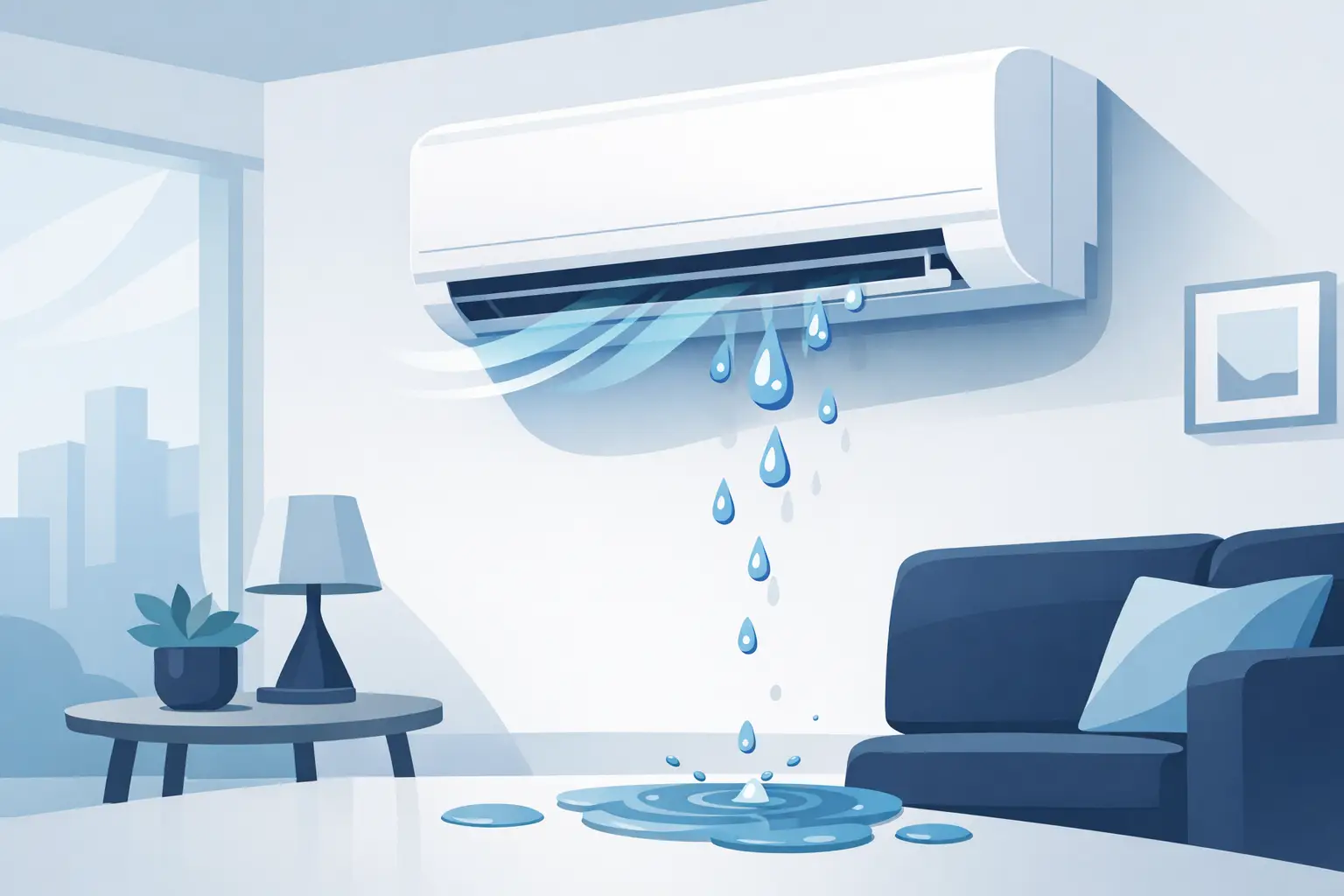
A small puddle under your indoor AC unit can look minor at first – until it starts staining the wall, soaking the floor, or dripping near a power outlet. If you are wondering, is aircon dripping water dangerous, the honest answer is sometimes. A little condensation is normal inside an air conditioner, but water leaking where it should not be is a sign that something needs attention.
The real risk depends on where the water is coming from, how much is leaking, and what it is dripping onto. In some cases, the issue is limited to reduced cooling performance and a clogged drain line. In others, it can lead to water damage, mold growth, electrical concerns, or damage to the unit itself.
Is aircon dripping water dangerous in every case?
Not every leak means immediate danger, but no visible indoor leak should be ignored. Air conditioners naturally remove moisture from the air as part of the cooling process. That moisture is supposed to collect and drain away through the system. When water starts dripping from the front panel, the ceiling, the wall, or the area around the unit, something in that process is no longer working as intended.
A slow drip may not be an emergency if you catch it early and keep it away from electrical points, furniture, and flooring. But even a small leak can become expensive if it continues for days. Drywall, wood, laminate flooring, and built-in cabinetry do not need much water exposure before damage starts to show.
If the leak is heavy, if the unit is making unusual noise, if cooling has dropped sharply, or if the water is near wiring or electrical fixtures, it should be treated as urgent.
Why an air conditioner drips water
Most indoor AC leaks come down to a few common causes. The drain line may be clogged by dirt, slime, or debris. The drain pan may be cracked or out of position. A dirty air filter can restrict airflow and cause the evaporator coil to freeze, then thaw and overflow. Low refrigerant can create a similar freezing problem. Poor installation, uneven unit positioning, or damaged insulation can also lead to dripping.
For homeowners, the challenge is that very different problems can produce the same visible symptom: water. That is why guessing can waste time. A unit that only needs cleaning can look similar to one with a more serious mechanical issue.
In commercial spaces, the stakes are often higher. A leaking cassette unit over a meeting room, retail floor, or server area can interrupt operations quickly. Water damage, safety concerns, and customer-facing disruptions make a fast response more important.
When the leak becomes dangerous
Electrical risk
Water and electricity are a bad combination. If your AC is dripping near a power outlet, extension cord, lighting fixture, control board, or exposed wiring, there is a real safety concern. The immediate step is to turn off the unit and avoid using the affected electrical point until it has been checked.
The risk is not limited to visible sparks. Moisture can enter internal electrical parts and cause short circuits, tripped breakers, or component failure. In some cases, the damage shows up later, after the leak has already been happening for a while.
Mold and indoor air quality
A persistent leak creates the right conditions for mold, especially behind walls, above ceilings, and around hidden insulation. You may not notice it right away. What starts as a minor drip can turn into a musty smell, dark stains, or worsening indoor air quality over time.
This matters even more in bedrooms, children’s rooms, offices, clinics, or any enclosed area where people spend long hours. If anyone in the space has allergies or respiratory sensitivity, ongoing moisture should be addressed quickly.
Structural and surface damage
Water can stain ceilings, bubble paint, warp wood, and weaken gypsum board. In apartment units or multi-story buildings, an indoor AC leak can also affect the neighbor below. A problem that starts in one room can turn into a building management issue if it travels through the ceiling cavity or wall.
Equipment damage
A leaking unit is often a sign the system is under stress. If the evaporator coil is freezing, airflow is restricted, or drainage is blocked, the unit is not operating the way it should. Running it in that condition can shorten component life and reduce efficiency. What could have been solved with servicing may become a repair job if left too long.
Signs you can monitor and signs you should not wait on
Some situations allow for brief monitoring. Others call for immediate service.
If the leak is light, the unit is still cooling normally, and the water is clearly coming from a safe area away from electrical points, you may have a short window to arrange inspection before the problem gets worse. Place a container or towel to protect the area, turn the temperature to a normal setting, and avoid running the system continuously.
Do not wait if you see water dripping from the front of the unit, heavy or fast dripping, repeated leaking after cleaning, ice on the coil or pipes, burning smell, breaker trips, or water entering lights, switches, or electronics. Those are not signs of a harmless inconvenience.
Can you keep using the AC if it is leaking?
It depends on the severity, but continued use is usually not the best idea. If the leak is active indoors, the safer choice is to switch the unit off until the cause is checked. That helps prevent more water damage and protects internal components.
People sometimes keep running a leaking AC because the room still feels cool. That can be misleading. Cooling does not mean the unit is healthy. A partially blocked drain or frozen coil can still allow some cooling while the underlying issue worsens.
In a business setting, the pressure to keep cooling running is understandable. But if a leak is affecting a reception area, office floor, food-service environment, or equipment room, short-term operation can create bigger disruption later.
What you can check before calling for service
There are a few safe checks that may help you describe the problem clearly.
Look at the air filter. If it is visibly dirty, airflow may already be restricted. Check whether the water is clear or discolored. Notice whether the leak starts only after long operation or appears almost immediately. Listen for unusual sounds such as gurgling, rattling, or fan strain.
You can also note whether cooling performance has dropped and whether any ice is visible on the pipes or front coil area. These details help a technician narrow down the likely cause faster.
What you should not do is open electrical panels, force drain components loose, or keep resetting the system if it is tripping. That can turn a manageable issue into a safety problem.
How professionals usually fix a leaking AC
The right repair depends on the cause, not just the symptom. A technician may flush a clogged drain line, clean the evaporator coil, replace or reposition the drain pan, check refrigerant pressure, inspect insulation, or correct installation angle issues. If the leak is linked to neglected maintenance, a full cleaning and servicing may restore normal drainage and airflow.
This is one reason routine servicing matters. Many indoor leaks do not appear suddenly out of nowhere. They build up from dirt, restricted airflow, and drainage problems over time. Preventive maintenance is usually less disruptive and less expensive than dealing with ceiling repairs, mold cleanup, or damaged electrical parts later.
For homes, regular servicing helps keep cooling reliable and protects the surrounding room. For offices, retail spaces, and managed properties, it also reduces complaints, downtime, and avoidable damage. Companies like Easy Cool Engineering Pte Ltd typically approach this as both a repair issue and a system care issue, which is the right way to prevent repeat leaks.
How to reduce the chance of future dripping
The most practical step is scheduled maintenance. Clean filters regularly, do not ignore weaker airflow, and pay attention to early signs like musty odor or occasional dripping during heavy use. If a unit was recently installed and starts leaking soon after, have the installation checked rather than assuming it will settle on its own.
For landlords and property managers, quick action matters because small leaks often become tenant complaints, finish damage, and repeat callouts. For commercial operators, preventive service is even more important when downtime affects staff comfort, customers, or sensitive equipment.
If you have been asking, is aircon dripping water dangerous, the safest way to look at it is this: the water itself may start as condensation, but indoor leaking is never something to normalize. The sooner you deal with it, the easier it usually is to protect your space, your system, and the people using it.
A dripping air conditioner is rarely the kind of problem that improves by waiting, and catching it early is often the difference between a simple service visit and a much bigger repair.