

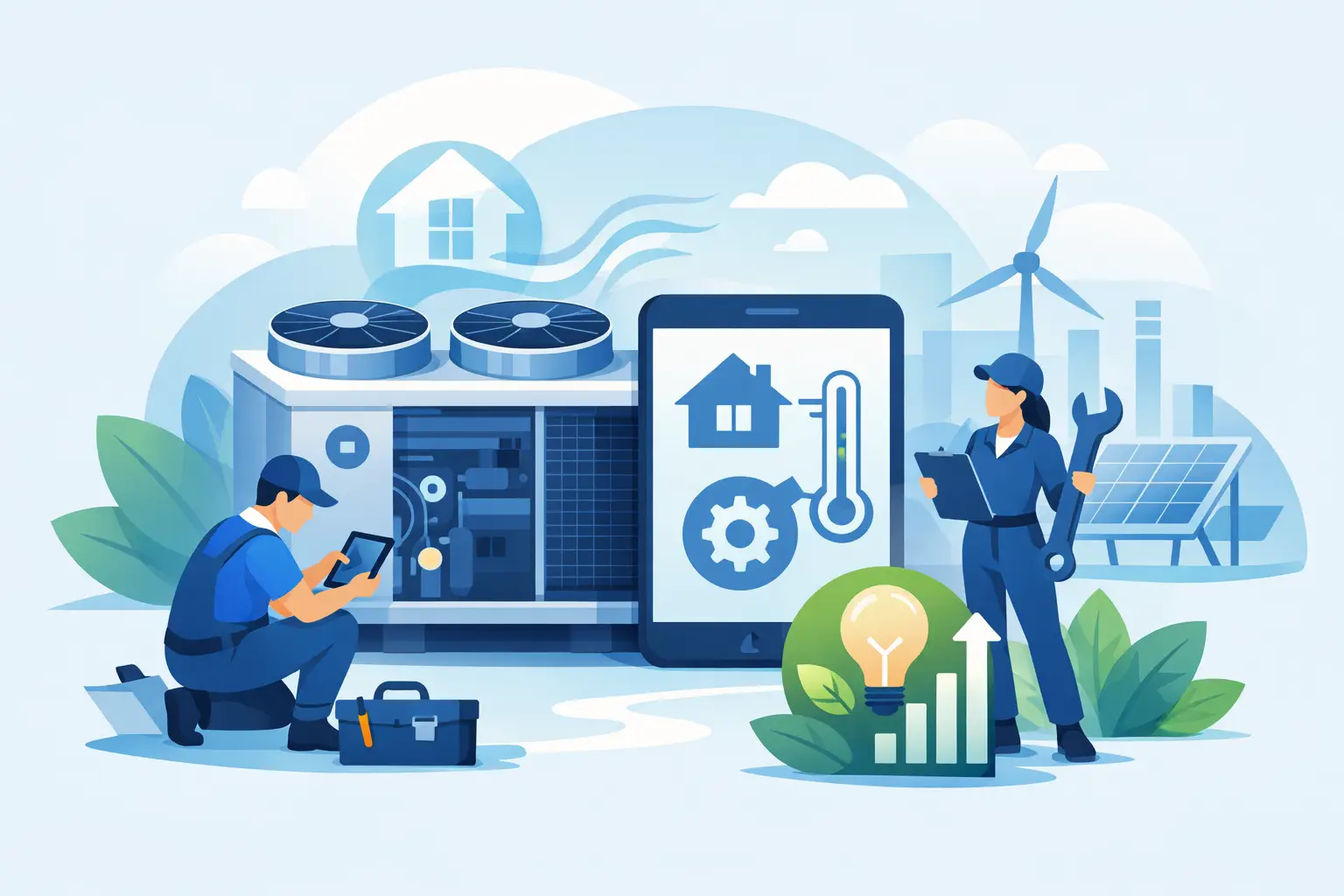
A cooling system rarely fails without leaving clues first. A room takes longer to cool, energy use rises, airflow weakens, or a drain line begins to leak. Smart cooling maintenance trends are changing how those early signals are identified, helping homeowners and facility teams address small performance issues before comfort, operations, or equipment life are affected.
For a homeowner, this may mean receiving a filter or service reminder based on actual system use. For an office, restaurant, or industrial site, it can mean monitoring temperatures, equipment runtime, and fault alerts across multiple units. The technology is useful, but the goal remains practical: keep cooling dependable, control operating costs, and avoid unnecessary disruption.
Smart Cooling Maintenance Trends Are Becoming More Practical
Smart maintenance is no longer limited to large building-management systems. Connected thermostats, equipment sensors, controller data, and mobile service records are making useful information available for smaller commercial sites and residences as well. The value is not in collecting every possible data point. It is in knowing which information calls for action.
A modern air conditioning system can indicate when it is working harder than normal. Longer cooling cycles, unusual compressor runtime, temperature differences between zones, and repeated system restarts may point to airflow restrictions, refrigerant concerns, dirty coils, drain problems, or control issues. These symptoms do not always mean an immediate breakdown, but they deserve professional assessment before they develop into a larger repair.
For facilities with VRV, VRF, centralized ACMV, or chiller systems, trend data can be particularly useful. One unit operating outside its normal range can place additional load on connected equipment or create uneven temperatures across the building. Maintenance teams can prioritize inspection based on operating conditions rather than waiting for tenant complaints or a complete shutdown.
Predictive Maintenance Is Replacing the Fix-It-Later Approach
Traditional maintenance schedules are still essential. Filters need replacement, coils need cleaning, drains need clearing, and electrical components need inspection whether a system is connected or not. Predictive maintenance adds another layer by using operating history to identify changes that deserve attention between scheduled visits.
For example, a system that normally reaches its set temperature within a certain time may begin running significantly longer. That change could be related to outdoor heat, occupancy, or thermostat settings. It could also signal reduced heat transfer from a dirty coil, low refrigerant charge, a failing fan motor, or duct leakage. Comparing current performance with normal performance helps a technician investigate with purpose.
Predictive tools are most effective when paired with accurate installation, regular servicing, and skilled diagnosis. Sensors can flag an abnormal pattern, but they cannot clean a clogged drain line, repair damaged wiring, or confirm whether a fault is mechanical, electrical, or control-related. The best maintenance programs combine digital visibility with on-site technical work.
Energy Monitoring Is Driving Better Service Decisions
Energy costs make inefficient cooling difficult to ignore. A system can still produce cold air while using more electricity than it should. This is why maintenance increasingly includes reviewing how equipment performs, not simply whether it turns on.
Smart thermostats and energy monitors can show when cooling demand peaks, how often a unit cycles, and whether settings are causing avoidable runtime. In a home, simple adjustments such as realistic temperature settings, clean filters, and properly sealed doors and windows can reduce unnecessary strain. In commercial spaces, scheduling cooling around occupancy patterns can make a meaningful difference.
However, energy data needs context. A higher bill during a heat wave does not automatically mean the equipment has a fault. A retail store with extended hours, an office with more staff on site, or a restaurant producing more kitchen heat will naturally require more cooling. A qualified service provider should look at the full operating picture before recommending repairs or upgrades.
Equipment efficiency also depends on the condition of components that are easy to overlook. Dirty indoor and outdoor coils reduce heat transfer. Blocked filters restrict airflow. Poorly maintained condensate drainage can lead to leaks and indoor humidity concerns. Worn electrical connections can affect reliability and safety. Smart monitoring makes these issues easier to spot, but routine cleaning and inspection remain the foundation.
Indoor Air Quality Is Part of Cooling Maintenance
Customers are paying closer attention to indoor air quality, especially in spaces where families, employees, customers, or sensitive equipment spend long hours. Cooling maintenance now often considers airflow, humidity, cleanliness, and ventilation alongside temperature control.
A poorly maintained air conditioner may circulate less air and struggle to manage moisture. That can leave rooms feeling stuffy even when the thermostat displays the desired temperature. In humid climates, drainage performance and coil condition are especially important because excess moisture can contribute to musty odors, water leaks, and discomfort.
The right approach depends on the property. A homeowner may need regular filter care, indoor unit cleaning, and drain-line servicing. An office may need a planned schedule for multiple fan coil units and outdoor condensers. Food-service sites may also need coordinated attention to kitchen ducts, ventilation, and cooling equipment, since grease, heat, and airflow demands create a different maintenance environment.
For specialized facilities, precision cooling and humidity control can be operational requirements rather than comfort preferences. Semiconductor and industrial environments may require closer monitoring, clear maintenance records, and carefully planned service windows. In these settings, a minor temperature variation can have consequences beyond an uncomfortable room.
Connected Systems Need Better Maintenance Records
Another important trend is the move from scattered service paperwork to organized maintenance records. When service history is easy to review, property owners and facilities managers can see recurring faults, parts replaced, cleaning dates, and recommendations from previous inspections.
This helps with decision-making. If the same unit has repeated drainage issues, for example, the solution may be more than another basic cleaning. The technician may need to check unit leveling, pipe routing, insulation, pump performance, or underlying contamination. Likewise, repeated refrigerant-related service calls may justify a deeper leak assessment rather than short-term top-ups.
Clear records also support budgeting. Instead of facing a sudden replacement decision after failure, customers can plan around equipment age, repair history, usage patterns, and expected efficiency gains. Replacement is not always the best answer. A well-maintained system with a targeted repair may continue serving a property reliably. When repair costs, downtime risk, and energy use begin to outweigh that value, replacement becomes easier to justify.
What Smart Maintenance Should Look Like in Practice
Smart cooling does not have to mean installing a complex platform in every property. It means using the right level of monitoring and maintenance for the equipment, the space, and the consequences of downtime.
For most homes, a practical program starts with scheduled servicing, filter attention, coil and drainage cleaning when needed, and prompt investigation of weak airflow, leaks, unusual sounds, or inconsistent cooling. Smart thermostat alerts can provide additional clues, but homeowners should not ignore physical warning signs while waiting for an app notification.
For commercial properties, the plan may include equipment inventories, service intervals by unit type, performance checks, documented repairs, and alert response procedures. Managers should also consider access requirements and operating hours. Maintenance that interrupts a busy retail period or critical office activity may need to be scheduled differently from work at a vacant unit.
For high-demand systems, monitoring should focus on meaningful indicators: supply and return temperatures, runtime, alarms, drainage condition, electrical performance, and equipment trends over time. More data is not automatically better. A useful maintenance setup produces clear actions, not a stream of alerts that no one has time to review.
Easy Cool Engineering supports this practical approach by combining routine air conditioning servicing with technical capability for ACMV, VRV, kitchen duct, and specialized chiller systems. The right service plan should be tailored to the equipment and the demands placed on it, not treated as a one-size-fits-all visit.
The most useful next step is simple: pay attention to changes in cooling performance and arrange service before they become urgent. A timely inspection can protect comfort now while giving you clearer choices about maintenance, repairs, and future equipment planning.