
Why Your Aircon Trips the Breaker at Home
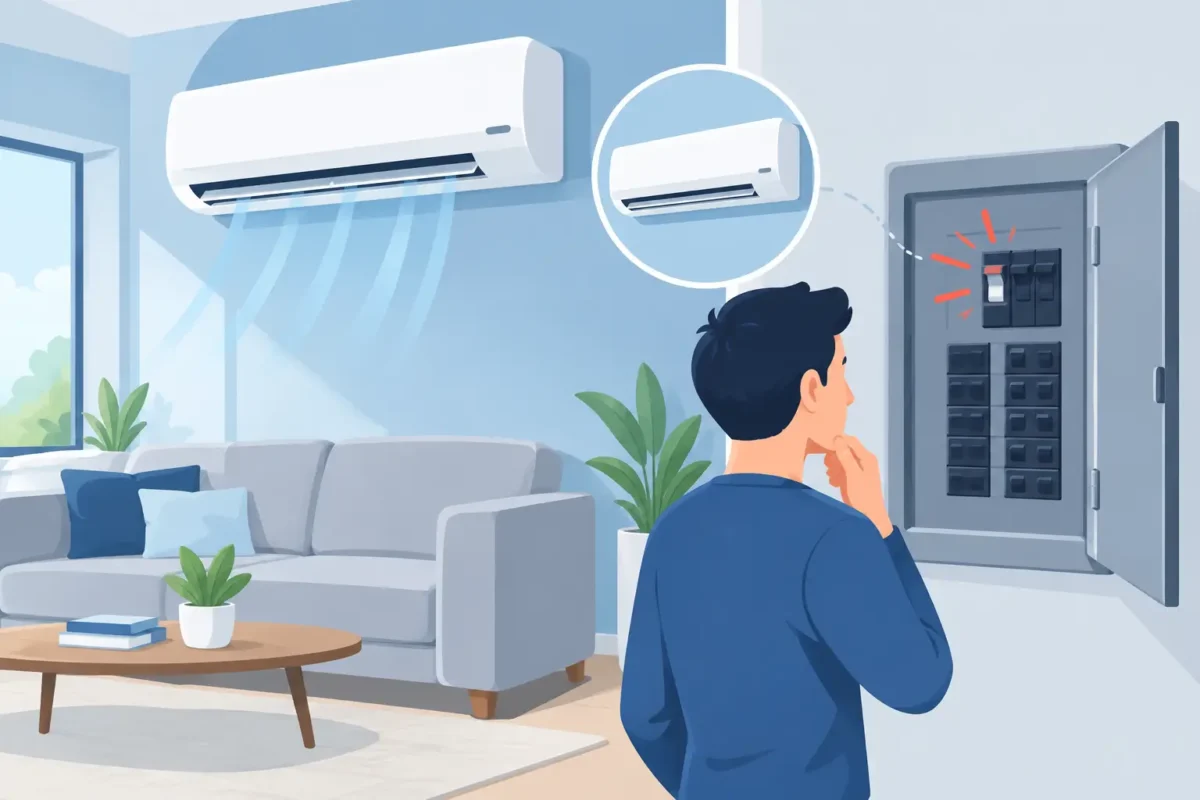
The air conditioner starts, runs for a few minutes, and then the lights go out in part of the house. If you are wondering why aircon trips breaker, the breaker is doing its job: it has detected an electrical condition that could overheat wiring, damage equipment, or create a fire risk. Resetting it once may be reasonable after a brief power fluctuation. Resetting it repeatedly is not a fix.
An air conditioner uses more power than many household appliances, particularly as its compressor starts. But a correctly installed and maintained system should not repeatedly trip its dedicated breaker. The cause can be as straightforward as a dirty filter or as serious as a failing compressor, damaged wiring, or an undersized electrical circuit. Knowing the pattern of the trip helps determine the next step.
Why an Aircon Trips the Breaker
A circuit breaker trips when it senses too much current, a short circuit, or current leaking to ground. In air conditioning systems, those conditions often develop gradually. A unit that once cooled normally may begin working harder as airflow becomes restricted or components wear out.
The timing matters. A breaker that trips the instant the air conditioner is switched on often points to an electrical fault, such as damaged wiring, a faulty control board, or a shorted component. A breaker that trips after 10 to 30 minutes of cooling may indicate overheating, restricted airflow, or a compressor drawing excessive current under load. If it trips mainly on very hot days, the system may be struggling with capacity, ventilation, or an aging outdoor unit.
An overloaded or shared circuit
Many air conditioners need a dedicated circuit. If your system shares a circuit with other high-demand appliances, the combined load can exceed the breaker rating. Portable units are especially vulnerable to this issue when plugged into an outlet shared with a microwave, dryer, or other major appliance.
A dedicated circuit is not simply a convenience. It protects the wiring and allows the air conditioner to receive stable power. Do not replace the breaker with a larger one to stop nuisance trips. A breaker must match the wire size and equipment requirements. Increasing its rating without an electrical assessment can allow wiring to overheat before protection activates.
A dirty filter, coil, or blocked airflow
Poor airflow makes an air conditioner work harder and run longer. A clogged filter restricts air moving across the indoor coil, while dirt on the evaporator or condenser coil reduces heat transfer. The compressor may then draw more current as it tries to maintain the selected temperature.
This is one of the more preventable causes. Check whether the filter is visibly dusty, whether supply vents are blocked, and whether the outdoor condenser has room for air to circulate. For split and central systems, professional cleaning is often needed to remove buildup from coils, drain components, and blower areas that homeowners cannot safely access.
A failing capacitor, fan motor, or compressor
The capacitor gives the compressor and fan motor the electrical boost needed to start and run. As it weakens, the motor may struggle at startup, hum, or take longer to engage. That higher starting current can trip the breaker.
A worn fan motor can produce a similar problem. If the outdoor fan is not moving enough air across the condenser coil, heat builds up and the compressor is placed under additional strain. The compressor itself may also be failing, particularly in an older system. Compressor diagnosis requires proper electrical testing. Continuing to reset the breaker can turn a repairable fault into more extensive equipment damage.
Refrigerant and pressure problems
Low refrigerant is not the most common direct reason for a breaker trip, but it can contribute to compressor stress. A leak, incorrect refrigerant charge, restricted refrigerant flow, or malfunctioning expansion component can leave the system operating outside normal pressures.
The result may be poor cooling, longer run times, ice on the indoor coil, hissing sounds, or a breaker that trips when demand is high. Refrigerant should never be treated as a simple top-up service. A qualified technician should identify the source of a leak, repair it where appropriate, and verify the system charge against manufacturer specifications.
Water, damaged insulation, or electrical faults
Air conditioning equipment operates around condensation, outdoor weather, and vibration. Over time, wire insulation can deteriorate, terminals can loosen, and moisture can reach electrical components. These conditions can create a short circuit or ground fault that trips the breaker immediately or intermittently.
Look for obvious warning signs without opening electrical panels or equipment covers: a burning smell, scorch marks near an outlet, buzzing, water around the indoor unit, or a damaged power cord. Turn the system off and arrange professional service if you notice any of these signs.
What You Can Safely Check Before Calling
Start by turning the air conditioner off at the thermostat or remote control. At the electrical panel, move the tripped breaker fully to the OFF position before resetting it to ON. If it trips again immediately, leave it off.
You can then check the filter, make sure vents and return grilles are open, and remove leaves or loose debris around an outdoor condenser. For a window or portable unit, confirm that it is plugged directly into a suitable wall outlet rather than an extension cord or power strip. Also note what else was operating when the breaker tripped.
It is useful to record a few details for the technician: whether the system trips at startup or after running, whether it cools before tripping, any unusual noise, and whether the problem began after cleaning, installation work, a storm, or a power outage. These observations can shorten diagnosis and help avoid unnecessary parts replacement.
Do not remove condenser covers, touch capacitors, bypass safety switches, or hold a breaker in the ON position. Capacitors can retain a dangerous electrical charge even after power is disconnected, and panel work should be completed by a qualified electrician or HVAC professional.
When a Breaker Trip Needs Urgent Attention
One isolated trip after a known power event may not always mean the air conditioner is faulty. However, repeated trips should be treated as a service issue. Stop using the unit and arrange prompt inspection if the breaker trips more than once, the panel feels warm, the air conditioner smells burnt, the breaker will not reset, or you hear crackling or loud buzzing.
Commercial properties should act quickly as well. An air conditioning fault can disrupt staff comfort, customer areas, equipment rooms, and temperature-sensitive operations. In larger ACMV, VRV, and chiller systems, a single electrical symptom may affect multiple zones or indicate a fault that needs coordinated diagnosis. The right approach is to assess both the equipment and its electrical supply rather than replacing parts based on guesswork.
Preventing Future Aircon Breaker Trips
Regular maintenance reduces the conditions that cause excessive electrical load. Filters should be cleaned or replaced on the schedule recommended for your system and household conditions. Homes with pets, renovation dust, or frequent daily use may need more frequent attention. Professional servicing can check coil cleanliness, drainage, fan operation, electrical connections, capacitor condition, and cooling performance.
Installation quality also matters. Correct circuit sizing, secure electrical connections, proper outdoor-unit clearance, and equipment capacity matched to the space all support reliable operation. A system that is too small may run constantly; one that is oversized may short-cycle. Both situations can increase wear, even if they do not immediately trip a breaker.
Easy Cool Engineering approaches breaker-trip concerns by identifying the actual source of the overload or fault, then recommending a practical repair or maintenance solution. For homeowners, that means clear communication and minimal disruption. For facilities and commercial sites, it means dependable technical support that considers the wider cooling system and operational needs.
A breaker that protects your air conditioner is protecting your property as well. Leave it off if it continues to trip, keep the affected area comfortable with safe alternatives where possible, and have the system inspected before the next hot day turns a small warning into a complete cooling outage.