

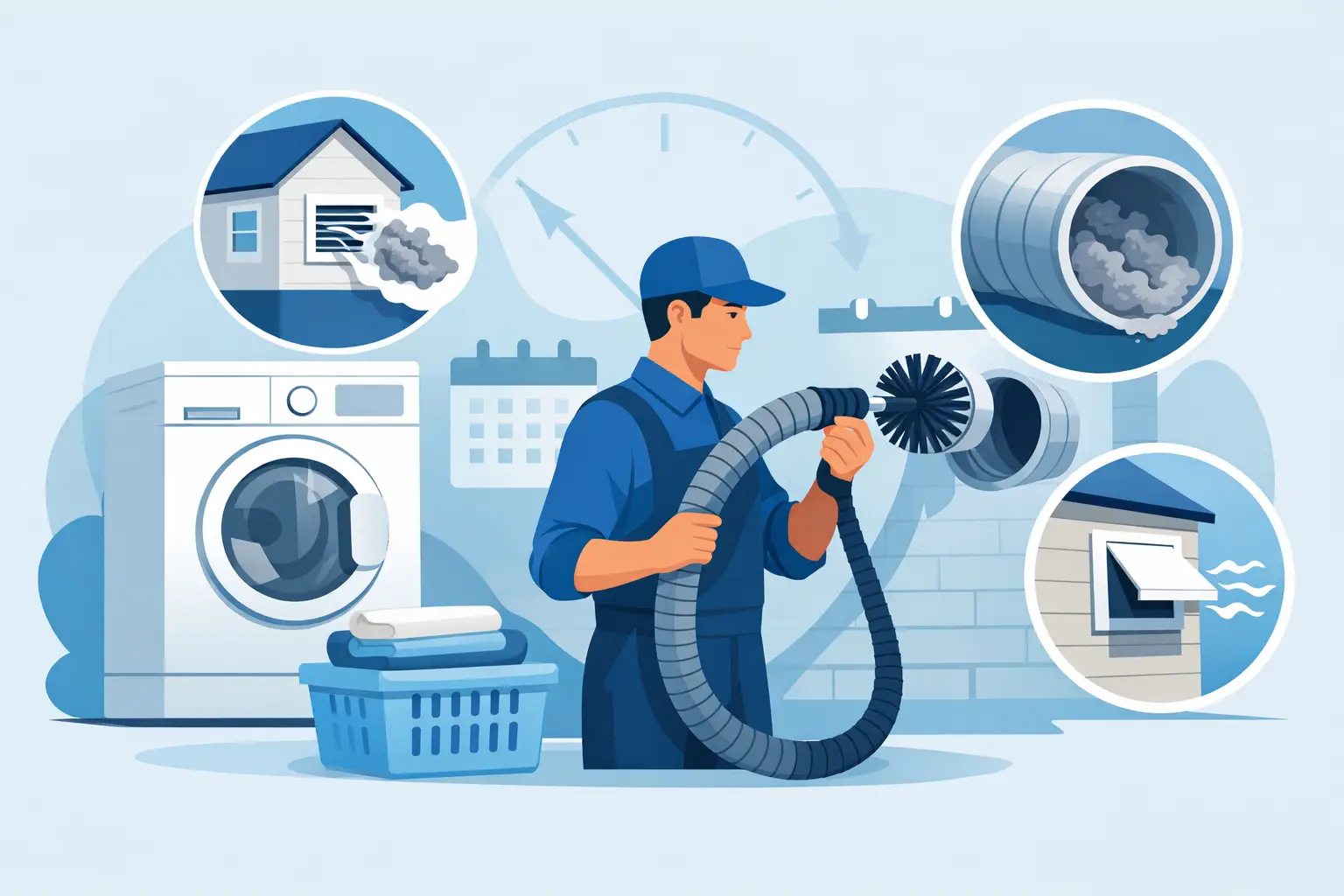
A load of laundry should not leave your dryer hot to the touch, your clothes still damp, and your laundry room feeling stuffy. When that starts happening, the issue is often not the machine itself. A clogged vent is a common cause, and a professional dryer vent cleaning service can correct it before it turns into a bigger safety or performance problem.
For homeowners, landlords, and property managers, this is one of those maintenance tasks that is easy to delay because the dryer still seems to run. The catch is that restricted airflow usually gets worse gradually. You may not notice the extra drying time, energy use, or heat buildup until the vent is heavily blocked.
Why a dryer vent cleaning service matters
Dryers depend on steady airflow to push heat, moisture, and lint out of the system. When lint collects in the vent line, the dryer has to work harder to do the same job. That can lead to longer cycles, higher utility costs, added wear on components, and in some cases a serious fire risk.
This is not just about visible lint in the lint trap. The lint screen catches a lot, but not all of it. Fine particles still move into the ductwork during normal use. Over time, that buildup narrows the passage and reduces exhaust efficiency.
For busy households, the warning signs often show up as inconvenience first. Clothes need two cycles to dry. Towels come out warm but still slightly wet. The dryer feels hotter than usual. In apartments, condos, and tightly planned homes, trapped heat and humidity can also make the surrounding area uncomfortable.
In rental properties or shared-use settings, the need for routine vent maintenance becomes even more practical. More frequent loads mean faster buildup. If multiple occupants rely on one machine, airflow problems can develop sooner than expected.
Signs you may need dryer vent cleaning service now
The most obvious sign is longer drying times. If a normal load suddenly takes much longer than it used to, airflow restriction should be one of the first things checked. A vent problem can mimic appliance failure, which is why some owners replace parts before addressing the real cause.
Another sign is excess heat. If the dryer cabinet feels unusually hot, or the laundry room warms up quickly during a cycle, the exhaust may not be moving out properly. You might also notice a musty smell on clothing because moisture is staying in the system too long.
Lint around the dryer area, a burning smell, or a vent flap outside that barely opens during operation are stronger indicators that service should not wait. These symptoms suggest the dryer is struggling to exhaust air effectively.
For commercial spaces such as laundries in residential buildings, staff housing, salons, or hospitality properties, a drop in throughput matters too. If dryers are tying up machines for longer cycles, vent maintenance can help restore normal operation and reduce avoidable downtime.
What happens during a professional dryer vent cleaning service
A proper service goes beyond cleaning the lint trap and vacuuming around the appliance. The technician typically inspects the vent path, checks for visible lint buildup, and identifies issues such as crushed ducts, disconnected sections, poor routing, or external blockages.
The vent line is then cleaned using equipment designed to remove lint from the full duct run. The exact method depends on the layout, vent length, and accessibility. A short, straight run is simpler than a long vent route with bends, concealed sections, or higher discharge points.
In many cases, the service also includes checking airflow at the termination point and confirming that the system is exhausting properly after cleaning. If the vent design itself is part of the problem, cleaning alone may help only temporarily. That is why experienced technicians do not treat every job as identical.
This is where practical service matters. Some properties need a straightforward clean-out. Others need attention to the duct material, routing, or condition of the exterior vent cap. A reliable provider should explain what was found and whether maintenance alone solves the issue.
How often should dryer vents be cleaned?
There is no single schedule that fits every property. It depends on how often the dryer is used, what types of loads are dried, the length of the vent line, and whether the system was installed efficiently in the first place.
A household that runs a few loads a week may need service less often than a larger family that washes daily. Homes with pets often accumulate lint and hair faster. Rental units and shared-use laundry rooms may need more regular attention because usage is heavier and less predictable.
As a starting point, many properties benefit from having the vent checked on a routine basis rather than waiting for obvious symptoms. If drying times are changing, that is already a signal to inspect the system.
For landlords and facility managers, a preventive schedule is often more cost-effective than reactive service. It reduces the chance of performance complaints, helps protect the appliance, and supports safer operation across occupied spaces.
DIY cleaning versus professional service
Basic maintenance by the user still matters. Cleaning the lint screen after every load is essential, and occasionally vacuuming accessible lint around the dryer helps reduce debris in the area. But these simple steps do not replace full vent cleaning.
The challenge with DIY vent cleaning is access and completeness. Some vent runs are long, hidden, or difficult to reach without moving the appliance or working from an exterior point. If the duct has several turns, partial cleaning may leave deeper buildup behind.
There is also the risk of damaging flexible ducting or reconnecting the vent incorrectly after moving the dryer. A poorly reattached duct can leak moist air into the room or allow lint to accumulate in hidden spaces. That can create a different problem from the one you started with.
Professional service makes more sense when performance issues are already present, when the vent layout is not simple, or when you want confidence that the airflow problem has been fully addressed.
Choosing the right dryer vent cleaning service
Not every service provider approaches appliance ventilation with the same level of care. The right choice is not just someone who can remove lint. It is a company that understands airflow, duct condition, and the relationship between appliance performance and safe exhaust design.
That matters even more if your property already relies on regular mechanical system support. A service partner with broader experience in residential and commercial air movement systems is often better positioned to spot issues that a narrow cleaning-only provider might miss.
Look for clear communication, realistic recommendations, and technicians who explain whether the problem is buildup, duct damage, poor routing, or a combination of factors. If a provider jumps straight to a standard cleaning without assessing the vent condition, you may not get a lasting result.
For customers who already value dependable support for cooling and appliance care, working with an established service company can simplify maintenance planning. Easy Cool Engineering Pte Ltd supports both household and commercial service needs with a practical, professional approach that focuses on reliable performance rather than one-size-fits-all service calls.
Dryer vent cleaning service for homes and commercial properties
Residential customers usually book service because clothes are not drying properly or because they want peace of mind. In those cases, the goal is better efficiency, safer operation, and less strain on the dryer.
Commercial customers often look at the same service through an operational lens. A clogged vent can affect machine availability, energy use, maintenance frequency, and user satisfaction. In staff housing, managed properties, and business environments where dryers support daily operations, ignoring vent issues can become an unnecessary disruption.
The needs are different, but the principle is the same. Good airflow supports better dryer performance. When the exhaust path is clean and functioning as intended, the machine can do its job with less effort and less risk.
If your dryer is taking longer, running hotter, or giving you reason to question its performance, a dryer vent check is a practical next step. Small airflow problems rarely stay small for long, and timely service can save you from bigger repairs, wasted energy, and avoidable safety concerns later.