

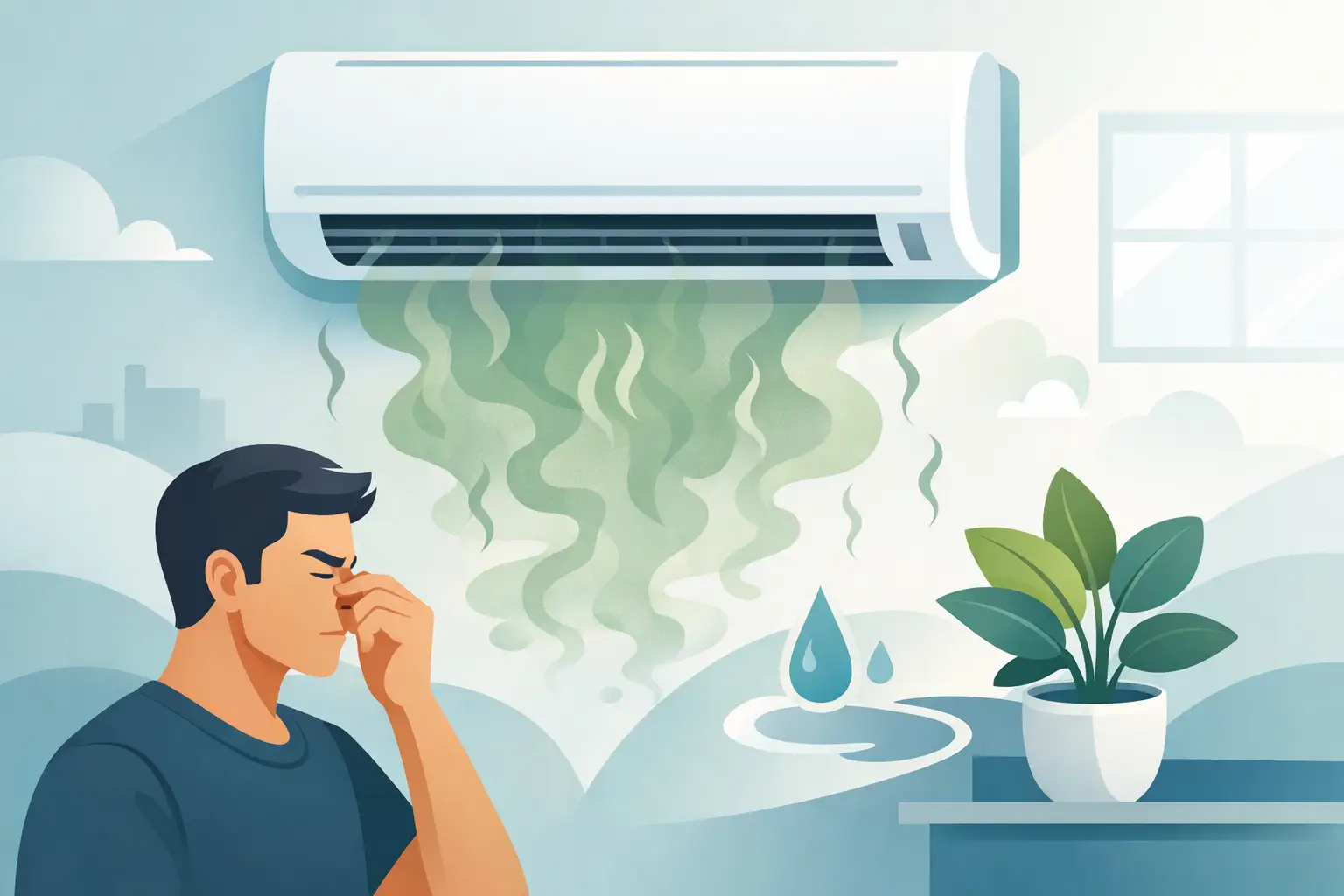
You notice it the moment the system kicks on – that damp, stale odor that makes the room feel less clean instead of more comfortable. If you have been asking, why does aircon smell musty, the short answer is usually trapped moisture somewhere inside the unit. Once moisture lingers, dust, biofilm, and sometimes mold can build up and create that familiar smell.
The good news is that a musty air conditioner does not always mean a major repair. In many cases, the problem comes down to cleaning, drainage, airflow, or overdue maintenance. Still, the exact cause matters, because the right fix for a home split unit may be different from what is needed in an office, retail space, or larger commercial setup.
Why does aircon smell musty in the first place?
Air conditioning systems remove heat and humidity from indoor air. As warm air passes over the evaporator coil, condensation forms naturally. That moisture is supposed to drain away quickly through the drain pan and drain line.
When that process is interrupted, the inside of the system stays damp. Add normal household dust, fine particles, and organic debris, and you get the ideal environment for microbial growth. That is the most common reason an air conditioner starts smelling musty.
In simple terms, the odor is often not coming from the cool air itself. It is coming from wet internal components that have not dried properly or have not been cleaned thoroughly for some time.
The most common causes of a musty AC smell
Dirty evaporator coils
The evaporator coil handles condensation every time your AC runs. Over time, the coil can collect dust, grease, and film from the air. If the coil stays dirty and damp, odors can develop quickly.
This is especially common in bedrooms, living rooms, or offices where the system runs for long hours but does not get regular servicing. If the smell is strongest right after startup, coil contamination is often part of the problem.
Clogged drain pan or drain line
Your air conditioner should move collected water out of the unit without trouble. If the drain pan is dirty or the drain line is partially blocked, water can sit inside longer than it should. Standing water creates the kind of stale, damp smell many people describe as musty.
Sometimes the blockage is minor and causes odor before it causes visible leaking. Other times, you may notice dripping, water stains, or excess humidity along with the smell.
Dirty air filters
A dirty filter by itself does not always cause a strong musty odor, but it can contribute. When airflow is restricted, the system may not dry out as effectively. Dust buildup also gives moisture more material to cling to inside the unit.
If the filter has not been changed or cleaned in a while, it is one of the first places to check. It is a simple fix, but not always the only one.
Mold or mildew inside the indoor unit
When people ask why does aircon smell musty, this is usually what they are worried about. Mold and mildew can grow on internal surfaces when moisture remains trapped and cleaning is delayed.
That said, not every musty smell means a heavy mold problem. Sometimes the odor comes from early-stage microbial buildup that can be removed with proper servicing. The key is not to ignore it and let it develop further.
Low usage or irregular operation
An AC that sits unused for long periods can develop odor too. Moisture left inside after the last cycle may not dry completely, especially in humid climates. When the system turns on again, that trapped smell gets pushed back into the room.
This can happen in guest rooms, rental units between tenants, or offices that close for extended periods.
Oversized systems or short cycling
This is a less obvious cause, but it matters. If an air conditioner cools the room too quickly and shuts off before running long enough to remove humidity properly, the space can stay damp even while the temperature drops. That extra indoor humidity can encourage musty smells over time.
In larger commercial environments, poor system balancing or zoning issues can create the same effect in certain areas.
When the smell happens tells you a lot
Timing can help narrow the problem down.
If the musty smell is strongest during the first few minutes after startup, there may be moisture and buildup on the coil or inside the blower section. If the smell stays constant the entire time the AC runs, the contamination may be more established or spread through several components.
If the odor appears only during cooling mode and not fan mode, condensation-related issues are more likely. If you smell it mainly in one room or one indoor unit, the issue is probably local to that unit rather than the whole property.
For landlords and facilities managers, this distinction matters. One odor complaint from a single room is often a service issue in that unit. Multiple odor complaints across zones can point to a wider maintenance or drainage problem.
Can you fix a musty aircon smell yourself?
Sometimes, yes. If the issue is mild and the system is otherwise working normally, start with the basics. Clean or replace the filter if needed. Check for obvious signs of water leakage around the indoor unit. If your system has been off for a while, running fan mode briefly after cooling can sometimes help dry out internal moisture.
But there is a limit to what basic maintenance can solve. The parts most likely causing the smell, such as the evaporator coil, blower wheel, drain pan, and drain line, are not always accessible without proper tools and safe disassembly. Surface cleaning alone may improve the smell for a few days without removing the real source.
That is where professional servicing makes the difference. A proper cleaning should focus on the components that actually hold moisture and buildup, not just the visible outer panel.
Signs it is time to call for professional service
A musty smell that keeps returning is a clear sign the issue is deeper than a dirty filter. The same applies if you notice weaker airflow, unusual noises, water dripping, inconsistent cooling, or rising energy use.
For homes, fast attention helps prevent a small odor issue from turning into a bigger indoor air quality problem. For commercial spaces, it also protects occupant comfort and your brand environment. No customer or employee wants to walk into a room that smells damp every time the air turns on.
Professional technicians can inspect the full path of airflow and drainage, clean critical components, and identify whether the problem is maintenance-related or linked to system sizing, installation quality, or part failure.
How to prevent musty odors from coming back
The most reliable prevention is regular servicing. That keeps the system clean, the drain path clear, and the cooling process efficient. It also makes it easier to catch early signs of trouble before odor becomes a recurring complaint.
For homeowners, a simple maintenance schedule is often enough to avoid repeat issues. For offices, retail units, and other commercial properties, the schedule may need to be more frequent depending on usage hours, occupancy, and environmental conditions. A system operating near a kitchen, high-traffic entrance, or dusty workspace can accumulate grime faster than a unit in a low-use room.
Good habits help too. Keep filters clean, do not ignore minor leaks, and avoid waiting until cooling performance drops before booking service. If your property has humidity issues, that should be addressed alongside the air conditioning problem, because the two often feed into each other.
Why a proper diagnosis matters
Not every musty smell has the same fix. One unit may just need a thorough cleaning and drain flush. Another may have an installation issue that causes poor drainage. In some cases, the AC is not the only source, and nearby ducts, false ceilings, or room humidity are adding to the odor.
That is why guessing can be expensive. Over-cleaning the wrong part, using the wrong chemicals, or delaying a drainage issue can all make the problem worse. A dependable service approach is about identifying the root cause, correcting it properly, and helping the system stay clean and efficient after that.
If you are dealing with a persistent odor, it is worth having the system checked before the smell spreads or performance starts to suffer. Easy Cool Engineering Pte Ltd supports both residential and commercial customers with practical, professional servicing that focuses on long-term reliability, not temporary fixes.
A musty-smelling air conditioner is usually your system asking for attention early, while the solution is still manageable. Taking care of it promptly keeps your space more comfortable, your equipment cleaner, and your cooling performance where it should be.