

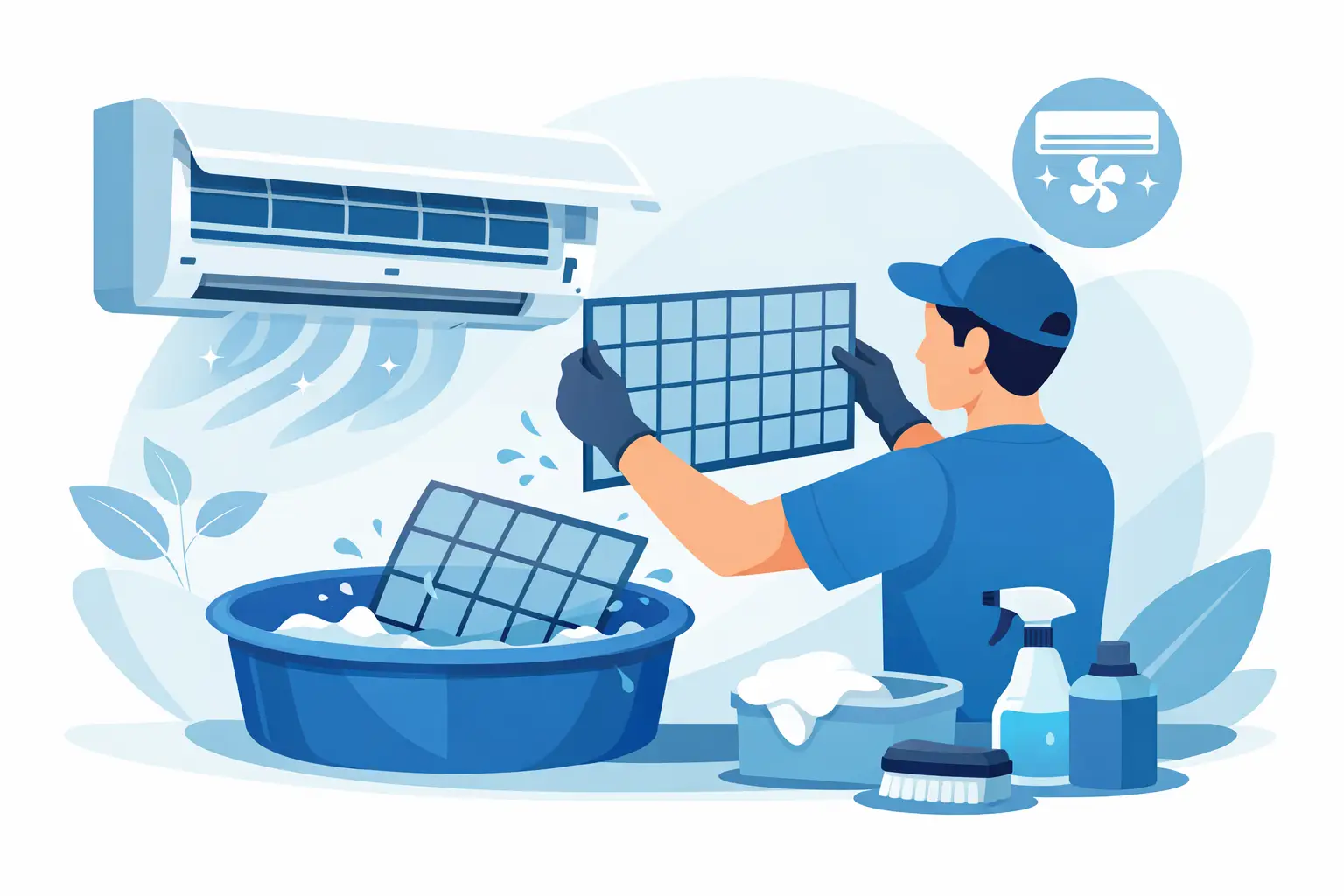
A weak airflow problem usually starts small. The room takes longer to cool, the unit sounds like it is working harder, and dust seems to return faster than usual. If that sounds familiar, learning how to clean aircon filter safely is one of the simplest ways to protect performance before a minor issue turns into a service call.
For most residential wall-mounted units, filter cleaning is basic maintenance. It can improve airflow, reduce strain on the system, and help keep indoor air cleaner. At the same time, it is worth being careful. Air conditioners include delicate plastic clips, electrical components, and filters that can be damaged by rough handling, harsh chemicals, or putting them back while still wet.
Why filter cleaning matters
Your aircon filter catches dust, lint, and airborne particles before they move deeper into the unit. As that buildup increases, airflow drops. When airflow is restricted, the system may cool less effectively and run longer to reach the same temperature.
That extra strain can affect both comfort and efficiency. In homes, you may notice uneven cooling, stale smells, or more visible dust around the room. In rental units and commercial spaces, neglected filters can also lead to avoidable complaints because the system feels underpowered even when the main components are still working.
Cleaning the filter does not solve every aircon problem. If the evaporator coil is heavily soiled, the drainage is blocked, or the unit has refrigerant or fan issues, filter cleaning alone will not restore full performance. Still, it is the right first step and one of the safest maintenance tasks a homeowner can handle if done properly.
How to clean aircon filter safely at home
Start by turning the unit off completely. Use the remote to power it down, then switch off the main power supply or circuit if you can access it safely. This matters because you do not want the fan starting while the front panel is open.
Next, open the front cover carefully. Most split-type aircon units have a panel that lifts upward. Do not force it. If it resists, check the model design and lift from the correct points rather than pulling hard from one side.
Once the cover is open, slide the filters out gently. They are usually light mesh screens set just behind the panel. Hold the frame rather than pressing into the mesh itself. A filter can bend or tear more easily than people expect.
Take the filters to a sink, shower area, or outdoor wash space. If there is a thick layer of dry dust, remove that first with a soft brush, microfiber cloth, or a vacuum on a low setting. This keeps the dust from turning into sticky residue when water hits it.
Rinse the filters with clean water. In most cases, lukewarm water is enough. If the filter is greasy or especially dirty, use a small amount of mild soap. Avoid strong detergents, bleach, abrasive brushes, or high-pressure water. Those can damage the filter mesh or the frame.
Wash gently from the cleaner side outward if possible, so debris is pushed away instead of deeper into the mesh. You are trying to remove buildup, not scrub the filter aggressively. If dirt remains after a light wash, repeat the rinse rather than using more force.
After washing, shake off excess water and let the filters air dry fully in a shaded, ventilated area. Do not use a hair dryer on high heat, place them in direct intense sun for too long, or reinstall them while damp. Moisture left in the filter can contribute to odor, mold growth, or dust sticking faster once the unit restarts.
When the filters are fully dry, slide them back into place the same way they came out. Make sure they sit evenly in their tracks. Then close the front panel securely and restore power.
What you should never do
The safest cleaning method is usually the simplest one. Problems often happen when people try to deep clean the unit without the right tools or experience.
Do not spray water directly into the indoor unit while the filter is removed. Behind the filter are parts that should not be soaked casually, including electronics and coil sections that need controlled cleaning methods.
Do not use disinfectants, perfume sprays, or strong chemical cleaners on the filter. These can leave residue, trigger odors when the unit runs, or weaken the material over time.
Do not scrub with hard-bristle brushes or scouring pads. If the mesh tears, the filter becomes less effective and may need replacement.
Do not assume every filter is washable. Some systems, especially specialized or commercial equipment, may have disposable or upgraded filtration components. If you are unsure, check the manufacturer instructions before washing anything.
How often should you clean the filter?
It depends on the space and how often the system runs. For many homes, cleaning every two to four weeks during heavy use is a practical routine. If you have pets, open windows often, live in a dusty area, or run the aircon daily, the filter may need more frequent attention.
In offices, retail spaces, and other commercial settings, the interval can be shorter because occupancy and dust load are often higher. A clean-looking filter is not always a fully clean filter either. Fine dust can still reduce airflow even when the surface does not look heavily coated.
A simple habit helps. Check the filter regularly instead of waiting for performance to drop. That small routine is usually easier and cheaper than responding after cooling quality declines.
Signs your aircon needs more than filter cleaning
Filter cleaning is useful, but it has limits. If the unit still has weak airflow after the filter is cleaned and dried, there may be dirt deeper inside the system. The fan wheel, evaporator coil, or drainage line may need professional cleaning.
You should also pay attention if you notice water leaks, ice formation, loud noise, strong musty smell, frequent shutdowns, or poor cooling even with a clean filter. Those are signs that the issue may involve drainage, electrical components, refrigerant, or internal buildup beyond what should be handled as DIY maintenance.
This matters even more for commercial and higher-load environments. In those spaces, a small airflow issue can affect comfort, operations, and equipment reliability faster than most people expect.
A few practical safety tips that make a difference
If you are cleaning the filter on a high wall-mounted unit, use a stable step stool instead of stretching. Many minor injuries happen because someone tries to reach awkwardly with one hand while holding the panel with the other.
Keep the area below the unit dry before you begin. Wet tile or polished flooring increases slip risk when carrying a rinsed filter back and forth.
If the front panel feels brittle, the filter frame seems stuck, or the unit has not been cleaned in a very long time, stop before forcing anything. Plastic parts can crack with age, especially in systems that have seen years of daily use.
For households with children, older family members, or anyone sensitive to dust, it is a good idea to wear a simple mask while brushing off heavy buildup. It is a small step, but it makes the task more comfortable.
When professional servicing is the better choice
There is a clear difference between routine filter cleaning and full aircon servicing. Filter cleaning helps maintain airflow between service visits. Professional servicing addresses the parts you cannot safely or effectively clean on your own.
That includes internal coil cleaning, drainage checks, fan cleaning, washdown procedures, and identifying wear before it leads to breakdowns. If your unit cools inconsistently, smells off, leaks, or has gone too long without maintenance, professional attention is often the faster path to a real fix.
For landlords, offices, and businesses, scheduled servicing also helps reduce disruption. Instead of waiting for complaints or a complete loss of cooling, preventive maintenance keeps systems operating more reliably over time. That is especially important in spaces where comfort, equipment performance, or customer experience depends on consistent cooling.
If you want to handle the basics yourself, cleaning the filter is a smart place to start. Just keep the method gentle, keep water away from the wrong parts, and let the filter dry fully before reinstalling it. And when the problem looks bigger than a dusty screen, getting qualified help early is usually the easiest way to keep your cooling dependable.