

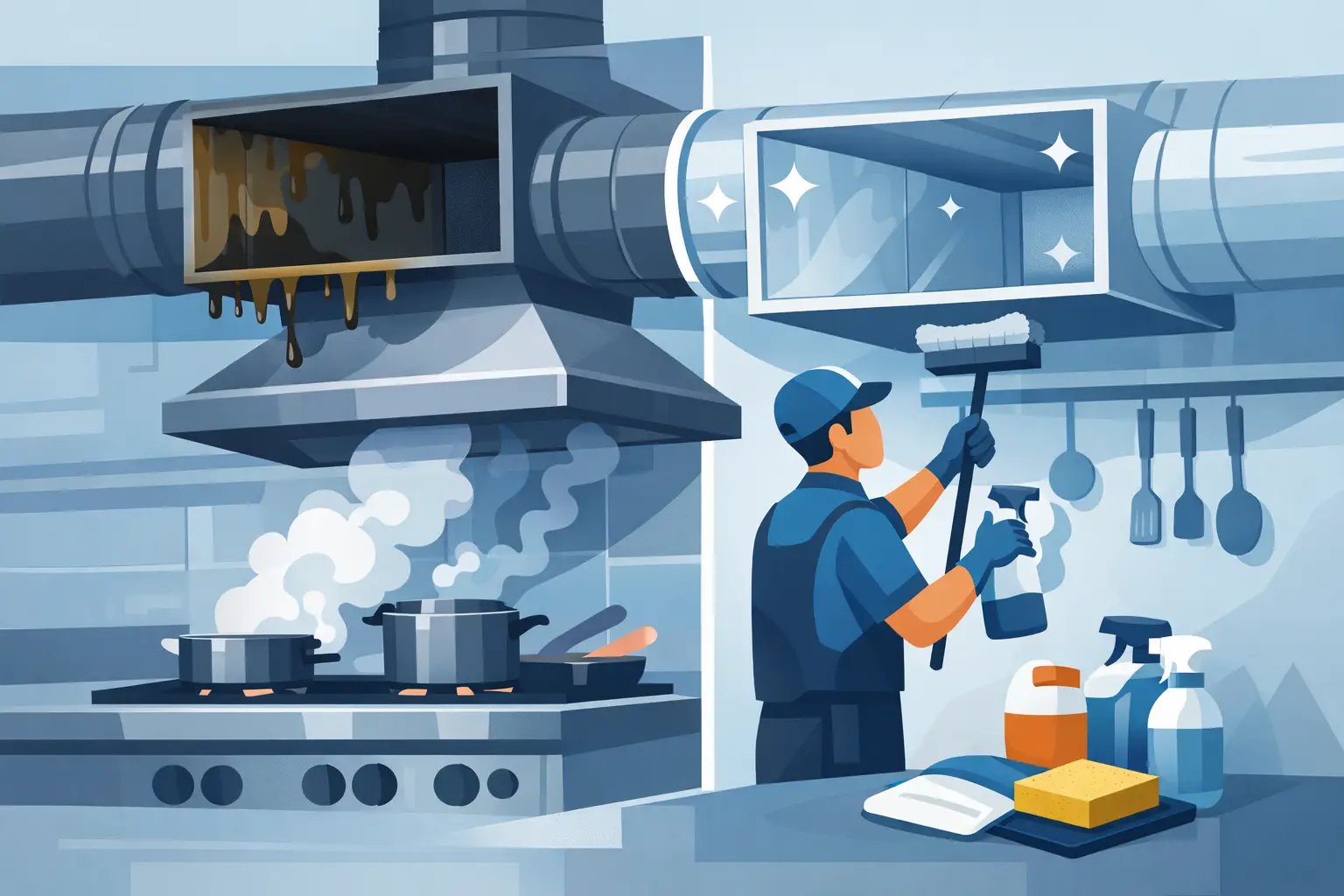
A kitchen duct can look fine from the outside while grease quietly builds up inside the hood, filters, ductwork, and exhaust fan. If you are asking how to prevent kitchen duct grease, the real answer is not one product or one deep clean. It is a combination of good system design, consistent cleaning, and day-to-day habits that reduce how much grease enters the duct in the first place.
For homeowners, grease buildup usually means odors, sticky surfaces, and poor ventilation. For commercial kitchens, the stakes are higher. Heavy grease accumulation can affect airflow, create hygiene issues, increase fire risk, and lead to expensive downtime. Prevention is always easier and more cost-effective than dealing with a badly contaminated system later.
Why kitchen duct grease builds up so fast
Grease does not stay over the cookline just because the hood is running. When cooking oils, fats, and food particles are heated, they turn into airborne grease vapor. As that vapor moves through the hood and into the exhaust duct, it cools down and sticks to metal surfaces.
The rate of buildup depends on the type of cooking, how often the kitchen operates, and whether the ventilation system is properly sized and maintained. A home kitchen that pan-fries occasionally will create far less grease than a restaurant that deep-fries, stir-fries, or grills for hours every day. Even so, poor airflow or neglected filters can make a light-use kitchen dirty faster than expected.
There is also a common misunderstanding here. Many people think visible grease on the baffle filter tells the whole story. It does not. When filters are saturated, damaged, or poorly fitted, grease can move deeper into the duct and settle where it is harder to detect and harder to clean.
How to prevent kitchen duct grease at the source
The best way to reduce grease in the duct is to stop as much of it as possible before it enters the system. That starts at the hood.
A properly selected hood should match the cooking load. If the hood is too small, badly positioned, or not pulling enough air, grease-laden vapor escapes capture and spreads through the kitchen. If airflow is too weak, grease can also linger and condense unevenly inside the system. On the other hand, airflow that is too aggressive can create its own issues, especially if the makeup air is not balanced. It may affect comfort, kitchen pressure, and overall system efficiency.
For commercial kitchens, the hood type must fit the equipment below it. A light-duty setup and a heavy-duty frying line do not produce the same exhaust load. For residential kitchens, an underpowered range hood is a frequent reason grease ends up on cabinets, walls, and duct surfaces.
Filters matter just as much. Good baffle filters help separate grease from the airstream before it travels into the duct. But they only work when they are clean, installed correctly, and replaced when damaged. Bent filters, missing filters, or clogged filters all reduce performance.
Daily habits that make a real difference
Grease prevention is not only about equipment. It is also about how the kitchen is used.
Running the exhaust hood before cooking begins helps create steady airflow before grease vapor rises. Turning it off the moment cooking stops is another mistake. Letting the fan run for several minutes afterward helps clear remaining vapor and moisture.
Cooking temperature also plays a part. Extremely high heat produces more smoke and airborne grease, especially when oil is left to overheat. That does not mean every kitchen should cook at low heat. It means staff or household users should avoid unnecessary overheating and pay attention to smoke points.
Cleaning visible grease quickly is important too. When grease collects on nearby surfaces, it often signals that capture is incomplete or maintenance is overdue. Wiping the hood canopy, nearby backsplash, and exposed components does not replace duct cleaning, but it helps prevent residue from hardening and recirculating.
In commercial settings, consistency matters more than intensity. A kitchen with simple daily wipe-downs and scheduled filter cleaning often stays in better shape than one that waits for obvious buildup and then reacts.
Cleaning schedules are the core of prevention
If you want a practical answer to how to prevent kitchen duct grease, this is it: set a cleaning schedule based on actual kitchen use, not guesswork.
For home kitchens, the hood filters usually need frequent attention, especially if cooking involves frying, searing, or oily foods. Some households can manage with a monthly clean, while others need it more often. The right interval depends on use.
Commercial kitchens need a more structured plan. Filters often require very frequent cleaning, sometimes daily or several times a week depending on output. Hood surfaces need routine degreasing, and the full exhaust system should be professionally inspected and cleaned on a schedule that reflects the cooking volume.
Waiting until airflow drops or odors become obvious is too late. By then, grease has already built up inside hidden sections. Preventive maintenance works because it removes grease before it becomes thick, sticky, and expensive to deal with.
Warning signs your duct is collecting too much grease
Grease buildup is often gradual, so it helps to know what to watch for.
One early sign is reduced extraction performance. If smoke, heat, or cooking odors seem to hang around longer than they used to, the system may not be moving air effectively. Another sign is visible grease around the hood seams, filters, or fan housing. In some kitchens, you may notice sticky residue forming faster than normal on surrounding walls or ceiling surfaces.
Noise can also tell you something. A fan working harder against restricted airflow may sound different, though noise alone does not confirm grease buildup. In commercial settings, staff may also notice higher kitchen temperatures, discomfort near the cookline, or recurring issues with smoke escaping the hood.
These symptoms can also point to other ventilation problems, so inspection matters. The right fix depends on whether the issue is filter condition, fan performance, duct contamination, or poor system design.
When professional servicing becomes necessary
There is a limit to what routine user cleaning can do. Wiping hood surfaces and cleaning removable filters are essential, but they do not reach the full duct run, internal fan components, or hard-to-access grease deposits.
That is why professional kitchen duct servicing matters, especially for commercial operations. A trained team can assess buildup levels, inspect problem areas, clean the system properly, and identify whether poor airflow or duct layout is contributing to the issue. In some cases, repeated grease problems are not caused by weak cleaning habits at all. They come from installation faults, inaccessible duct sections, or undersized exhaust capacity.
This is where working with a capable service partner helps. A company like Easy Cool Engineering Pte Ltd can support both installation and servicing needs, which matters because prevention is strongest when system setup and maintenance are treated as part of the same plan.
Design and maintenance need to work together
A well-designed duct system is easier to keep clean. Straightforward routing, proper access points, suitable materials, and correctly sized exhaust components all support better grease control. If the system has sharp turns, difficult access, or poor drainage behavior, grease can collect faster in certain sections.
That does not mean every existing system needs replacement. In many cases, improved maintenance and a few practical adjustments can make a major difference. But if a kitchen repeatedly struggles with grease despite regular cleaning, the design should be reviewed rather than assuming staff effort is the only issue.
Residential and commercial kitchens also need different expectations. A homeowner may focus on odor control, convenience, and keeping the kitchen cleaner. A restaurant or food-service operator has to think about compliance, fire safety, uptime, and staff working conditions. The goal is the same, but the maintenance standard is not identical.
A simple prevention mindset that works
The most effective kitchens treat grease prevention as a routine operating issue, not an occasional cleaning job. Capture grease early with the right hood and filters. Keep airflow steady. Clean on a schedule that matches real cooking volume. Inspect before small problems become hidden buildup.
That approach is less disruptive, safer, and usually more affordable over time. If your kitchen ventilation system is doing its job properly, you should notice the difference in cleaner surfaces, better airflow, and a kitchen that feels easier to manage day after day.
A cleaner duct system rarely happens by accident. It comes from small, consistent actions that keep grease from getting ahead of you.