

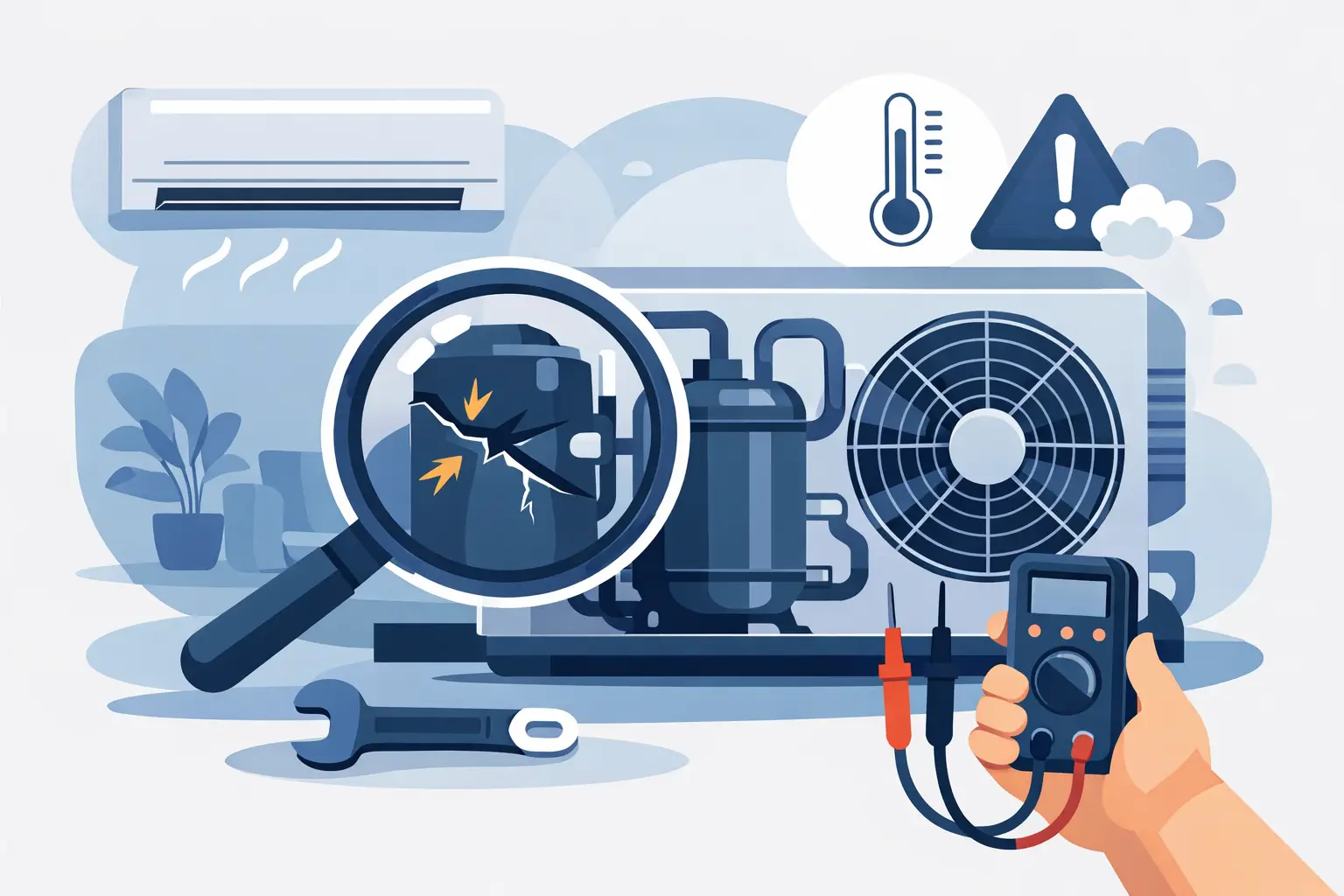
Your air conditioner can still blow air and look normal from the outside while the compressor is already struggling. That is why knowing how to spot aircon compressor issues early can save you from a full breakdown, higher energy bills, and avoidable repair costs.
The compressor is the part of the system that keeps refrigerant moving through the cooling cycle. When it starts to fail, the entire unit feels the impact. In a home, that may mean rooms that never quite cool down. In a shop, office, or facility, it can quickly affect comfort, equipment performance, and daily operations.
Why compressor problems are easy to miss
Many people expect compressor failure to be dramatic, but that is not always how it starts. In many cases, the warning signs are gradual. Cooling becomes weaker. The system runs longer than usual. You notice odd noises now and then, but the unit still turns on, so it is easy to put the issue off.
That delay is where costs can climb. A compressor under strain can place extra pressure on other components, including capacitors, fan motors, and electrical parts. Sometimes the compressor itself is not the root cause. Low refrigerant, dirty coils, blocked airflow, or voltage issues can all make it behave like a failing compressor. That is why proper diagnosis matters.
How to spot aircon compressor issues at home or at work
One of the clearest signs is weak or inconsistent cooling. If your thermostat is set correctly but the space takes much longer to cool, the compressor may not be compressing refrigerant efficiently. You might also notice that certain rooms stay warm while others feel acceptable. In larger commercial spaces, uneven cooling often shows up across zones.
Another common sign is short cycling. This happens when the air conditioner starts, runs briefly, then shuts off before reaching the target temperature. It can also happen the other way around, where the system runs almost nonstop with little improvement. Both patterns suggest the compressor is under stress or the system is dealing with a related fault.
Noise is another clue. A healthy compressor usually makes a steady operating sound. If you hear hard clicking, rattling, buzzing, growling, or a louder-than-usual startup noise from the outdoor unit, the compressor or its supporting electrical parts may need attention. Not every noise points directly to the compressor, but unusual sound changes should never be ignored.
Warm air coming from the vents can also signal trouble. If the blower is working but the air does not feel cool, the refrigerant cycle may not be functioning properly. A compressor problem is one possible reason. So are refrigerant leaks and control issues, which is why an inspection is the safest next step.
Signs the compressor may be overheating
An overheating compressor often gives a few warnings before the system shuts down completely. You may notice the outdoor unit stopping unexpectedly, then restarting after a period of rest. This can happen when thermal overload protection kicks in to prevent damage.
The outside condenser may also feel unusually hot, and the system may struggle more during the hottest part of the day. That does not always mean the compressor is bad. Dirty condenser coils, blocked airflow around the outdoor unit, or low refrigerant can all cause heat buildup. Still, repeated overheating is a sign that something is wrong and should be checked promptly.
A sudden jump in electricity usage can point in the same direction. When a compressor is working harder than it should, the system often runs longer and less efficiently. If your usage rises without a clear seasonal reason, the air conditioner deserves a closer look.
Electrical symptoms that should not be ignored
Some compressor issues show up first as electrical problems. If the circuit breaker trips when the air conditioner starts, the compressor may be drawing too much current. A hard-starting compressor can also create a humming sound without fully turning on.
In some systems, a failed capacitor or contactor can mimic compressor trouble. That is the trade-off with symptom-based guessing. You might suspect the compressor, but the actual problem could be a smaller electrical component. On the other hand, repeatedly resetting the breaker without inspection can make things worse. If the unit trips power more than once, it is time for professional testing.
Burning smells or signs of scorched wiring around the outdoor unit also need immediate attention. These can indicate electrical overheating or compressor damage. In a residential setting, that means shutting the unit off and arranging service. In a commercial environment, it is even more important to act quickly to avoid wider disruption.
What causes compressor problems in the first place
Compressors usually do not fail without a reason. Lack of maintenance is one of the most common causes. Dirty filters, clogged coils, and restricted airflow force the system to work harder and for longer periods. Over time, that added strain affects compressor performance.
Refrigerant issues are another major factor. If the system is undercharged because of a leak, the compressor may overheat or lose efficiency. If the refrigerant charge is incorrect after previous service, performance can suffer in a different way. Either condition can shorten compressor life.
Electrical instability is also a risk. Voltage fluctuations, worn capacitors, poor connections, and aging contactors can all affect compressor startup and operation. In some properties, especially older buildings or high-load commercial sites, power quality should not be overlooked.
Age matters too. An older compressor may simply wear out, especially if the system has had years of heavy use. But even then, replacement is not always the immediate answer. The condition of the full system, repair cost, refrigerant type, and efficiency level all need to be weighed together.
When the issue is urgent and when it can wait a day
If the system is making loud mechanical noise, tripping breakers, blowing warm air continuously, or shutting down repeatedly, treat it as urgent. These signs suggest active strain or potential damage. Continued operation can turn a repairable issue into a compressor replacement.
If cooling is only slightly weaker but the unit is otherwise stable, you may have a little more time to schedule service. Even so, it is better not to wait too long. Compressor-related problems rarely improve on their own, and small supporting faults often become bigger ones when ignored.
For businesses, urgency depends on what the cooling supports. In an office, poor comfort may be the first concern. In a retail, food-service, or technical environment, cooling issues can affect equipment, products, and operations much faster. That is why response time matters.
What a technician will usually check
A proper inspection goes beyond listening for noise or feeling the air from the vents. A technician will typically check refrigerant pressures, electrical readings, capacitor condition, contactor performance, coil cleanliness, airflow, thermostat response, and compressor amp draw.
This matters because a compressor can appear faulty when the underlying issue is elsewhere. Accurate diagnosis helps avoid unnecessary replacement and gives a clearer picture of whether repair is practical. In many cases, early intervention can correct the supporting problem before the compressor suffers permanent damage.
For homeowners, that means less guesswork and fewer repeat visits. For commercial clients, it supports planning, especially when uptime and cost control are priorities. A dependable service partner should be able to explain the issue clearly, outline the available options, and recommend the most sensible next step based on system condition rather than a one-size-fits-all answer.
How to reduce the risk of future compressor trouble
Regular maintenance is still the best defense. Clean filters, clear airflow, coil cleaning, refrigerant checks, and electrical inspection all help the compressor operate within normal limits. Preventive service is usually far more cost-effective than waiting for failure.
It also helps to pay attention to small changes. If the system sounds different, runs longer, cools unevenly, or causes an unexplained rise in energy use, do not assume it is normal aging. Those details often show up before a complete shutdown.
For homes, routine servicing keeps comfort stable and protects the investment in the system. For offices, retail sites, and more demanding facilities, maintenance supports reliability and reduces avoidable downtime. That practical, preventive approach is the one Easy Cool Engineering Pte Ltd recommends across both residential and commercial environments.
If your air conditioner has started acting differently, trust that early signs usually mean something. A quick check today is often the difference between a manageable repair and a much larger problem next week.