

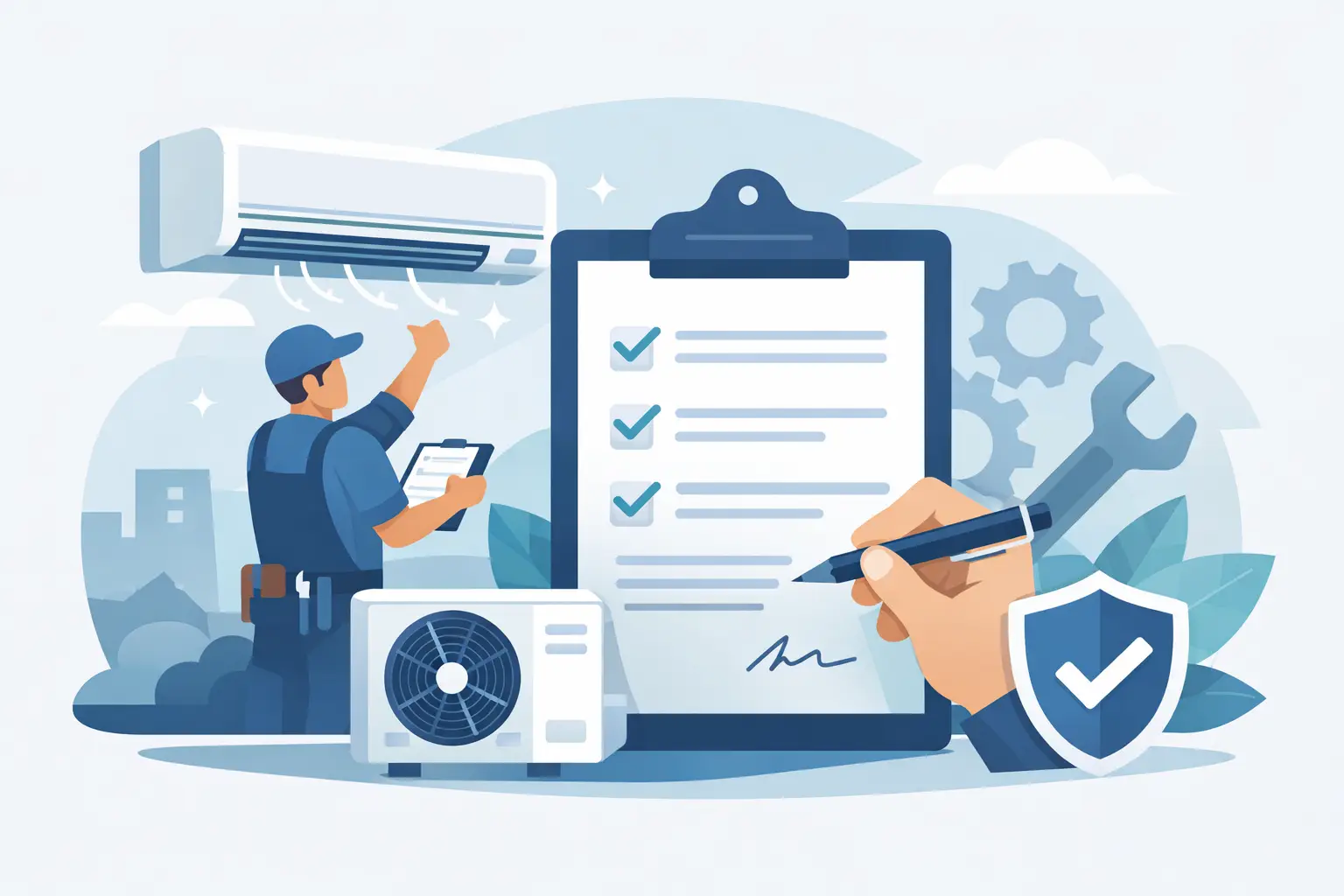
If your air conditioner only gets attention when it stops cooling, repairs tend to happen at the worst possible time – during a heat wave, before guests arrive, or in the middle of business hours. A good aircon maintenance contract guide helps you avoid that cycle by showing what a service agreement should actually cover, what it should cost, and when it makes financial sense.
For homeowners, the right contract means fewer breakdowns, cleaner airflow, and less hassle scheduling repeated one-off visits. For offices, retail spaces, and other commercial sites, it also means better uptime, more predictable operating costs, and less disruption to staff or customers. The detail that matters most is not whether a contract exists. It is whether the contract fits the system you have and the way you use it.
What an aircon maintenance contract really includes
At its core, a maintenance contract is a recurring service agreement for inspection, cleaning, and basic preventive care. The purpose is simple: keep the system running efficiently, spot wear early, and reduce the chance of sudden failures.
That said, contracts vary more than many customers expect. Some cover only standard servicing, such as filter cleaning, panel cleaning, checking drainage, and testing basic performance. Others are broader and include chemical cleaning, priority scheduling, emergency response support, replacement recommendations, or service records that are useful for landlords and facility teams.
The best contracts are clear about scope. If the wording is vague, problems usually show up later when a customer assumes certain tasks are included and finds out they are billed separately. A dependable provider explains what is routine, what is charged additionally, and what conditions may affect service frequency.
Who should get a maintenance contract
Not every system needs the same level of coverage. That is why a practical aircon maintenance contract guide should start with usage, not price.
For a homeowner running one or two units mainly at night, a basic recurring plan may be enough. The focus is usually cleanliness, cooling performance, and extending equipment life. If there are pets, allergies, heavy daily usage, or tenants rotating through a property, more frequent service may be worth it.
For landlords, a contract often reduces call-backs and helps keep units in rentable condition. It can also create a clear maintenance trail, which is useful when problems arise between tenancies.
For commercial clients, maintenance becomes more operational. Offices, shops, restaurants, and managed properties usually need a more structured schedule because downtime affects comfort, productivity, or customer experience. Larger ACMV, VRV, or specialized cooling systems may also require technicians with stronger technical depth than a standard residential crew.
In other words, it depends. A low-cost contract for a lightly used apartment unit may be perfectly fine. That same contract could be too limited for a business that relies on consistent cooling every day.
What to check before you sign
The most useful way to compare contracts is to look past the headline price. A lower fee can still become expensive if the plan excludes basic items you are likely to need.
First, check the visit frequency. Quarterly servicing is common, but not universal. Some systems need more attention based on usage, environment, or system design. A small bedroom unit and a busy retail space should not be treated the same way.
Next, review the cleaning scope. Ask whether the plan includes indoor unit cleaning, filter washing, evaporator coil checks, condenser inspection, drainage clearing, refrigerant pressure checks where appropriate, and testing of cooling performance. If chemical washing is not included, find out whether it is available at a reduced contract rate or billed fully as an extra.
Then look at response terms. Some providers offer priority booking for contract customers. That may not seem essential until the first urgent issue happens during a peak season. For businesses, response time can be a major factor, especially where cooling affects operations, equipment, or customer comfort.
Also ask about parts and repairs. Maintenance contracts often do not include replacement parts, and that is normal. What matters is transparency. You should know whether labor for minor fixes is included, whether diagnostics are charged separately, and how repair quotations are handled.
Finally, check whether service reporting is provided. For homeowners, a simple update may be enough. For facilities or landlords, documented service records are more valuable because they support planning, budgeting, and accountability.
Red flags in an aircon maintenance contract guide
Some warning signs are easy to miss because they look harmless at the start.
One is overly broad promises with little detail. If a contract says comprehensive maintenance but does not define tasks, frequency, exclusions, or escalation process, the agreement may leave too much open to interpretation.
Another is pricing that looks unusually low without explaining limits. In many cases, that means the plan covers very little beyond basic rinsing and visual checks. There is nothing wrong with a basic package if that is what you need, but it should be presented honestly.
A third red flag is poor fit between technician capability and system complexity. Residential servicing experience does not automatically translate to larger commercial, VRV, or precision cooling systems. The provider should be comfortable with the type of equipment on site, not just air conditioning in general.
You should also pay attention to scheduling reliability. A contract only works if service visits actually happen on time and with minimal follow-up from the customer. Consistency matters as much as technical skill.
How pricing usually works
Most maintenance contracts are priced based on the number of units, system type, service frequency, and scope of work. Residential wall-mounted split units are usually straightforward. Costs rise with cassette units, ducted systems, larger commercial installations, or any setup that needs specialized access, testing, or coordination.
The cheapest option is not always the best value. If a contract reduces breakdowns, keeps energy use in check, and catches issues before major repair is needed, it can pay for itself over time. On the other hand, paying for a premium plan with features you will never use does not make sense either.
The key is matching the plan to actual risk. A family using air conditioning daily in multiple rooms may benefit from a more consistent schedule. A business with customer-facing space may value fast response and dependable reporting more than the lowest annual fee.
Choosing a provider, not just a contract
A strong contract matters, but the service provider behind it matters more. The best agreement on paper will still disappoint if technicians are rushed, communication is unclear, or appointments are hard to secure.
Look for a company that can explain recommendations in plain language. You should not need to guess whether a drain line issue is minor, whether a coil condition needs closer attention, or whether a repair can wait. Good service teams communicate clearly, give practical options, and avoid pushing unnecessary work.
Breadth of capability can also be a real advantage. A provider that supports residential systems as well as commercial and specialized cooling environments often brings a stronger maintenance mindset, especially when diagnosing recurring issues or handling non-routine equipment. That is part of why many customers prefer a technically capable partner over a call-and-fix vendor.
Easy Cool Engineering Pte Ltd reflects that kind of service approach by supporting both everyday air conditioning needs and more specialized system requirements, while keeping communication direct and customer-focused.
Questions worth asking before you commit
Before signing, ask how often visits are recommended for your specific setup and why. Ask what is included in each visit, what counts as extra work, and how urgent issues are prioritized. Ask whether service notes are provided after each appointment and whether the same technician team is likely to return.
If you manage a commercial site, also ask how they handle access coordination, after-hours servicing, and equipment with different age profiles. If you are a homeowner, ask what signs would trigger a deeper cleaning or repair outside the regular schedule. These questions usually reveal how organized and transparent the provider really is.
When a contract is better than one-off servicing
One-off service visits still have a place. If a unit is lightly used, newer, and consistently performing well, ad hoc servicing may be reasonable for a while. But once usage becomes frequent, unit count increases, or downtime becomes more disruptive, a contract usually becomes the more practical option.
That shift happens earlier than many people expect. The value is not just in the cleaning itself. It is in regular attention, easier scheduling, and fewer surprises. Over time, that creates a more reliable cooling system and a less stressful ownership experience.
The best maintenance contract is not the one with the longest feature list. It is the one that keeps your system dependable, your costs predictable, and your service experience straightforward. If a provider can offer that with clear scope and consistent support, you are not just buying maintenance. You are buying fewer problems later.