

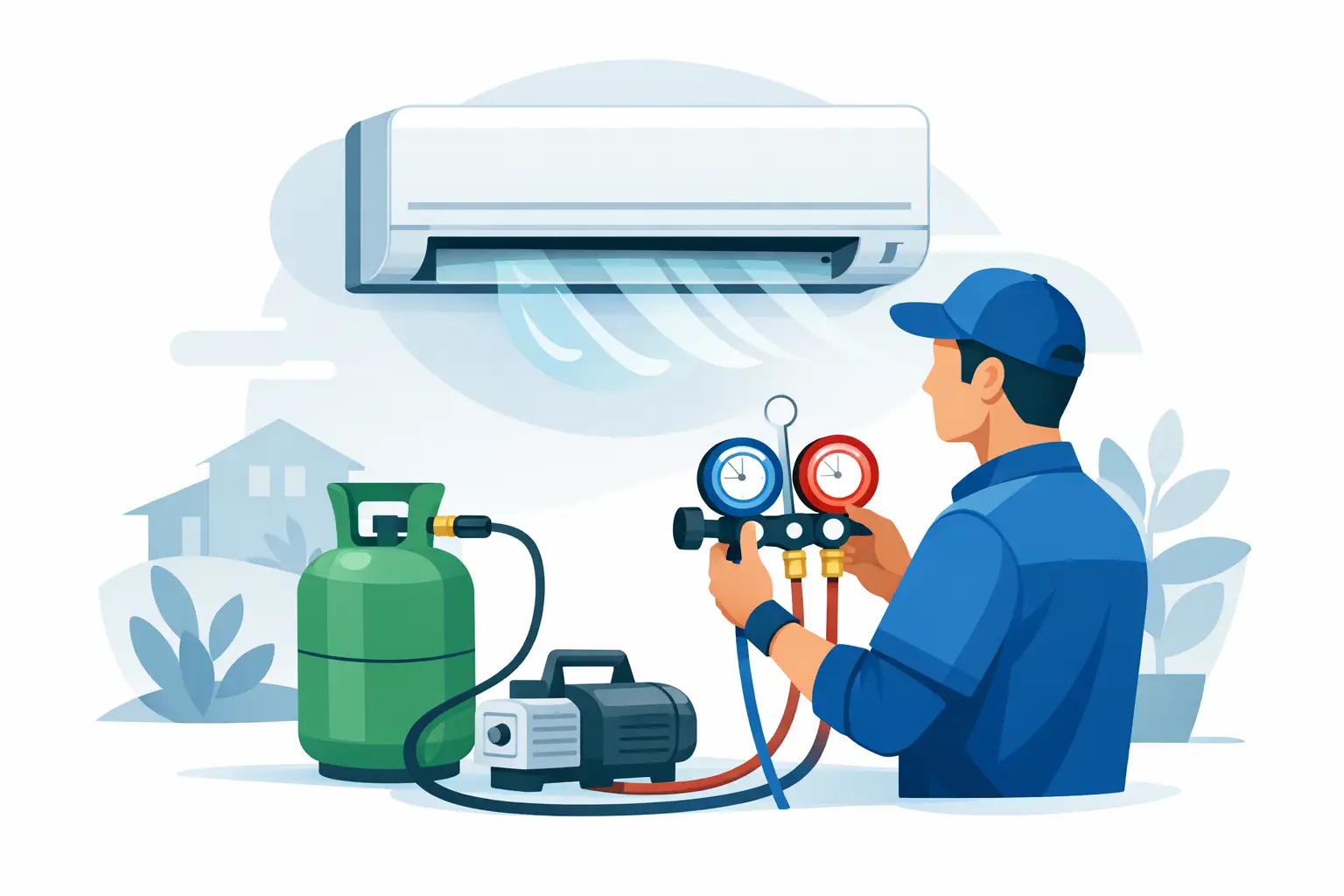
When an air conditioner starts blowing warm air, many people assume it just needs more gas. That is exactly why aircon gas top up explained properly matters. In most cases, low refrigerant is not routine wear and tear – it usually points to a leak, poor installation, or a repair issue that needs attention first.
That distinction saves time, money, and repeat service calls. If you top up refrigerant without checking why it dropped in the first place, the cooling problem often comes back. For homeowners, landlords, and facilities teams, the better approach is simple: understand what refrigerant does, know the signs of a real shortage, and make sure the system is diagnosed correctly before any refill happens.
What aircon gas top up explained really means
“Aircon gas” is the common term people use for refrigerant, the chemical that absorbs heat from indoor air and releases it outside. It circulates in a closed system. Under normal conditions, it does not get “used up” like fuel in a car.
That is the part many customers do not hear often enough. If an air conditioner is low on refrigerant, the issue is usually not age alone. It often means refrigerant has escaped through a leak in the piping, flare joints, coils, or service valves. In some cases, the unit may have been undercharged from the start after installation or previous servicing.
So, a gas top-up is not regular maintenance in the same way filter cleaning is. It is a corrective service. The goal is not just to add refrigerant. The goal is to restore the correct charge and fix the reason the charge dropped.
When an aircon gas top up is actually needed
There are situations where a top-up is appropriate. If a technician confirms refrigerant loss through pressure readings, temperature checks, and leak inspection, then adding refrigerant may be part of the repair process. This is common after a leak has been fixed or if refrigerant was recovered during certain repair work.
But not every weak-cooling complaint means low gas. Dirty filters, clogged fan coils, a faulty thermostat, blocked condensers, compressor issues, and electrical faults can all reduce cooling performance. In commercial systems, controls and zone issues can also create symptoms that look like refrigerant loss.
That is why proper diagnosis matters more than the refill itself. A technician who immediately recommends a top-up without checking the system may solve the symptom for a short time, but not the root cause.
Common signs of low refrigerant
A system with low refrigerant often shows a pattern rather than one single symptom. The air may feel less cold than usual even when the thermostat is set low. Cooling may take longer, and the unit may run for extended periods without reaching the desired temperature.
You might also notice ice forming on the indoor coil or refrigerant line. Hissing or bubbling sounds can point to a leak, though not always. Utility bills may rise because the system works harder to deliver less cooling.
In some cases, the indoor unit still blows air strongly, but the air is not cold enough. That difference matters. Good airflow with weak cooling can be a refrigerant issue, but it can also be a sign of dirty coils or a compressor problem. It depends on what the full system check shows.
Why topping up without fixing leaks is a problem
This is where many avoidable costs happen. If refrigerant is added to a leaking system, the cooling may improve temporarily, then fade again as the gas escapes. The customer pays for repeat top-ups, and the equipment continues operating under strain.
Low refrigerant can reduce efficiency and, in some cases, damage major components. The compressor is especially vulnerable because the refrigerant cycle helps manage operating conditions inside the system. Running a system that is undercharged for too long can turn a manageable repair into a more expensive one.
There is also a practical issue with diagnosis. If a unit is repeatedly topped up without proper leak tracing, it becomes harder to judge how fast refrigerant is being lost and where the fault is occurring. A more disciplined service approach is usually the more cost-effective one.
How technicians confirm whether refrigerant is low
A proper check should involve more than a glance at the unit. Technicians typically look at operating pressures, line temperatures, coil condition, airflow, and the unit’s overall cooling performance. They also inspect common leak points such as flare connections, valves, and coils.
Depending on the system and the suspected fault, leak detection may involve electronic tools, soap testing, or pressure holding tests. For some installations, especially larger commercial systems, the diagnostic process can be more involved because pipe runs are longer and system design is more complex.
This is one reason pricing can vary. A simple residential split unit with an accessible leak point is very different from diagnosing a larger ACMV or VRV system in an occupied commercial space.
Aircon gas top up explained for costs and pricing
Customers often ask for a flat gas top-up price, but the real cost depends on what the system needs. The refrigerant type matters because different systems use different refrigerants, and pricing can vary based on availability and volume. The amount needed matters too. A minor correction after a repair is not the same as refilling a system that has lost a large part of its charge.
Labor is another factor. If the technician only adds gas, that is one level of service. If the job includes leak checking, repairs, pressure testing, evacuation, and recharging to the correct level, the scope is larger but also more complete.
For most customers, the better question is not “What is the cheapest top-up?” but “What work is included, and was the cause of the gas loss checked?” Transparent communication matters here. A lower quote can become more expensive if the same problem returns a few weeks later.
Residential and commercial systems are not the same
For homes and apartments, the issue is often straightforward: one or more rooms are not cooling well, and the system is accessible. Even then, correct diagnosis matters because basic servicing problems can be mistaken for refrigerant issues.
For offices, retail spaces, restaurants, and industrial environments, refrigerant-related faults can affect comfort, operations, equipment performance, and downtime risk. Larger systems may have multiple indoor units, longer piping, and more control layers. In these cases, a quick refill without deeper checks can create bigger operational problems later.
That is why many customers prefer a service partner that can handle both daily cooling issues and more technical system support. Easy Cool Engineering Pte Ltd takes that practical approach – diagnose clearly, explain what the system needs, and carry out work that addresses the issue instead of patching it.
What you should ask before approving a top-up
If a technician recommends adding refrigerant, ask what signs show the system is low and whether a leak check was done. Ask which refrigerant your system uses and whether the amount being added is based on measured readings rather than guesswork.
It is also reasonable to ask whether the leak has been repaired, whether pressure testing or vacuuming is needed, and what could happen if the issue is left unresolved. A trustworthy service process should make these answers clear without making the customer feel pressured.
For landlords and facilities managers, documentation is especially useful. Knowing which unit was serviced, what refrigerant was added, and whether a leak was found helps with future maintenance decisions and budget planning.
How to reduce the chance of refrigerant problems
Not every refrigerant issue is preventable, but regular maintenance helps catch early warning signs. Keeping coils and filters clean supports proper operating conditions. Good installation practices also matter, especially with flare joints, pipe insulation, and system charging.
If cooling performance changes suddenly, do not wait too long to have it checked. A unit that is still running but not cooling properly may continue to operate under stress. Early diagnosis often prevents a smaller issue from becoming a larger repair.
For older systems, there is also a practical trade-off. If a major leak develops in an aging unit, repair may not always be the best value. Sometimes a replacement discussion makes more sense, especially if efficiency, parts availability, and long-term reliability are already concerns.
Air conditioning works best when service decisions are based on cause, not guesswork. If your unit seems to need gas, the most helpful next step is not just adding refrigerant – it is making sure the system is checked thoroughly so the fix lasts.