

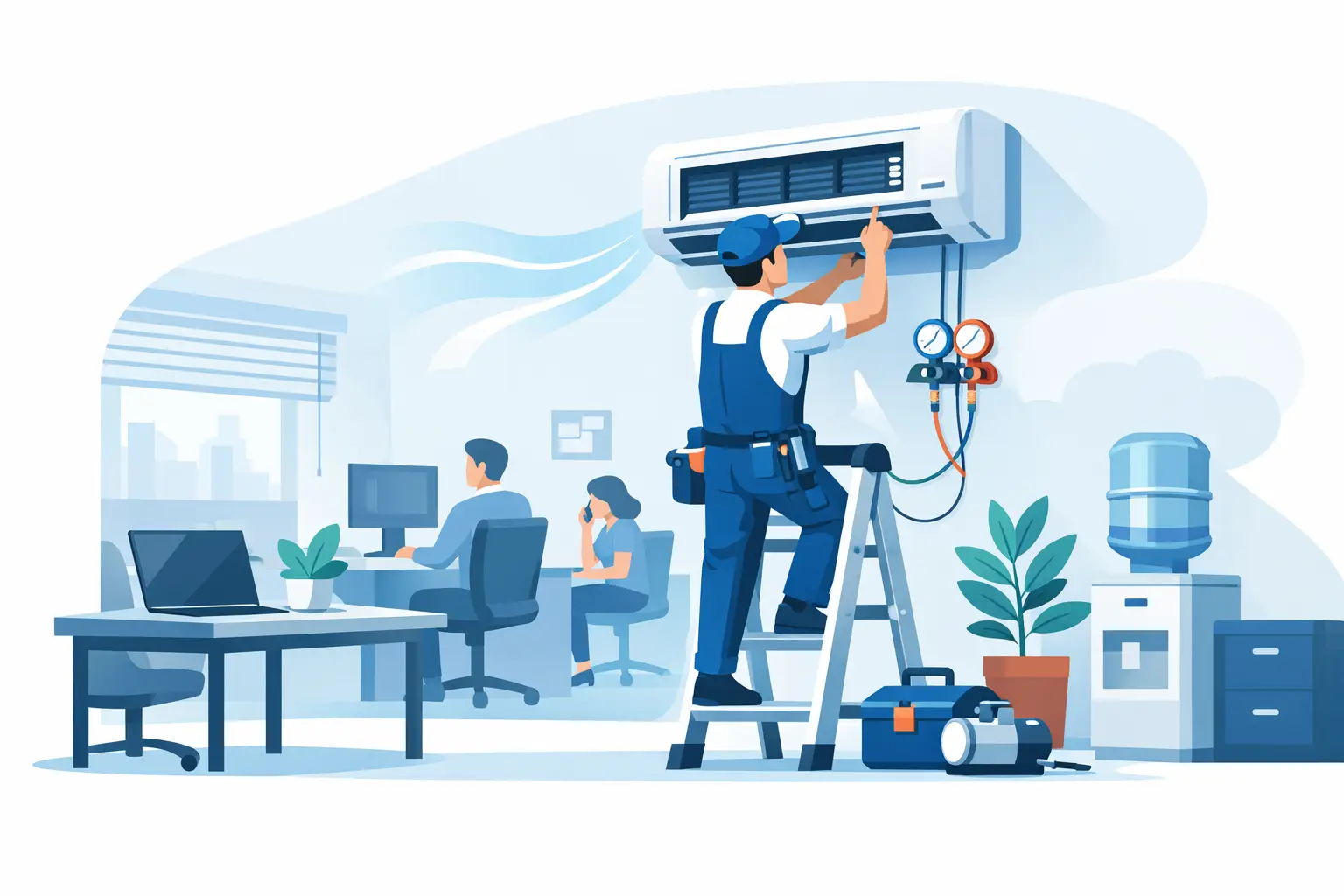
A small office usually notices air conditioning problems before anyone says them out loud. The meeting room feels stuffy by noon. One corner stays too cold while the front desk feels warm. Staff start adjusting the thermostat more often, and energy bills creep up without a clear reason. That is usually the point when aircon servicing for small offices stops being a nice-to-have and becomes part of running the space properly.
For small teams, cooling issues have a bigger impact than many people expect. You may only have one or two indoor units supporting the whole office. If performance drops, comfort drops across the entire workspace. There is less room for error, less backup, and less time to deal with disruptions during business hours.
Why aircon servicing for small offices matters
Office cooling is not just about temperature. It affects concentration, equipment performance, air quality, and how professional the space feels to staff and visitors. When a unit is underperforming, the problem often shows up in small ways first. Airflow weakens, drainage becomes inconsistent, filters collect dust faster, and the system runs longer to achieve the same result.
That longer run time matters. A neglected unit often uses more energy because it has to work harder to push air through dirty filters or cool with reduced efficiency. In a small office, where utility costs are closely watched, even a modest drop in efficiency can become a recurring expense.
There is also the issue of unplanned downtime. If an office relies on a single system for a compact space, a breakdown can disrupt work quickly. Staff become uncomfortable, customers notice, and temporary fixes rarely solve the real cause. Regular servicing helps catch wear and tear early, before it turns into a same-day emergency.
What small office aircon servicing should include
Not all servicing is equal. A basic visit should go beyond a quick wipe-down and temperature check. For office settings, the goal is to maintain reliable daily performance, not just confirm that the unit can still turn on.
A proper service visit generally includes cleaning filters, checking evaporator and condenser condition, inspecting drainage, testing refrigerant-related performance, reviewing airflow, and confirming that controls and operating modes respond correctly. The technician should also look for early warning signs such as unusual noise, water leaks, weak cooling output, or dirt buildup around key components.
For some offices, chemical cleaning or a more intensive wash may be needed rather than routine servicing alone. It depends on usage patterns, the age of the unit, and the environment around it. An office near a busy street, renovation area, workshop zone, or food business may accumulate dirt faster than a standard administrative workspace.
That is why a one-size-fits-all schedule rarely works well. Small offices benefit more from maintenance plans that match real operating conditions.
How often should a small office schedule service?
There is no single answer that fits every office, but there are reliable guidelines. A lightly used office with short operating hours may do well with servicing every three to four months. A busier office that runs air conditioning throughout the workday, five or six days a week, may need more frequent attention.
If the office has higher occupancy, more electronic equipment, frequent door opening, or a layout that traps heat, servicing intervals should usually be shorter. The same applies if staff have already noticed inconsistent cooling or increased dust.
Waiting until the unit fails is the most expensive schedule of all. It often leads to reactive repairs, lost work time, and avoidable discomfort. Preventive servicing is more predictable, easier to plan around, and usually more cost-effective over time.
Common problems in small offices
Small offices often deal with a specific set of air conditioning issues. Uneven cooling is one of the most common. This can come from clogged filters, poor airflow, blocked vents, incorrect thermostat placement, or a system that is not well matched to the layout.
Water leakage is another frequent issue. In many cases, this points to drainage blockage or dirt buildup rather than a major component failure. Even so, it should not be ignored. Water stains, damp smells, and ceiling damage can follow if the problem is left unresolved.
Then there is the system that still runs but no longer cools properly. That can be caused by dirty coils, low refrigerant performance, fan problems, sensor issues, or simple neglect. A small office may tolerate this for weeks because the unit is still technically operating, but staff comfort and efficiency usually suffer in the meantime.
Noise is also worth paying attention to. Rattling, buzzing, or unusual vibration often signals a loose part, fan issue, or mounting problem. These may seem minor at first, but they tend to become more serious if left unchecked.
Choosing the right service partner
For a small office, responsiveness matters just as much as technical skill. You need a provider who can assess the system clearly, explain what is necessary, and carry out the work with minimal disruption. If the technician only addresses the visible symptom without checking the underlying condition, the same issue often returns.
A dependable service partner should be comfortable supporting both routine office systems and more complex commercial environments. That broader capability often leads to better diagnosis, cleaner workmanship, and stronger preventive recommendations. It also matters when an office grows, adds rooms, upgrades systems, or needs support beyond basic servicing.
Clear communication is another sign of a good fit. Office managers and business owners do not need complicated explanations. They need practical answers. What is causing the issue, what should be done now, and what can wait? Good service is not about upselling every possible task. It is about matching the recommendation to the actual condition of the system.
Cost versus value in aircon servicing for small offices
It is reasonable to compare service costs, especially for small businesses managing monthly overhead. But the cheapest option is not always the best value. A low-cost visit that skips inspection steps or uses rushed cleaning methods can leave the real problem untouched.
Value comes from reliable performance between visits. If proper servicing helps the unit cool faster, consume less energy, and avoid breakdowns during work hours, that service is doing its job. It also reduces the chance of larger repair bills later.
This is where regular maintenance plans can make sense. Instead of booking only when something goes wrong, offices can spread maintenance into a predictable routine. That often leads to better system health and fewer disruptions over the year.
When servicing is not enough
There are times when repeated servicing does not fully solve the issue. If a unit is aging, incorrectly sized, or facing recurring faults, repair or replacement may be the better business decision. Small offices sometimes keep underperforming systems running longer than they should because replacement feels like a bigger expense. In practice, constant repairs, poor cooling, and higher operating costs can add up quickly.
A good provider will tell you when maintenance is still worthwhile and when it is more practical to consider repair, system upgrade, or a different configuration. That kind of advice matters because small offices need solutions that support daily operations, not just temporary relief.
Easy Cool Engineering Pte Ltd works with both everyday air conditioning needs and more specialized commercial cooling requirements, which is useful when a small office wants service support that can scale with the space and the system.
A smarter maintenance approach for small offices
The best approach is usually simple. Service the system before performance drops, keep records of recurring issues, and pay attention to early signs such as weak airflow, unusual odors, leaks, or inconsistent temperature. These are often maintenance signals, not random annoyances.
If your office depends on a few units to keep the whole team comfortable, those systems deserve the same planning as any other essential equipment. Reliable cooling supports productivity, protects your environment, and helps avoid disruptions that never seem convenient when they happen.
A comfortable office is not created by chance. It usually comes from regular attention, timely servicing, and a service partner who treats your workspace like a place that needs to keep running tomorrow, not just today.