

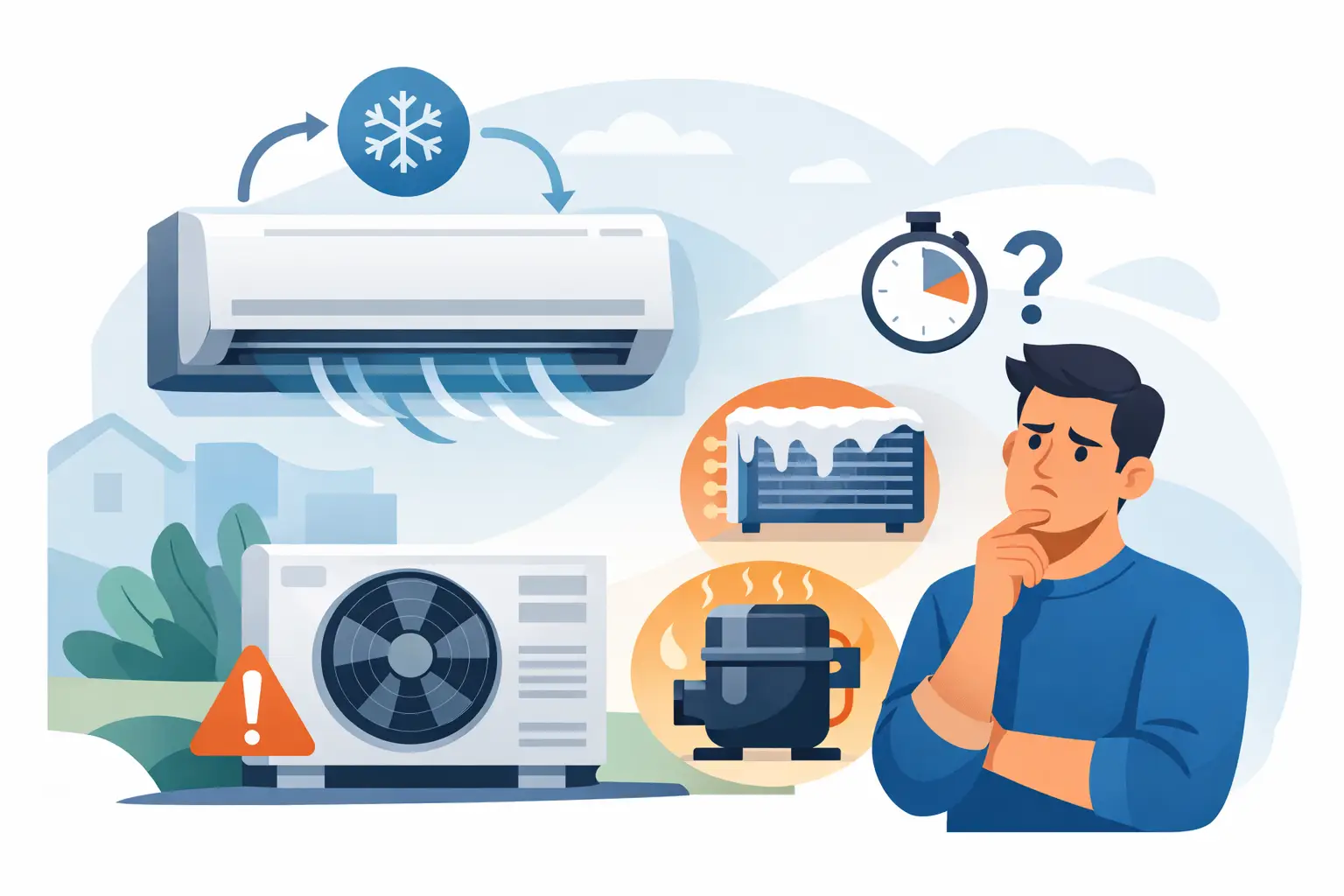
Your AC turns on, runs for a minute or two, shuts off, then starts again before the room ever feels comfortable. That pattern is frustrating, expensive, and usually a sign that something is off. If you are looking into aircon short cycling causes, the key thing to know is this: short cycling is not a minor quirk. It often points to a system issue that can wear out parts faster, raise energy bills, and leave cooling uneven.
Short cycling happens when an air conditioner starts and stops more often than it should. A normal system should run in steady cycles long enough to remove heat and humidity effectively. When it cuts off too early and restarts again and again, the system is working harder but delivering less. In homes, that can mean hot spots, sticky air, and higher monthly costs. In commercial spaces, it can affect comfort, equipment performance, and day-to-day operations.
What short cycling usually looks like
Most people notice the symptom before they know the term. The indoor unit kicks in, the outdoor condenser follows, and then both stop after a short run. A few minutes later, the cycle repeats. Sometimes the thermostat reaches the set temperature too quickly because of a sensor issue. Other times, the system shuts down as a protective response to overheating, pressure problems, or restricted airflow.
Not every short cycle looks exactly the same. In a small apartment, you may just notice the room never feels consistently cool. In an office or retail setting, occupants may complain that the temperature swings too much during the day. The pattern matters because it gives a technician clues about whether the problem is electrical, mechanical, airflow-related, or tied to system sizing.
The most common aircon short cycling causes
Dirty air filters and restricted airflow
One of the most common causes is also one of the easiest to overlook. When the filter is clogged, airflow drops. That can make the evaporator coil get too cold, sometimes leading to freezing, while the system struggles to move enough air across the coil. It can also create temperature imbalances that trigger shutdowns before the space is properly cooled.
Restricted airflow is not limited to the filter. Blocked return vents, dirty coils, closed supply registers, or a blower issue can all create similar symptoms. This is why replacing the filter helps in some cases, but not all. If short cycling continues after a filter change, the restriction may be deeper in the system.
Thermostat problems
A thermostat can cause short cycling even when the AC equipment itself is in decent shape. If the thermostat is installed in a poor location, such as near a sunny window, kitchen heat, or an air supply vent, it may read the wrong temperature and shut the system off too soon. Faulty wiring, calibration issues, or a failing sensor can create the same result.
Smart thermostats add another variable. They can be very effective, but only when set up correctly for the equipment they control. Incorrect cycle settings or incompatible controls may cause frequent starts and stops that feel like an equipment fault.
Low refrigerant or refrigerant imbalances
Refrigerant problems are among the more serious aircon short cycling causes because they often signal a leak or a charging issue. If refrigerant is low, pressures may fall outside the normal range, and the system may trip on safety controls or struggle to complete a proper cooling cycle. You may also notice weak cooling, ice buildup, or hissing sounds.
This is not a DIY fix. Refrigerant circuits need proper testing, leak detection, and charging by trained technicians. Simply topping up refrigerant without finding the source of the problem usually leads to repeat breakdowns.
Oversized AC systems
Bigger is not always better in air conditioning. An oversized system cools the space too quickly, reaches the thermostat set point fast, and shuts off before it has done enough dehumidification. That creates short run times and frequent restarts. The room may feel cool but clammy, especially in humid weather.
This issue often shows up after a replacement installation where equipment was selected without a proper load calculation. In commercial environments, changes to layout, occupancy, or equipment loads can make an existing system behave as if it is oversized for part of the day. Fixing this depends on the setup. Sometimes airflow or controls can be adjusted. In other cases, the core sizing mismatch is the real problem.
Dirty condenser coils or outdoor unit problems
The outdoor unit needs to release heat efficiently. If the condenser coil is dirty or blocked by debris, the system can overheat or operate at high pressure, causing it to shut down early. This tends to happen more in units exposed to dust, leaves, grease, or tight installation spaces with poor ventilation.
A failing condenser fan motor can create a similar pattern. The system may start normally, then stop once temperatures or pressures move out of range. From the user side, it just looks like the AC cannot stay on long enough to cool.
Electrical and capacitor issues
Air conditioners rely on several electrical components to start and run properly. A weak capacitor, damaged contactor, loose wiring, or control board fault can interrupt the cycle. Sometimes the unit struggles to start. Other times, it starts but cuts out unexpectedly.
Electrical issues can be intermittent, which makes them harder to spot without proper testing. That is why short cycling that seems random should still be checked. A problem that appears minor can develop into a no-cooling breakdown if ignored.
Frozen evaporator coils
A frozen coil is usually a symptom of another problem rather than the root cause by itself. Low airflow, dirty filters, blower problems, or refrigerant issues can all lead to icing. Once the coil freezes, cooling performance drops, and the system may short cycle as controls react to abnormal temperatures.
If you see ice on the indoor unit or refrigerant lines, turn the system off and have it inspected. Letting it keep running can put added strain on the compressor.
Why short cycling should not be ignored
Short cycling increases wear because startup is one of the hardest parts of an AC cycle. Frequent starts and stops place stress on the compressor, fan motors, and electrical components. Over time, that can shorten equipment life and lead to more costly repairs.
It also affects comfort in ways people do not always connect to the AC. Because the unit is not running long enough, it removes less humidity. The result is a space that feels sticky even when the thermostat shows the target temperature. In offices, shops, and other occupied spaces, that inconsistency can quickly become a service issue.
Energy use is another concern. While it might seem like shorter run times would save electricity, the repeated startup cycle often wastes power. A system that runs steadily and correctly is usually more efficient than one that keeps turning on and off.
What you can check before calling for service
There are a few safe checks worth making. Replace a dirty filter, confirm vents are open and not blocked by furniture, and make sure the thermostat settings are correct. If the thermostat uses batteries, replace them. You can also look at the outdoor unit to see whether it is visibly clogged with debris or lacking clearance.
That said, if the system keeps short cycling after those basics, it is time for professional diagnosis. Problems involving refrigerant, electrical components, frozen coils, controls, or system sizing need trained attention. Guesswork can make the problem worse or mask the real cause.
When professional diagnosis matters most
If the AC is short cycling along with weak cooling, water leakage, ice buildup, unusual sounds, burning smells, or repeated breaker trips, do not wait. Those combinations often point to a deeper issue. A proper service visit should look beyond the symptom and identify why the cycle is being interrupted.
For residential customers, that means checking airflow, thermostat operation, refrigerant pressure, coil condition, electrical components, and overall system health. For commercial and industrial systems, the same principle applies, but the diagnostic process may also involve zoning, controls integration, duct performance, occupancy load changes, and equipment staging. A capable service partner should be able to match the diagnosis to the type of system and the demands of the site.
At Easy Cool Engineering Pte Ltd, this practical approach matters because the right fix is not always the fastest guess. A filter issue and an oversized unit can both look like short cycling from the outside, but the solution is very different.
Preventing short cycling over time
The best prevention is regular maintenance with attention to the full system, not just the visible parts. Cleaning coils, checking refrigerant conditions, testing electrical components, confirming thermostat performance, and keeping airflow balanced all help reduce the risk of repeated short cycling.
It also helps to take comfort complaints seriously early. If one room is always warmer, humidity feels high, or the system seems louder and more erratic than usual, those are useful warning signs. Addressing them early often costs less than waiting for a major component to fail.
A short cycling AC is your system’s way of saying something is not working as it should. The sooner the cause is identified, the easier it is to protect comfort, control operating costs, and keep the system running the way it was meant to.