

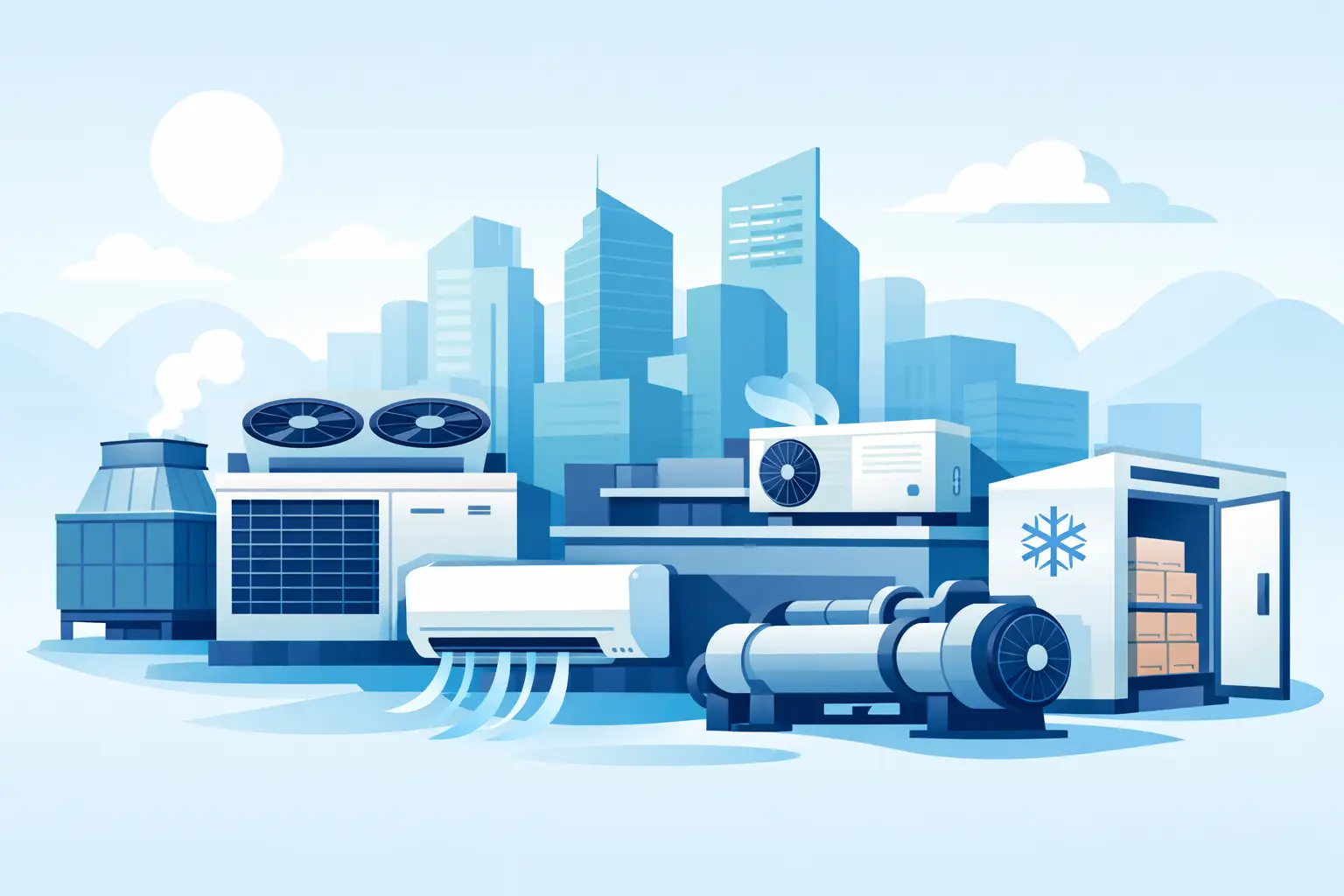
A warm office gets complaints by 10 a.m. A hot kitchen can slow service before lunch. In a server room or production area, poor temperature control can cause far more than discomfort. Choosing the best commercial cooling solutions starts with one practical question: what does your space need to stay stable, efficient, and operational every day?
That answer is rarely the same from one property to the next. A small retail shop has different cooling demands than a medical facility, a restaurant, or a semiconductor environment. The right system depends on layout, heat load, operating hours, indoor air needs, and how much downtime your business can tolerate.
What the best commercial cooling solutions actually solve
Commercial cooling is not just about lowering the temperature. A good system helps control humidity, maintain air quality, support equipment performance, and keep energy costs from climbing faster than they should. For many businesses, it also protects staff comfort and customer experience.
That is why the best option is not always the biggest unit or the newest technology. Oversized systems can short cycle and waste energy. Undersized systems struggle through peak demand and wear out faster. The better approach is matching the system to the actual use of the space, then supporting it with proper installation and regular servicing.
Best commercial cooling solutions by application
Split and multi-split systems for smaller commercial spaces
For small offices, clinics, shops, and service units, split or multi-split systems are often a practical choice. They are cost-effective, relatively straightforward to install, and well suited for spaces with separate rooms or zones that need individual temperature control.
These systems work best when the cooling demand is moderate and the building layout allows for indoor and outdoor unit placement without major constraints. They can be a strong fit for businesses that want dependable cooling without the cost and complexity of a larger centralized setup.
The trade-off is scale. Once the property gets larger or the number of zones increases, multiple split systems can become harder to manage and maintain as a whole.
VRF and VRV systems for flexible zoning
For medium to large offices, retail floors, mixed-use properties, and commercial buildings with multiple occupied zones, VRF and VRV systems are often among the best commercial cooling solutions available. They allow different areas to be cooled according to actual usage, which helps improve comfort while reducing wasted energy.
This matters in real operating conditions. A conference room packed at noon does not need the same cooling pattern as a quiet office wing. A storefront facing afternoon sun may need different output than stock rooms in the back. With zone-based control, businesses can respond more accurately to those differences.
VRF and VRV systems usually come with a higher upfront investment, and the design work needs to be done properly. But when a building has varied occupancy and long daily operating hours, the efficiency and control can justify the cost over time.
Central ACMV systems for larger facilities
For commercial buildings, institutions, and larger multi-room environments, a centralized ACMV system can provide a more integrated solution. These systems are designed to handle air conditioning, mechanical ventilation, and airflow planning together rather than as separate decisions.
This is especially useful where ventilation standards, indoor air quality, and uniform cooling performance matter as much as temperature alone. In larger properties, the cooling system needs to work with the building, not against it.
The main benefit is coordinated performance across the site. The challenge is that design, installation, and maintenance need stronger technical oversight. If one part is poorly planned, the rest of the system can underperform.
Commercial kitchen cooling and duct support
Restaurants, food preparation spaces, and commercial kitchens face a different kind of heat problem. Cooking equipment, grease, steam, and long operating hours create conditions that basic comfort cooling alone cannot solve.
In these environments, kitchen duct systems and ventilation support are part of the cooling strategy. Removing heat, smoke, and airborne contaminants is essential for safety, compliance, and workable indoor conditions. Air conditioning can help the occupied areas, but without proper exhaust and airflow management, the space will still feel overloaded.
For food-service operators, the best commercial cooling solutions are usually a combination of cooling equipment and properly designed ductwork. Treating them as separate issues often leads to poor results.
Chiller systems for industrial and mission-critical use
For manufacturing sites, process environments, data-sensitive operations, and semiconductor facilities, precision matters more than general comfort. Chiller systems are often the right fit where equipment performance, process stability, or tightly controlled temperatures are required.
These systems are built for applications where fluctuations can create operational risk. In a mission-critical setting, a cooling failure can interrupt production, affect product quality, or damage sensitive equipment. That changes the buying decision completely. The cheapest option is rarely the safest one.
In these cases, system reliability, response support, and maintenance discipline matter as much as capacity. A technically capable service partner becomes part of the solution, not just the installer.
How to choose the best commercial cooling solutions
The right starting point is a site assessment, not a product brochure. Cooling systems should be selected based on heat load, occupancy pattern, equipment usage, ventilation requirements, and property layout. Ceiling height, sun exposure, kitchen output, server racks, and room partitioning all affect what the system needs to do.
Energy efficiency is important, but it should be judged in context. A highly efficient system that is poorly matched to the building will not perform as promised. On the other hand, a correctly designed system with clear maintenance planning often delivers better long-term value even if the purchase price is higher.
Business continuity also matters. Some spaces can tolerate brief interruptions. Others cannot. If your operation depends on round-the-clock cooling or controlled temperatures, redundancy, monitoring, and faster service response should be part of the decision.
Installation quality matters more than many buyers expect
Even a strong system can disappoint if the installation is rushed or incomplete. Poor refrigerant piping, drainage issues, weak airflow planning, and incorrect sizing all lead to recurring complaints and higher operating costs.
This is one reason commercial clients should look beyond equipment alone. The best commercial cooling solutions include correct design, careful installation, commissioning, and after-sales support. A provider that understands both standard commercial spaces and specialized environments can usually identify issues earlier and recommend a setup that fits real usage.
For businesses managing multiple cooling needs across offices, retail units, kitchens, or industrial areas, working with one dependable service partner can also simplify communication and maintenance planning.
Maintenance is part of the solution, not an add-on
A commercial cooling system is not a one-time purchase. Filters clog, coils collect dirt, drain lines block, and performance drifts over time. Without regular servicing, even a well-installed system can become inefficient, noisy, or unreliable.
Preventive maintenance helps protect cooling output, reduce breakdown risk, and extend equipment life. It also makes budgeting easier because routine servicing is usually less disruptive and less expensive than emergency repair work.
For commercial sites, maintenance schedules should reflect actual operating conditions. A lightly used office may need a different servicing frequency than a restaurant kitchen or an industrial facility with strict thermal requirements. The point is not to over-service every site. It is to service each one according to workload and risk.
Easy Cool Engineering Pte Ltd works with both everyday commercial properties and specialized cooling environments, which is often what businesses need when their facilities do not fit into a single simple category.
What a good cooling partner looks like
Businesses usually remember cooling problems for the wrong reasons: delayed response, unclear recommendations, repeat breakdowns, or service teams that do not understand the site. A better experience comes from working with a provider that communicates clearly, shows up prepared, and can support both routine maintenance and more technical system needs.
That matters whether you manage one storefront or multiple facilities. The best commercial cooling solutions are not just about hardware. They come from a reliable plan, a system matched to your operation, and a service team that keeps it performing the way your business needs it to.
If you are evaluating options, start with the day-to-day reality of your space rather than the broadest promise on the market. A cooling system should make operations easier, quieter, and more predictable – and the right one usually proves its value long after installation day.