

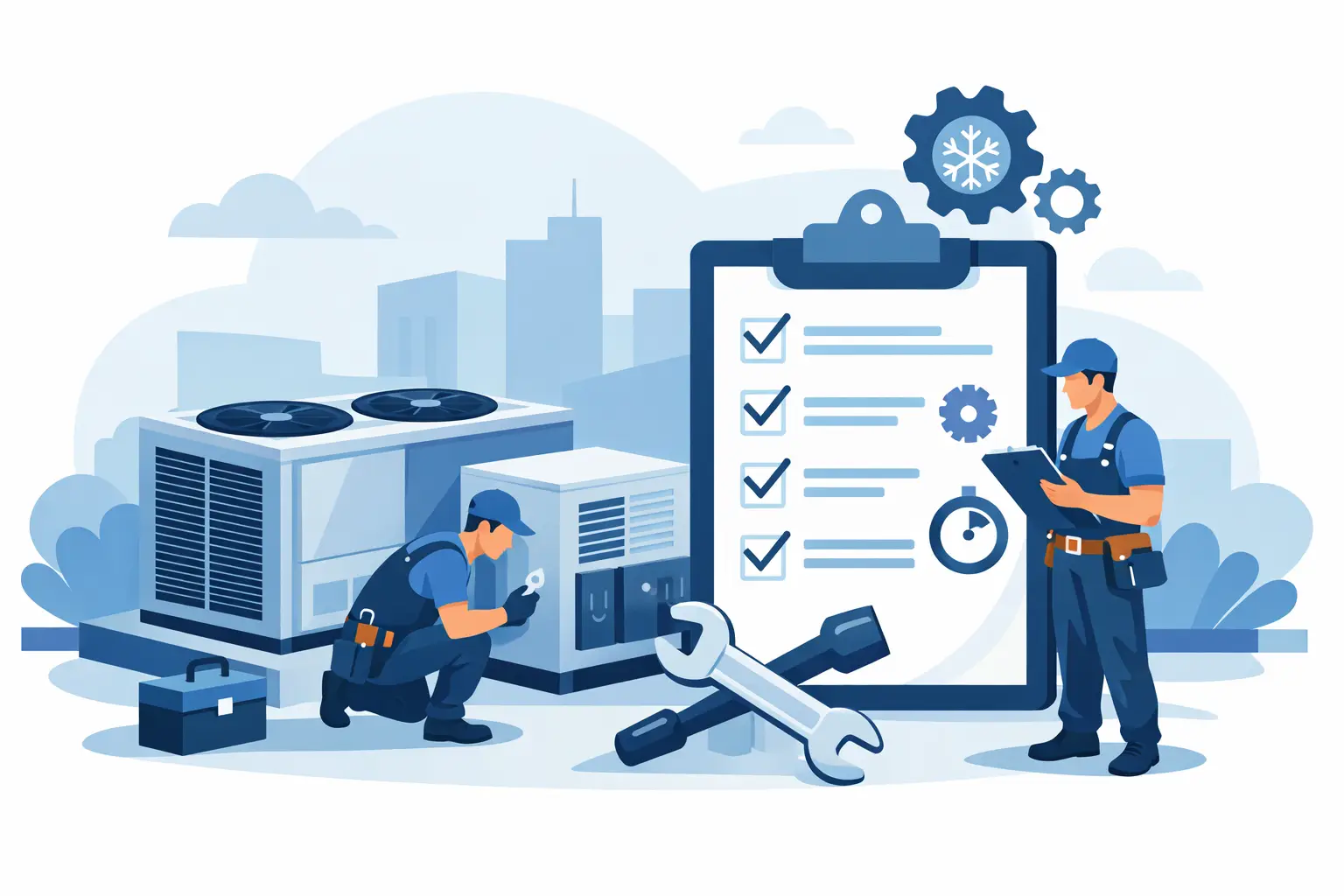
One missed service visit can turn into a warm office, a spoiled inventory issue, or an after-hours emergency call that costs far more than routine upkeep. A commercial cooling maintenance schedule gives building owners, facility managers, and operators a practical way to stay ahead of failures instead of reacting to them.
For most businesses, the goal is not simply keeping air cold. It is protecting uptime, energy efficiency, indoor comfort, and equipment life without disrupting day-to-day operations. That is why a good schedule should match the type of system you run, how hard it works, and what your space demands from it.
What a commercial cooling maintenance schedule should do
A useful maintenance schedule is not just a calendar reminder every few months. It should map out what needs to be checked, cleaned, tested, and documented at the right intervals. That matters because commercial cooling systems rarely operate under ideal conditions. Offices deal with long run hours, retail spaces face frequent door openings, restaurants carry grease and heat loads, and industrial sites may have strict temperature tolerances.
The right schedule reduces unplanned downtime, helps maintain air quality, and supports more stable utility costs. It also gives service teams a better chance to spot smaller issues early, such as refrigerant loss, worn belts, clogged drains, dirty coils, or controls drifting out of range.
There is also a financial side to this. Deferred maintenance often looks cheaper in the short term, but it usually leads to higher energy consumption, more frequent repairs, and shorter equipment life. A well-managed schedule turns maintenance into a controlled operating expense instead of an unpredictable emergency.
How often commercial cooling systems should be serviced
The honest answer is that it depends on the equipment and the environment. Still, most commercial properties benefit from a layered schedule that includes monthly visual checks, quarterly preventive maintenance, and annual deeper inspections or system performance reviews.
A small office with light cooling demand may stay on track with quarterly visits if filters and basic housekeeping are handled consistently in between. A restaurant, data-sensitive space, or high-occupancy retail environment often needs more frequent attention because the cooling load is heavier and the consequences of failure are higher.
If your site uses VRV, VRF, ACMV, package units, split systems, or chillers, each asset may need a different service rhythm. Grouping them all into one generic maintenance plan usually leaves gaps. The better approach is to build one master schedule with different intervals for different equipment.
Monthly tasks that keep problems from building up
Monthly checks are about catching warning signs before they become breakdowns. These are often simple but high-value tasks. Filters should be inspected and replaced or cleaned as needed, not just on a fixed date if actual dust load is higher. Drain lines and drain pans should be checked for blockage, standing water, or algae growth. Thermostat or control settings should be reviewed to make sure the system is not overcooling or short cycling.
This is also the right interval for a visual inspection of indoor and outdoor units. Look for unusual vibration, abnormal noise, damaged insulation, oil stains, ice formation, or restricted airflow around condensers. In commercial spaces, these signs are easy to miss because the system may still appear to be running normally.
For facility teams, monthly logging matters almost as much as the physical check. Record room temperatures, basic operating conditions, and any comfort complaints. Patterns often show up in the notes before they show up as failures.
Quarterly preventive maintenance for core system health
Quarterly service is where preventive maintenance becomes more technical. Coils should be inspected and cleaned as needed because dirt on evaporator and condenser coils reduces heat transfer and forces the system to work harder. Electrical connections should be tightened and checked for signs of heat damage or wear. Motors, belts, bearings, and fans should be inspected to confirm proper operation.
This is also the point where refrigerant performance should be reviewed. Low refrigerant does not just reduce cooling capacity. It can increase compressor stress and energy use. A proper inspection helps determine whether the issue is undercharge, airflow restriction, control problems, or a leak that needs repair.
Controls and safety devices should be tested during quarterly visits as well. Many commercial cooling issues come from sensor errors, relay wear, or control calibration drift rather than major mechanical failure. Catching those early can prevent unnecessary downtime.
Annual maintenance and system review
Annual maintenance should go beyond routine cleaning. This is the time for a deeper system assessment that reviews performance over the full year. Service records, repair history, recurring complaints, energy trends, and aging components should all be considered together.
An annual review may include a full coil cleaning, drain system treatment, duct or airflow review, insulation inspection, electrical testing, and control calibration. For larger systems, it may also involve checking compressor condition, evaluating sequence of operation, and reviewing whether current cooling demand still matches equipment setup.
This is especially useful for businesses that have changed occupancy, added heat-producing equipment, remodeled part of the building, or extended operating hours. Cooling systems are often asked to do more over time without any update to the maintenance plan.
When your schedule needs to be more frequent
Some businesses should not wait for standard quarterly intervals. Restaurants, commercial kitchens, medical spaces, server rooms, manufacturing sites, and semiconductor environments usually need tighter maintenance control because contamination, heat load, or precision requirements are higher.
If your site shows frequent filter loading, unstable room temperatures, persistent drain issues, or rising energy bills, that is a sign the current schedule may be too light. The same applies if tenants or staff regularly report hot spots, humidity issues, or uneven cooling.
Seasonality matters too. In warmer climates or during peak summer demand, pre-season inspections help reduce the chance of failure when the system is under the most strain. It is easier to plan maintenance than to compete for emergency service during a heat wave.
Building the right commercial cooling maintenance schedule
A strong schedule starts with an equipment list. Every unit should be identified by type, location, age, operating hours, and criticality. From there, service intervals can be assigned based on actual use rather than guesswork.
Next, define the scope of work for each interval. Monthly, quarterly, and annual service should each have a clear checklist, but those checklists should not be copied blindly across every system. A ducted office unit, a retail split system, and a process chiller need different attention points.
It also helps to decide who handles what. In-house teams can often take care of simple visual checks, filter changes, and reporting. Qualified service technicians should handle technical cleaning, diagnostics, electrical inspection, refrigerant checks, and system adjustments. That division keeps routine tasks moving while reducing the risk of incomplete technical maintenance.
Documentation is the last piece that many businesses overlook. Without records, it is hard to prove maintenance history, identify repeat problems, or plan replacements. A simple service log with dates, findings, repairs, and recommendations can make future decisions much easier.
Common mistakes that weaken a maintenance plan
One common mistake is treating all equipment the same. Another is focusing only on breakdown repair and skipping preventive service until comfort complaints become unavoidable. Businesses also run into trouble when filters are changed regularly but coils, drains, controls, and electrical components are ignored.
Price-only decisions can create problems too. A lower-cost visit is not always a complete visit. If inspections are rushed or limited to surface cleaning, the schedule may look active on paper while critical issues continue to build inside the system.
A better maintenance partner will explain what was checked, what was found, and what needs attention next. That kind of communication helps businesses plan ahead instead of being surprised by avoidable repairs.
Choosing a schedule that fits your operation
The best maintenance plan is the one your team can actually follow and your system actually needs. For some sites, that means a straightforward quarterly program with annual deep service. For others, it means monthly technical visits and tighter monitoring because the cooling load is constant and the room conditions matter more.
A dependable provider should be able to tailor the plan to your equipment, business hours, and risk level. That is where practical experience makes a difference. Companies such as Easy Cool Engineering Pte Ltd support both everyday commercial systems and more specialized cooling environments, which is useful when your site needs more than a basic checklist.
If your current maintenance approach only starts after complaints come in, it is probably time to tighten the schedule. The right plan protects comfort, controls operating costs, and gives you fewer surprises when your business needs cooling the most. Start with the equipment you have, the conditions you run in, and the level of downtime your operation can realistically afford.