

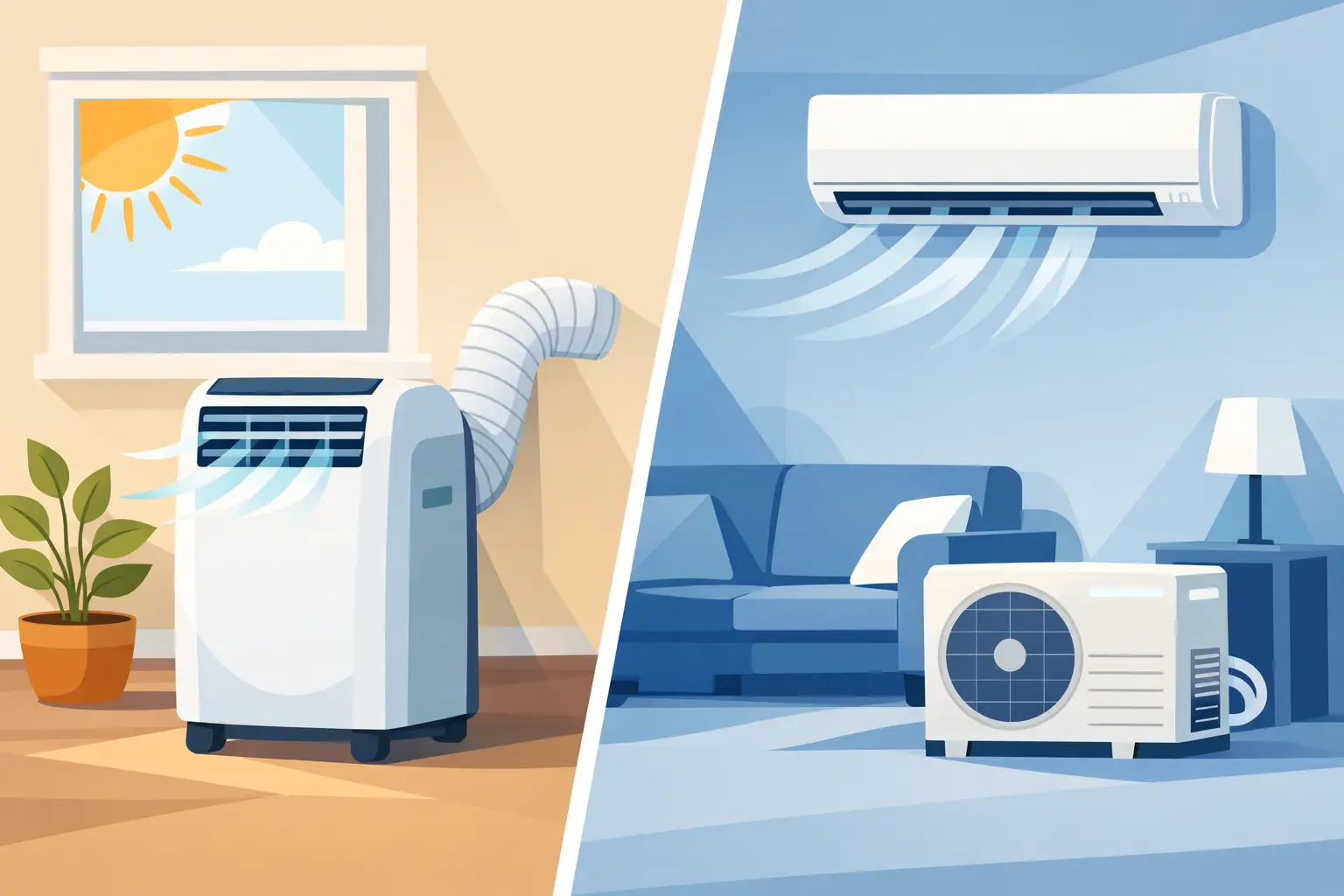
A bedroom that stays warm after sunset, a home office with afternoon sun, or a retail back room that never seems to cool down can make the portable versus split aircon decision feel urgent. Both options can lower the temperature, but they do it very differently. The better choice depends on whether you need a fast temporary solution or reliable, efficient cooling for years ahead.
Portable Versus Split Aircon: The Real Differences
A portable air conditioner is a self-contained unit that sits inside the room. It removes heat from the air and sends that heat outdoors through a hose fitted to a window kit or another approved opening. Most models can be moved between rooms, although the unit, exhaust hose, and window setup still need to be in place while it runs.
A split air conditioner has two main components: an indoor unit that delivers cooled air and an outdoor condenser that releases heat outside. Refrigerant lines and electrical connections run between them. This design requires professional installation, but it provides a more permanent cooling solution with quieter operation and generally stronger efficiency.
The choice is not simply about which system gets colder. It is about the room, the building, your budget, how frequently you use cooling, and whether you can make installation changes to the property.
When a Portable Air Conditioner Makes Sense
Portable air conditioners are useful when cooling is needed quickly and permanent installation is not practical. Renters, short-term occupants, and people dealing with a temporary air conditioning outage may prefer a portable unit because it can be purchased and set up without installing an outdoor condenser.
They can also work for smaller, enclosed rooms where cooling is only needed for limited periods. A guest bedroom, small office, workshop, or temporary site office may not justify the cost and planning involved in installing a split system.
However, “portable” does not always mean effortless. The exhaust hose needs a secure route outdoors, usually through a window. If the window kit is poorly fitted, warm outdoor air can leak back in and reduce the unit’s performance. The hose also becomes hot during operation, adding heat to the room. Keeping it as short and straight as possible helps, but it cannot remove this limitation entirely.
Portable units also need enough floor space and a nearby suitable power outlet. Avoid using extension cords unless the manufacturer specifically allows them. A high-powered air conditioner can place a heavy load on an electrical circuit, and unsafe electrical connections create a risk that is not worth taking.
Single-hose and dual-hose portable units
If you are considering a portable model, the hose configuration matters. A single-hose unit uses indoor air to carry heat outside. This can create negative pressure in the room, drawing warm air in through gaps around doors, windows, and other openings.
A dual-hose model uses one hose to bring outside air into the unit and another to exhaust heat. It is often a better performer, especially in hot conditions, because it does not rely as heavily on conditioned indoor air. It may cost more, but the difference can be worthwhile if the unit will run frequently.
Why Split Air Conditioners Are Usually Better for Daily Use
For rooms that need dependable cooling every day, a split system is usually the stronger long-term option. Because the noisiest part of the system – the compressor and condenser fan – sits outside, indoor operation is noticeably quieter than a portable unit. That matters in bedrooms, nurseries, meeting rooms, and spaces where people work or sleep.
Split systems are also typically more energy efficient. They are designed to cool a room without relying on a hot exhaust hose running through the interior. Many models use inverter technology, which adjusts compressor output to maintain the set temperature rather than repeatedly turning fully on and off. Over time, that can help reduce energy use while keeping indoor comfort more consistent.
A properly sized split air conditioner also tends to cool more evenly. Airflow can be directed across the room, and the system can maintain a stable temperature without the concentrated blast of air common with some portable units. For larger rooms, open living areas, or spaces with regular heat gain from people, sunlight, appliances, or equipment, this difference is significant.
The trade-off is installation. A split system needs an appropriate location for the indoor unit, outdoor condenser, piping, drainage, and electrical supply. Property rules, homeowner association requirements, landlord approval, and local building codes may affect what is possible. Professional installation is essential to ensure the unit is correctly mounted, refrigerant lines are properly handled, condensate drains safely, and the system performs as intended.
Comparing Cost Beyond the Purchase Price
Portable units usually have a lower upfront cost. They can be a sensible way to handle occasional cooling needs without paying for installation. But a lower purchase price does not always mean lower ownership cost.
If a portable unit runs many hours each day, its lower efficiency may lead to higher electricity use. It may also be more likely to struggle during peak heat, causing it to run continuously without delivering the comfort you expect. Noise, drainage needs, and the loss of a usable window can become daily frustrations.
A split system costs more at the beginning because of equipment, materials, and professional labor. Yet it can offer better value for a room that requires regular cooling. Its efficiency, lifespan, quieter operation, and stronger performance often justify the initial investment, particularly in bedrooms, living spaces, offices, and customer-facing commercial areas.
For landlords, the decision may depend on the property strategy. A portable unit can provide a quick solution between repairs or for a short-term need. A split system is more likely to improve long-term tenant comfort and reduce complaints in a property where cooling is expected.
Size the Air Conditioner for the Room, Not Just the Label
A common mistake is buying the largest unit available. Oversizing can create problems just as undersizing can. An oversized system may cool the room too quickly and cycle off before removing enough humidity, leaving the space cool but clammy. An undersized system may run continuously, consume more power, and still fail to reach the desired temperature.
Start with the room’s square footage, then consider ceiling height, window size, direct sunlight, insulation, occupancy, and heat-producing equipment. A west-facing room with large windows and several computers needs more cooling capacity than a shaded bedroom of the same size.
Portable air conditioner ratings can be especially confusing. Look for the current rated cooling capacity rather than relying only on a larger marketing number. If you are unsure, a qualified air conditioning professional can assess the space and recommend a system size that matches real operating conditions.
Maintenance Needs Are Different, but Neither Is Maintenance-Free
Portable units need regular attention. Clean or wash the air filter according to the manufacturer’s instructions, check the exhaust hose and window seal, and manage collected condensate when required. Some units evaporate moisture automatically in normal conditions, while others use a drain tank or hose. High humidity can mean more frequent draining.
Split air conditioners need routine filter cleaning and periodic professional servicing. Dust buildup on filters, coils, and blower components reduces airflow and efficiency. Clogged condensate drains can lead to water leaks, while neglected outdoor condensers may struggle to release heat.
Regular service protects comfort, energy performance, and equipment life. Easy Cool Engineering can help homeowners and businesses assess existing systems, carry out maintenance, and plan an installation that suits the room and the way it is used.
Questions to Ask Before You Decide
Think about how long you expect to use the unit. If you only need cooling for a few weeks, during renovations, or while waiting for a repair, portability may be the priority. If the room is used every day and comfort affects sleep, work, customers, or equipment, a split system is usually worth closer consideration.
Also check the practical details before buying. Can you vent a portable unit correctly through an approved opening? Is there enough room around it for safe airflow? Can an outdoor condenser be installed legally and safely? Does the electrical system support the proposed equipment? These questions often determine the right answer more clearly than price alone.
Measure the room, note where heat enters, and be honest about how often cooling will be used. A portable unit can solve an immediate problem well, while a professionally installed split system can make a frequently used room consistently comfortable for the long run.