

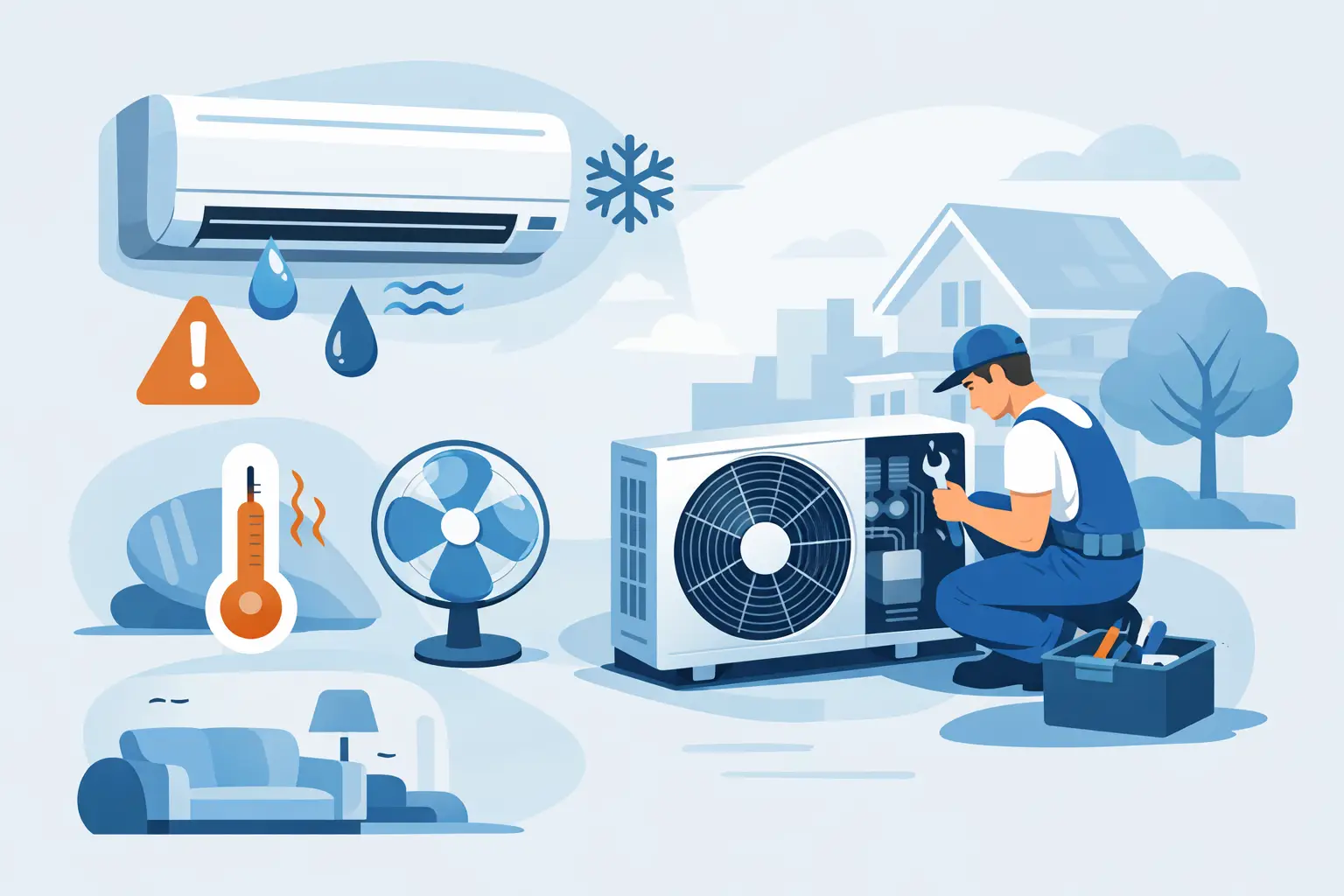
A bedroom unit that suddenly blows warm air at midnight, a living room system that runs nonstop, or water dripping from an indoor unit are more than everyday inconveniences. These are residential aircon repair signs that deserve attention before a minor fault affects comfort, energy use, or the condition of your equipment.
Air conditioning problems do not always mean the entire system needs to be replaced. In many homes, prompt diagnosis and targeted repair can restore reliable cooling and prevent a larger breakdown. The key is knowing what normal operation looks and sounds like, then acting when something changes.
When Your Air Conditioner Stops Cooling Properly
Weak or warm airflow is one of the clearest signs your air conditioner needs professional attention. First, make sure the thermostat is set correctly, the windows are closed, and the filter is not visibly clogged. If the unit still cannot bring the room to the selected temperature, the issue may involve restricted airflow, a dirty coil, a faulty fan component, refrigerant loss, or a compressor-related problem.
A system that cools one room well but leaves another room uncomfortable can be more complicated. It may be a zoning, ductwork, insulation, or unit-sizing issue rather than a simple repair. A technician should assess the system as a whole rather than treat the symptom alone.
The Unit Runs Constantly but Never Catches Up
It is normal for an air conditioner to run longer during very hot weather. However, it should still cycle off once it reaches the thermostat setting. If it runs continuously and your home remains warm, the system is working harder than it should.
This can raise utility bills and add stress to parts that are already struggling. Dirty outdoor condenser coils, low refrigerant, a malfunctioning thermostat, and poor airflow are common causes. Waiting through several weeks of high use can turn a manageable service call into a more costly repair.
Unusual Sounds Are Residential Aircon Repair Signs
Air conditioners make a low, steady operating sound. New or loud noises are not normal, especially if they occur during startup, while cooling, or when the system shuts down.
Rattling may point to a loose panel, mounting hardware, or debris near the outdoor unit. Banging or clanking can signal a loose or damaged internal component. Grinding or squealing may involve a motor, belt on applicable systems, or worn bearings. Repeated clicking can be associated with electrical controls or a failing component trying to start.
Turn the system off if you hear a loud metallic sound, persistent grinding, or any noise accompanied by a burning smell. Continuing to operate it can cause further damage. A qualified technician can identify whether the problem is a simple adjustment or a part that needs replacement.
Water Leaks, Ice, and Excess Humidity
Your air conditioner removes humidity as it cools, so a small amount of water moving through the condensate drain system is expected. Water collecting around the indoor unit, staining a wall or ceiling, or dripping onto flooring is not.
A blocked condensate drain line is a common cause, but leaks can also result from a damaged drain pan, disconnected line, frozen evaporator coil, or installation issue. Even a small leak can lead to drywall damage, mold growth, and damaged furnishings if it is left unresolved.
Ice on refrigerant lines or the indoor coil is another warning sign. It may seem logical to assume ice means the system is cooling very effectively, but the opposite is usually true. Frozen components can result from limited airflow, a dirty filter or coil, a blower issue, or refrigerant problems. Switch the unit off and arrange an inspection rather than chipping at the ice or repeatedly restarting the system.
Strange Odors Need More Than Air Freshener
A musty smell when the system starts may indicate moisture and microbial buildup on the coil, drain components, or within the air handler. Thorough cleaning may resolve the issue, depending on its source. If the odor returns quickly after cleaning, a technician should check for drainage problems or ongoing moisture conditions.
A burning, smoky, or electrical odor is more urgent. Shut the system down at the thermostat and, if safe to do so, at the breaker. Electrical faults, overheated wiring, or a failing motor should be assessed promptly. Do not mask these smells or assume they will disappear with continued use.
If you notice a chemical-like odor along with reduced cooling or hissing sounds, refrigerant may be involved. Refrigerant work requires trained handling, proper leak detection, and repair of the source of the leak. Simply adding refrigerant without correcting the underlying problem is not a lasting solution.
Uneven Temperatures and Poor Airflow
Rooms that are consistently hotter or colder than the rest of the home can make daily life uncomfortable, particularly in bedrooms, upper floors, and spaces with large windows. Before assuming the air conditioner has failed, check that supply vents are open and not blocked by furniture, curtains, or rugs.
If airflow remains weak at multiple vents, a dirty filter, blower issue, duct restriction, or coil buildup may be affecting performance. If only one area is affected, the cause could be a duct leak, damper setting, return-air limitation, or a layout issue. The appropriate fix depends on the system type and the pattern of the problem.
Poor airflow also makes the equipment work longer, which can increase wear and energy consumption. Addressing it early helps preserve comfort without putting unnecessary strain on the system.
Higher Bills Without a Clear Reason
A seasonal increase in energy use is expected when temperatures rise, but a sharp or unexplained jump deserves a closer look. Your air conditioner may be running longer because of dirty coils, restricted airflow, refrigerant loss, failing electrical components, or thermostat issues.
Energy bills alone cannot diagnose an air conditioning problem. Changes in household routines, weather, insulation, and electricity rates also matter. Still, when higher bills appear alongside warm rooms, loud operation, or frequent cycling, a service inspection is a sensible next step.
Frequent Cycling or Trouble Starting
Short cycling occurs when an air conditioner turns on and off in quick, repeated intervals instead of completing a normal cooling cycle. This behavior can be caused by thermostat placement or malfunction, airflow restrictions, electrical issues, refrigerant concerns, or an improperly sized system.
Frequent cycling is hard on the compressor and other components. It also makes indoor temperatures feel inconsistent. If the unit repeatedly tries to start, trips a breaker, or shuts down shortly after starting, avoid repeated resets. An electrical or mechanical issue should be checked safely by a trained professional.
Repair, Cleaning, or Replacement: What Does Your Home Need?
Not every problem calls for the same service. A system with dirty filters, coil buildup, or drain-line blockage may benefit from professional cleaning and maintenance. A damaged motor, capacitor, control board, or refrigerant line may require repair. Older equipment with repeated failures, declining efficiency, or expensive major-component repairs may justify a replacement discussion.
Age matters, but it should not be the only factor. A well-maintained system can often remain dependable for years, while neglected equipment may develop issues much sooner. The best decision considers the repair cost, condition of key components, cooling performance, efficiency, and how reliably the system meets your household’s needs.
Easy Cool Engineering approaches residential service with that practical perspective. A proper assessment should explain what is causing the issue, what repair is recommended, and whether maintenance can help reduce the chance of it returning.
What to Do Before the Technician Arrives
If the system is still operating safely, note what you are seeing: when the problem started, whether it affects every room, the thermostat setting, any unusual sounds or odors, and whether water is present. This information can help speed up diagnosis.
For water leaks, protect nearby flooring and furniture, but do not open electrical panels or attempt to disconnect refrigerant lines. For burning smells, breaker trips, or loud mechanical noises, turn the system off and arrange service promptly. Safety and preventing further equipment damage come first.
Your home should feel consistently cool without constant noise, leaks, or uncertainty about the next utility bill. Paying attention to early warning signs gives you more options, more control over repair costs, and a better chance of keeping your cooling system dependable when you need it most.