

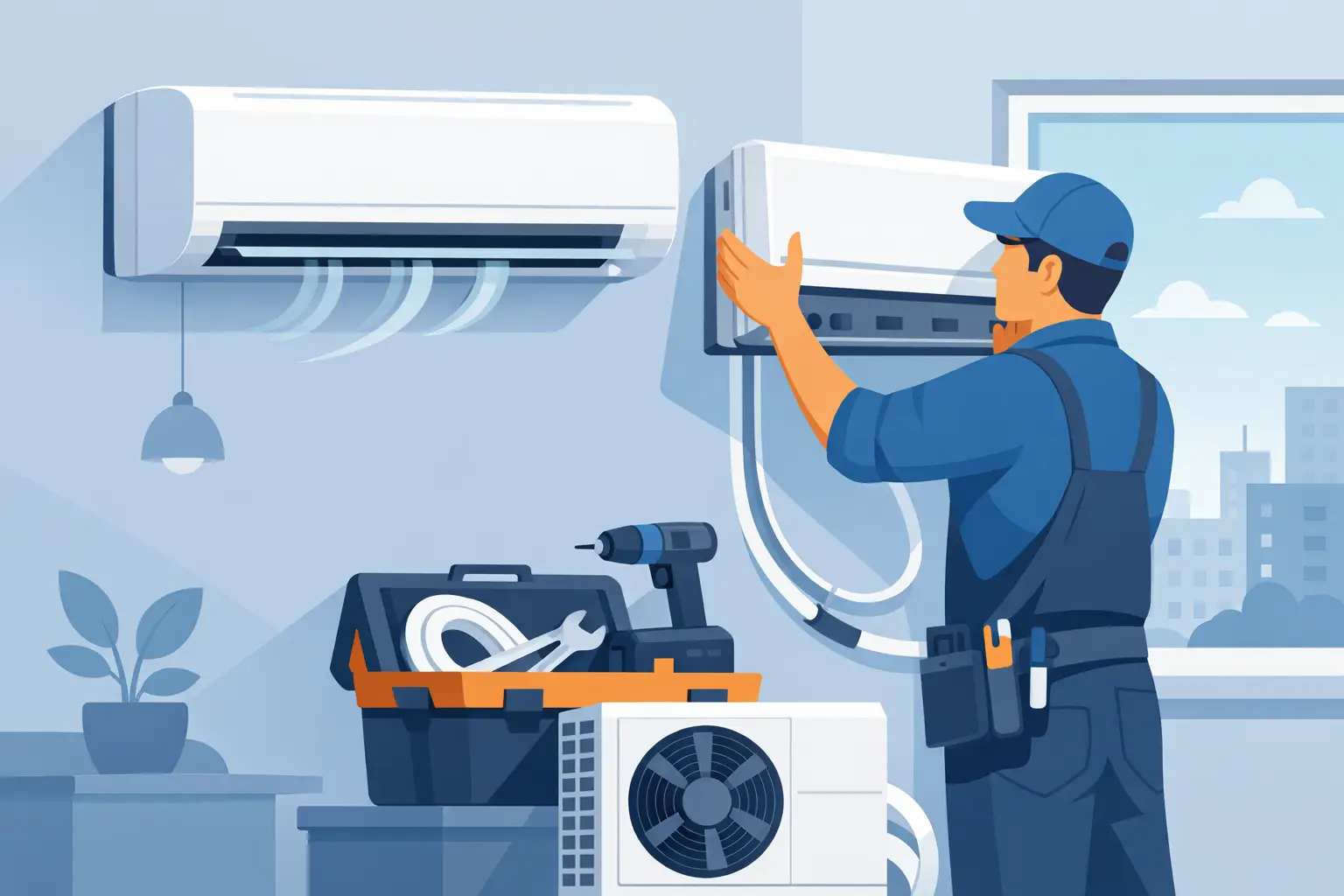
A wall unit that looks sleek on day one can become a daily frustration if the installation is rushed. Poor placement, weak drainage, bad piping routes, or incorrect sizing often lead to uneven cooling, water leaks, noise, and higher energy bills. That is why wall mounted air conditioner installation is not just about fixing an indoor unit onto a wall. It is about setting up the whole system to perform reliably from the start.
For homeowners, landlords, and business operators, the real goal is simple: strong cooling, clean workmanship, and fewer problems later. A proper install helps protect your comfort and your investment. It also reduces the chance of early breakdowns that often come from avoidable installation mistakes.
Why wall mounted air conditioner installation matters
A wall-mounted split system is one of the most common cooling choices for bedrooms, living rooms, offices, and small commercial spaces. It is compact, efficient, and suitable for many layouts. But even a good air conditioner can underperform if the installation conditions are wrong.
Placement affects how evenly cool air moves through the room. Pipe routing affects efficiency and service access. Drainage affects whether condensation leaves the unit properly or ends up dripping indoors. Electrical setup affects safety and system stability. These are not small details. They shape how the unit performs every day.
This is also where experience matters. Residential installations may look straightforward, but every property has constraints. Concrete walls, limited outdoor space, concealed piping, building rules, and room usage all change the best approach. In commercial settings, the planning is often even more sensitive because downtime, access, and cooling load matter more.
What happens before installation starts
Good installation begins with assessment, not drilling. The first step is checking the room size, ceiling height, sun exposure, insulation, window area, and how the space is used. A bedroom used at night has different demands from a retail shop with glass frontage or a small office with electronics running all day.
Sizing the unit correctly is one of the most important decisions. An undersized unit will run too hard and struggle to cool the space. An oversized unit may cycle too quickly, which can affect comfort and humidity control. Bigger is not always better.
The installer also needs to review where the indoor and outdoor units can go. The indoor unit should deliver good airflow without blowing directly at people all the time. The outdoor condenser needs adequate clearance for heat rejection and future servicing. If access is difficult, installation may take longer and maintenance later may become more complicated.
Choosing the right location for the indoor unit
This is where many installation problems begin. The indoor unit should be mounted high enough for proper air distribution, on a stable wall, and in a position that allows the condensate drain to flow correctly. It should not be placed where curtains, beams, shelves, or tall furniture block airflow.
In bedrooms, installers often balance cooling coverage with comfort. A unit directly above the bed may cool the room well but feel unpleasant if cold air blows on the sleeper for hours. In living rooms, central placement often works better, but wall structure and pipe route can limit the options.
For offices and commercial spaces, airflow direction matters even more. You want consistent cooling across occupied zones, not one overcooled corner and one warm side. That often requires careful placement rather than simply choosing the nearest available wall.
Outdoor unit placement matters too
The outdoor unit is easy to overlook because it stays out of sight, but its location affects performance, noise, and maintenance access. It needs enough open space to release heat efficiently. If it is boxed into a tight area, cooling performance can drop and energy use can rise.
Mounting method matters as well. Brackets must be secure, level, and appropriate for the wall or ledge condition. Vibration control is important, especially in apartments, offices, and properties where noise can disturb occupants or neighbors. A poorly mounted condenser can create rattling, structural strain, or service headaches later.
There is often a trade-off here. The most hidden location is not always the best service location. A professional installer looks for a balance between appearance, safe access, and long-term reliability.
The core steps in wall mounted air conditioner installation
Once the plan is confirmed, the physical installation usually moves through a clear sequence. The indoor mounting plate is fixed securely to the wall and leveled carefully. A wall opening is prepared for refrigerant piping, control wiring, and the drain line. The indoor unit is then connected and mounted.
Next comes the outdoor unit setup, including bracket installation or condenser positioning. Refrigerant pipes are routed, insulated, and connected. Electrical wiring is completed according to the unit requirements. The drain line is checked for proper slope so water can flow out without backing up.
After that, the system should be pressure tested, vacuumed, and commissioned properly. This part is critical. Skipping or shortening the vacuum process can leave moisture and air inside the system, which may reduce efficiency and harm long-term performance. Once the system is started, technicians should check airflow, temperature response, drainage, operating pressure, and noise.
Clean finishing also matters. Neat trunking, tidy cable runs, secure fittings, and minimal wall damage make a visible difference. Installation is technical work, but customers judge the result by both performance and workmanship.
Common issues that come from poor installation
When installation is done carelessly, the problems often show up quickly. Water leakage is one of the most common complaints, usually caused by poor drain slope, loose connections, or weak support of the indoor unit. Another common issue is weak cooling, which may come from sizing errors, refrigerant problems, poor vacuuming, or bad unit placement.
Noise is another sign something is wrong. Rattling panels, vibrating brackets, or improper pipe support can all create unnecessary sound. Some problems are less obvious at first, such as hidden stress on the compressor due to bad piping practices or restricted condenser airflow.
These issues are frustrating because they are often preventable. A lower upfront installation price can end up costing more if corrections, water damage, or early repairs follow.
Residential and commercial needs are not exactly the same
A home installation usually focuses on comfort, appearance, and convenience. Customers want reliable cooling, clean installation, and minimal disruption. Families also care about air distribution during sleep, energy use over time, and whether the system will be easy to maintain.
Commercial projects tend to add another layer of planning. Offices may need installation outside business hours. Retail spaces may need cooling coverage that supports customer comfort across open areas. Facilities teams often care about serviceability, equipment lifespan, and predictable maintenance access.
That is why the same wall-mounted system may be installed differently depending on the space. The equipment may look familiar, but the installation approach should match the operating needs.
How to choose the right installer
The installer matters as much as the equipment brand. Look for a provider that can assess the site properly, explain the installation approach clearly, and handle both standard and more complex requirements. Clear communication is a good sign. If the recommendations are vague or the site conditions are barely reviewed, that is worth questioning.
It also helps to choose a company with proven technical range. An installer that supports both everyday residential systems and more advanced commercial cooling work usually brings stronger problem-solving to the job. That matters when site conditions are less than ideal.
Professional after-sales support should not be overlooked either. Even a well-installed unit needs regular servicing to maintain performance. Working with a provider that can install, maintain, clean, and repair the system creates more consistency over the unit’s lifespan. For customers who want that kind of dependable support, Easy Cool Engineering Pte Ltd presents the value of a service partner rather than a one-time contractor.
What to ask before the work begins
Before approving any installation, ask how the unit size was selected, where the drain line will run, where the condenser will be placed, and whether future servicing access has been considered. Ask what finishing materials will be used and whether testing and vacuuming are included as standard steps.
You should also ask about installation constraints. If the wall is difficult, if pipe runs are longer than usual, or if building access is restricted, it is better to know that upfront. Good installers do not hide these details. They explain them early so expectations stay realistic.
A well-installed air conditioner should feel uneventful after day one. It cools evenly, drains properly, runs quietly, and does its job without constant attention. That kind of result rarely comes from shortcuts. It comes from careful planning, sound technical work, and a team that treats installation as the foundation of long-term performance.