

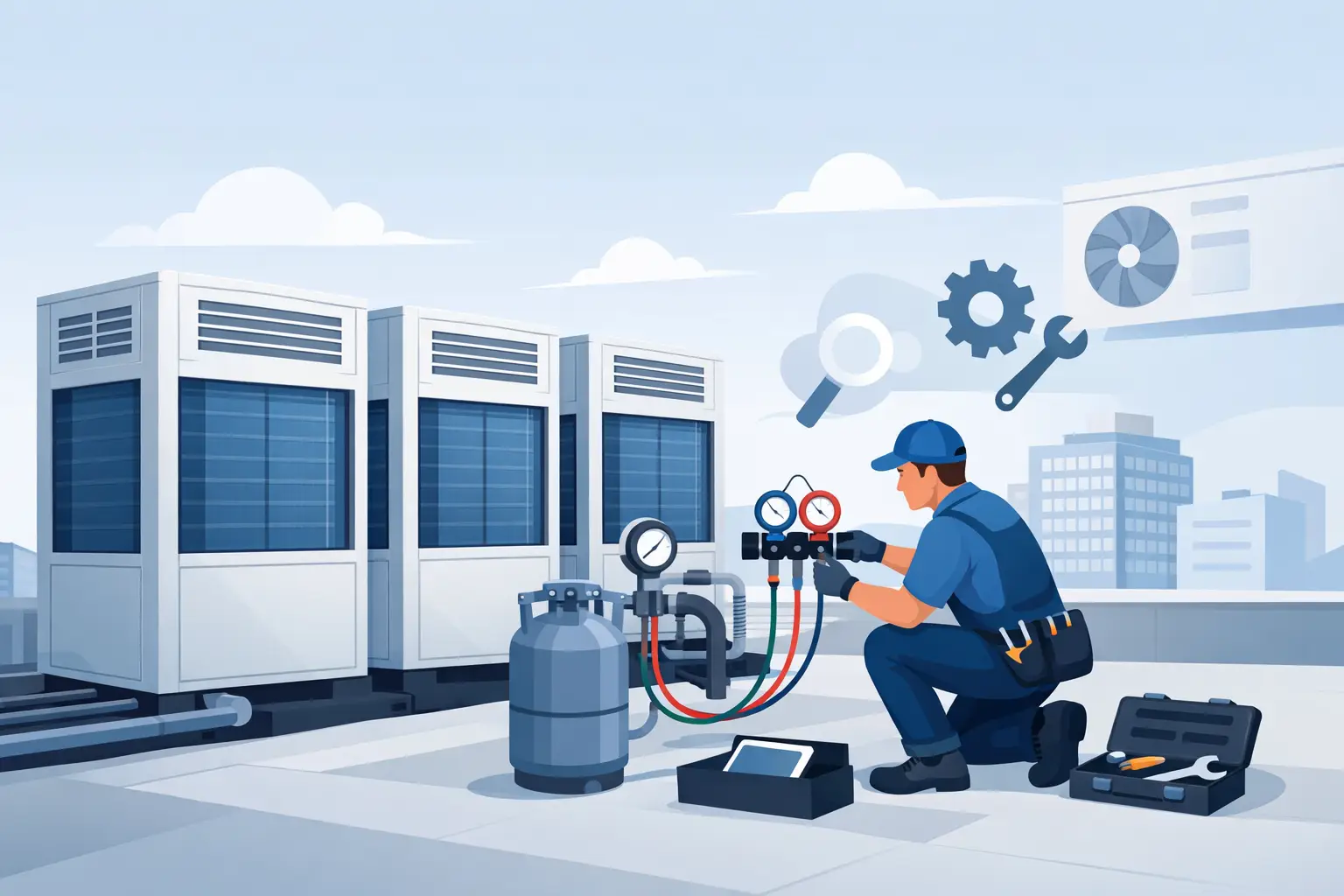
A VRV system rarely fails all at once. More often, it starts with small signs – uneven room temperatures, longer cooling cycles, higher energy bills, or complaints from one zone while another feels too cold. If you want to know how to maintain VRV system performance properly, the goal is not just to avoid breakdowns. It is to protect comfort, control operating costs, and catch issues before they interrupt your home or business.
VRV systems are built for flexibility. They can cool multiple zones with precision, which makes them a strong fit for larger homes, offices, retail spaces, and other properties with different cooling needs throughout the day. That same flexibility also means maintenance needs to be more consistent and more informed than a basic single-split setup. A neglected filter, clogged drain, or refrigerant issue in one part of the system can affect efficiency across the whole network.
How to maintain VRV system performance over time
Good VRV maintenance starts with a simple principle: keep airflow, heat exchange, drainage, and controls working as intended. When one part slips, the rest of the system has to work harder. That extra strain shows up in comfort problems first, then in higher utility costs, and eventually in repairs.
For building owners and facility teams, this means maintenance should be planned, not reactive. For homeowners with larger or multi-zone properties, it means paying attention to the system even when it still seems to be cooling. A VRV system can continue running while gradually losing efficiency, which is why routine checks matter.
Indoor unit filters are one of the first things to watch. When filters load up with dust, airflow drops and the evaporator coil cannot perform efficiently. Rooms may take longer to cool, and some occupants may lower thermostat settings to compensate. That often creates the impression that the system is weak, when the actual issue is restricted airflow. In lighter-use spaces, filters may only need periodic cleaning, but in high-traffic offices, shops, or dusty environments, service intervals may need to be much shorter.
Indoor coils also need attention. Even if filters are cleaned regularly, fine particles can still settle on the coil surface over time. Dirty coils reduce heat transfer and can contribute to icing, poor cooling, and unnecessary compressor workload. Coil cleaning is not something to ignore simply because the unit still turns on.
Then there is the drain system. Condensate drains can clog slowly, especially in humid climates or locations where dust and biofilm build up over time. Water leaks from indoor units are often treated as a small nuisance, but they can lead to ceiling damage, odor issues, and service disruption if left unresolved. Drain inspection and flushing should be part of routine maintenance, not a separate emergency call.
The outdoor side matters just as much
When people think about air conditioning maintenance, they often focus on the indoor units because those are the parts they see every day. But the outdoor condensing section plays a major role in system performance. If the condenser coil is dirty or blocked by debris, the system cannot reject heat efficiently. That raises operating pressure, increases power consumption, and can shorten component life.
Leaves, grease, dust, and general outdoor buildup can all reduce condenser performance. In commercial settings, the environment matters even more. A VRV system near a busy road, kitchen exhaust area, or industrial process may collect dirt faster than expected. The maintenance schedule should reflect the site conditions, not a generic calendar.
Fan motors, electrical connections, and mounting condition should also be checked during service. Loose wiring, worn insulation, or vibration issues may not be obvious to occupants, but they can lead to faults and downtime later. Preventive maintenance is where these small risks are usually found.
Controls, sensors, and zoning should be checked too
One of the key advantages of VRV is zoning control. Different spaces can operate based on occupancy, timing, or room-specific demand. But if sensors drift, controllers are misconfigured, or communication faults begin to develop, the system may cool the wrong areas or run longer than needed.
This is one reason VRV maintenance is not just cleaning. It also involves checking operating data, fault history, temperature readings, and communication between indoor and outdoor units. A zone that is always underperforming may not have a mechanical problem at all. It could be a control issue, a sensor placement issue, or a setting that no longer matches how the space is used.
For offices and retail spaces, this matters because comfort complaints often come from control mismatches rather than complete equipment failure. For homeowners, it can show up as one bedroom staying warm while the rest of the house feels fine. The system may still be running, but it is not running correctly.
Refrigerant checks need professional handling
If you are asking how to maintain VRV system efficiency, refrigerant condition is one area where professional service is essential. VRV systems depend on correct refrigerant charge and stable pressure conditions. Too little refrigerant can reduce cooling capacity and strain compressors. Too much can also create performance and reliability problems.
A refrigerant issue does not always mean a dramatic leak. Sometimes the early signs are subtle: reduced cooling in one branch, abnormal pressures, or recurring error codes. Because VRV systems are more complex than standard residential air conditioners, refrigerant diagnosis should be handled carefully and with the right tools.
This is also why repeated top-ups are not a real maintenance strategy. If refrigerant is low, the cause needs to be found and corrected. Otherwise, the system may continue losing performance while the root problem remains.
A practical maintenance schedule
The right maintenance frequency depends on usage, building type, and environment. There is no single schedule that fits every VRV installation.
For many properties, monthly visual checks are a sensible baseline. These can include looking for water leaks, unusual noise, blocked return air paths, and obvious control issues. Filter condition should also be reviewed regularly, especially in high-use areas.
Professional servicing is typically needed on a scheduled basis throughout the year. In a residential setting with moderate use, this may be less frequent than in a commercial property operating daily with multiple occupied zones. Offices, restaurants, retail units, and facilities with long running hours usually need a more structured preventive maintenance plan.
Seasonal demand also matters. It is better to service a VRV system before peak cooling periods, not after occupants start noticing discomfort. Waiting until the hottest week of the year usually means higher urgency, less flexibility in scheduling, and a greater chance that a small issue becomes a larger one.
What owners and managers can do between service visits
Not every maintenance task requires a technician, but the safe approach is to keep owner-level checks simple. Pay attention to how each zone performs. If one room consistently cools slower, smells unusual, or produces water, that is worth reporting early. Listen for changes in sound from indoor or outdoor units. Unusual rattling, buzzing, or short cycling should not be ignored.
Keep air paths clear around indoor units and outdoor equipment. Furniture, storage, or decorative panels can interfere with airflow more than people expect. In commercial spaces, changes in layout can affect system performance if supply or return paths become restricted.
It also helps to avoid constant thermostat adjustments. If occupants regularly overcorrect temperatures, it can mask an underlying issue and create unnecessary runtime. A system that is properly maintained should hold stable comfort without constant intervention.
Why professional VRV servicing is worth it
VRV systems reward proper maintenance because they are designed for efficiency, zoning, and long-term control. But they also involve more components, more communication points, and more operating variables than simpler air conditioning systems. That means a proper service visit should include more than basic washing.
A qualified technician should assess cleanliness, drainage, electrical condition, refrigerant performance, controls, and operating behavior as a whole. That broader view helps catch developing issues before they affect multiple zones or lead to major repair costs.
For businesses, this reduces downtime and helps protect customer or staff comfort. For homeowners, it helps preserve the convenience that made a VRV system worth installing in the first place. Companies like Easy Cool Engineering Pte Ltd support this kind of maintenance with both everyday service experience and the technical capability needed for more complex cooling systems.
If you are deciding how to maintain VRV system reliability for the long run, the best approach is simple: do not wait for failure to tell you the system needs attention. A consistent maintenance plan keeps performance steady, costs more predictable, and comfort where it should be – in the background, not on your problem list.