

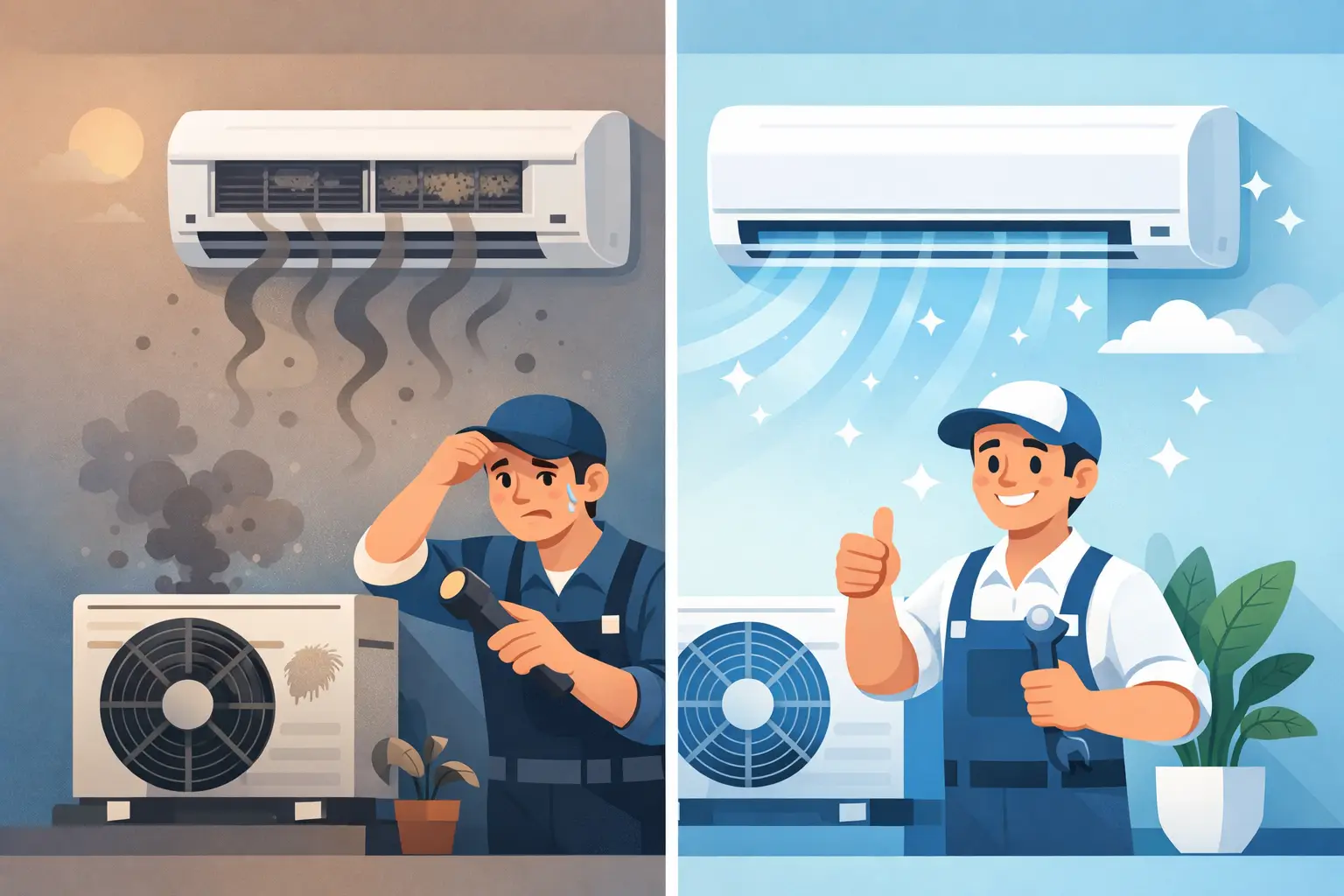
A useful aircon servicing before after example is not a dramatic photo of a shiny indoor unit. It is the difference you notice at home or work: a room reaches the set temperature without running endlessly, airflow feels even, odors disappear, and water no longer drips from the unit. Those changes point to a system that has been cleaned, checked, and restored to better working condition.
Air conditioning maintenance is not one identical task for every unit. A lightly used bedroom system may need routine cleaning, while an office unit with weak airflow, water leakage, or heavy dust buildup may require a more thorough inspection. The right service depends on the condition of the equipment, its usage, and the symptoms you are seeing.
Aircon Servicing Before After Example: A Common Scenario
Consider a wall-mounted split air conditioner in a regularly occupied bedroom. Before service, the homeowner notices that the room feels warm even when the thermostat is set low. Airflow from the vents is weak, there is a faint musty smell when the unit starts, and the indoor unit occasionally produces a small drip of water.
During servicing, a technician inspects the air filters, evaporator coil, blower wheel, drain pan, and condensate drain line. Dust on filters can restrict airflow. Dirt on the coil and blower can reduce heat transfer and make the system work harder. A partially blocked drain line may prevent condensation from flowing out properly, leading to water leakage.
After a suitable cleaning and functional check, the expected result is cleaner airflow and more consistent cooling. The fan may operate more quietly because it is no longer pushing air through heavy buildup. Condensation should drain as intended if the blockage has been cleared. The room may also cool faster, although the actual result still depends on outdoor temperature, room size, insulation, refrigerant condition, and whether the unit is correctly sized.
The before-and-after difference is therefore practical, not cosmetic. A clean unit cover is welcome, but better airflow, proper drainage, and stable operation are the signs that matter most.
What Technicians Check During Aircon Service
Routine servicing typically focuses on the parts that collect dust, handle moisture, and affect daily cooling performance. The indoor filters are cleaned because they are the first line of defense against airborne dust. The evaporator coil and blower area may also be assessed for buildup that cannot be solved by filter cleaning alone.
Drainage is another essential area. Every air conditioner removes moisture from the air as it cools. That moisture needs a clear path through the drain pan and pipe. When it does not, water can back up into the indoor unit and eventually drip onto walls, floors, furniture, or equipment.
A qualified technician should also look for signs that point beyond a cleaning need. These can include unusual noise, damaged insulation, loose electrical connections, poor thermostat response, or oil stains around refrigerant components. Cleaning can improve a dirty system, but it will not repair a faulty fan motor, a leaking refrigerant line, or a failing control board. Clear communication about this distinction helps prevent surprises after the service visit.
Before service: Signs worth documenting
Before a technician arrives, take note of what the system is doing. Is the problem limited to one room? Does the unit leak only after several hours? Does it cool well in the morning but struggle in the afternoon? Specific observations can help identify whether the issue is related to airflow, drainage, controls, or system capacity.
If you can safely do so, check whether the air filters are visibly dusty and whether the outdoor unit has obvious debris around it. Do not attempt to remove covers, handle electrical wiring, or add refrigerant yourself. Those tasks require the right tools and training.
After service: Results to look for
An effective service should leave you with more than a vague sense that work was completed. You should be able to assess the system over the next day or two through normal operation. Look for cooler, more even air delivery; reduced odor; no drainage leaks; and a unit that reaches the set temperature without excessive cycling.
It is normal for some rooms to cool differently due to sun exposure, open doors, high ceilings, or heat-producing appliances. However, if the same symptom remains unchanged after servicing, contact the service provider and explain what you are experiencing. The unit may need further diagnosis rather than another standard cleaning.
Why Before-and-After Results Vary
A heavily clogged filter can produce a noticeable improvement immediately after cleaning. In contrast, a system with low refrigerant due to a leak may feel only slightly better after routine servicing, if at all. This is why a responsible service approach starts with inspection instead of promising that every problem can be solved by one cleaning appointment.
System age also matters. Older equipment may have worn parts, reduced efficiency, or outdated controls. Regular maintenance can extend useful life and reduce avoidable strain, but it cannot make aging equipment perform like a new, properly sized installation. For landlords and facilities teams managing several units, service records are especially useful for identifying systems that repeatedly need repairs and may be approaching replacement.
Commercial environments bring additional variables. Office units can collect substantial dust because of long operating hours. Retail spaces may lose cool air through frequent door openings. Kitchen-adjacent areas may need specialized duct and ventilation attention, since grease and heat place different demands on the overall cooling environment. A service provider should tailor recommendations to the system and site rather than applying a household checklist to every property.
Cleaning, Chemical Washing, or Repair?
Not every aircon issue calls for the same level of work. Routine servicing is generally appropriate for scheduled maintenance, light dust buildup, and basic performance checks. A deeper wash may be recommended when internal components have significant dirt buildup, persistent odors, restricted drainage, or poor cooling that inspection links to contamination.
Repair is the appropriate path when the problem is mechanical or electrical. A damaged capacitor, failed fan motor, refrigerant leak, or sensor fault needs diagnosis and repair, not repeated washing. In some cases, a technician may recommend a chemical wash alongside repair work, but the reason should be explained clearly.
Ask what was found, what work is recommended, and what result is realistic. This is particularly valuable when comparing service packages. The lowest-priced option may be sufficient for a well-maintained unit, while a neglected or leaking system may need more involved work. The best value is the service that addresses the actual condition of the equipment without unnecessary add-ons.
How to Keep the Improvement Going
The after-service condition lasts longer when the system is used and maintained sensibly. Clean or replace accessible filters according to the manufacturer’s guidance and household conditions. Keep doors and windows closed while cooling a room, and avoid blocking indoor vents with curtains or furniture. For outdoor condensers, maintain clear space around the unit so heat can disperse.
A sensible maintenance schedule depends on use. A lightly used guest room may need less frequent attention than a living room system operating daily in humid weather. Homes with pets, smoking, renovation dust, or allergy concerns may need more frequent filter care. Offices, retail sites, and other high-use facilities often benefit from planned maintenance because unexpected downtime can disrupt employees, customers, and operations.
Easy Cool Engineering approaches servicing as a practical check on cooling performance, cleanliness, and reliability. Whether the equipment supports a family home or a busy commercial space, the goal is to identify what the system needs and carry out the work with clear recommendations.
A good before-and-after result should give you confidence the next time the air conditioner starts: clean air moving freely, water draining where it should, and a space that becomes comfortable without the system having to fight for every degree.